Stop guessing and start guiding! Find out how to share your brand story, style, and goals so designers nail your logo on the first try.
A custom logo project always sounds simple at first. You share your business name, maybe a color you like, and expect a designer to return with something that just fits. Then the revisions begin. The logo feels too generic, too playful, or not quite “you.” What usually sits at the center of this confusion is not the design but the brief.
A logo design brief is not paperwork or a formality. It is the translation layer between what a business owner knows instinctively about their brand and what a designer needs to see clearly. When it is done well, it shortens timelines, sharpens creative direction, and prevents expensive do-overs. When it is rushed, even talented designers end up guessing.
This guide walks through how to write a logo brief that actually works. Not theoretical advice, but practical structure, real examples, and small prompts that make clarity easier.
What Is a Logo Design Brief and Why You Need It
A logo design brief is a short, structured document that explains what a business is, who it serves, and how it wants to be seen. It gives a designer the context behind the logo before any sketches begin. In simple terms, it answers the questions a designer would otherwise have to guess:
- What does this brand stand for?
- Who is it trying to reach?
- How should it feel?
Think of it as the project’s compass. Without it, design decisions drift toward personal taste. With it, every shape, color, and type choice ties back to a clear goal. A strong brief does not limit creativity. It directs it.
The need for clarity is not theoretical. Research shows that about 65% of consumers form their first impression of a brand from its logo, and up to 75% judge credibility based on logo design. That means the visual outcome of a logo project carries real business weight. Yet designers often start with only a name and a vague mood word like “modern.”
A design brief closes that gap. It tells the designer what kind of recognition the brand needs to earn. It also reduces wasted effort. Projects with clear briefs reach the right direction faster and require fewer revision rounds, which keeps budgets under control.
Another practical reason: distinctiveness. People encounter thousands of brand messages each day, and memorable logos are far more likely to be recalled among competitors. A brief helps define what makes a brand different before visuals are created, not after.
How to Craft a Logo Design Brief?
Writing a logo design brief shouldn’t feel like filling out a boring form. It’s a story you tell a designer about your brand—but with structure, clarity, and a sprinkle of personality. A good brief gives direction without suffocating creativity.
To keep things manageable, we can break the process into three key steps:
- Understanding your business
- Defining visual style
- Carifying logistics like timing and budget
Each step covers the essentials a designer needs to turn your ideas into a logo that resonates.
Step 1: Get Clear on Your Business Identity
Before a designer even opens Illustrator, they need a clear picture of your brand beyond just products or services. Share the essentials and what makes your business distinct so the logo reflects your values and direction.
Include:
- Company name, industry, tagline, and location
- What you offer and how you deliver it
- What makes you different (methods, materials, values)
- Brand goals or future direction
When these basics are clear, designers can translate your business identity into visuals without guesswork.
• Know Your Brand Personality
Your logo should reflect the way your brand wants to be perceived. Use 3-5 adjectives to describe the tone: is it bold, friendly, modern, playful, luxurious, or minimalist? This helps a designer make decisions about shapes, typefaces, and even spacing.
Clean, soft, and friendly lettering in Mailchimp logo.
Mailchimp has a friendly, approachable personality. Its logo mascot, Freddie the chimp, with a cheeky smile, communicates warmth and accessibility.
The Apple logo with bitten apple silohuette
Apple, on the other hand, projects sophistication and innovation. Its clean, minimalist logo supports a premium and futuristic feel.
Different brand personality types reflect the human-like traits a brand expresses, shaping how it connects with its audience and influences perception.
1. Sincere & Trustworthy
Logos of sincere, trustworthy brands emphasizing authenticity, reliability, and genuine emotional connection.
Brands with this personality are honest, caring, and down-to-earth. They aim to build emotional connections based on reliability and authenticity.
2. Exciting & Energetic
Logos of exciting brands expressing bold energy, adventure, creativity, and youthful spirit.
These brands are daring, playful, and dynamic. They create a sense of adventure, novelty, and youthful energy for their audience.
3. Competent & Reliable
Logos of competent brands reflecting expertise, reliability, intelligence, and strong professional credibility.
Competent brands emphasize expertise, efficiency, and professionalism. They communicate dependability and inspire confidence in their products or services.
4. Sophisticated & Luxurious
Logos of sophisticated brands symbolizing luxury, elegance, prestige, and refined lifestyle.
Sophisticated brands are elegant, refined, and aspirational. They convey prestige and exclusivity.
5. Rugged & Outdoorsy
Logos of rugged brands symbolizing toughness, durability, strength, and adventurous outdoor spirit.
Rugged brands are tough, adventurous, and resilient. They appeal to audiences seeking durability, strength, and a connection to the outdoors.
6. Playful & Fun
Logos of playful brands expressing fun, creativity, friendliness, and youthful personality.
Playful brands are cheerful, spontaneous, and entertaining. They focus on delighting their audience and creating a lighthearted experience.
7. Innovative & Modern
Logos of innovative brands representing creativity, forward thinking, technology, and modern vision.
Innovative brands are forward-thinking and unconventional. They convey creativity, imagination, and a focus on progress and new ideas.
8. Reliable & Traditional
Logos of established brands representing tradition, heritage, stability, and long-standing trust.
Traditional brands are stable, classic, and conservative. They emphasize heritage, consistency, and trustworthiness.
• Define Your Target Audience
Who are you designing for? Not just age or gender—think motivations, values, and lifestyle. A logo that resonates with teenagers may fall flat with corporate clients, and vice versa.
Questions to answer:
- Who buys your product or service?
- What problem does your brand solve for them?
- How do they want to feel when interacting with your brand?
For example, Nike focuses on athletes and people who aspire to be active, so its bold, energetic swoosh fits a motivated, goal-oriented audience.
On the flip side, Innocent Drinks targets health-conscious but fun-loving consumers, which is reflected in their quirky fruit illustrations and playful font.
When designing a logo, understanding your target audience is essential. Different audiences respond to different colors, shapes, typography, and visual styles, so tailoring your design to their preferences can strengthen brand recognition and emotional connection.
1. Children & Families
Logos of cheerful brands representing joy, playfulness, creativity, and childlike imagination.
Logos for kids and families should feel playful and approachable. Bright colors, rounded shapes, and whimsical elements create a fun and friendly impression that appeals to younger audiences.
2. Teenagers & Young Adults
Logos of trendy brands reflecting youth culture, style, creativity, and modern street fashion.
Teen-focused logos should feel trendy, bold, and energetic. Dynamic shapes, vibrant colors, and edgy typography capture their attention and reflect their sense of individuality.
3. Young Professionals & Millennials
Logos of minimalist brands reflecting simplicity, clarity, modern aesthetics, and thoughtful design.
Millennial audiences often prefer sleek, minimalist, and modern designs. Clean lines, muted or gradient colors, and simple sans-serif fonts convey sophistication and professionalism.
4. Corporate & B2B Audience
Logos of corporate brands representing professionalism, authority, credibility, and global business leadership.
Corporate logos need to communicate trust, reliability, and stability. Conservative fonts, neutral colors, and geometric shapes help establish credibility and professionalism.
5. Luxury Consumers
Logos of luxury brands representing exclusivity, elegance, prestige, and high-end lifestyle.
Luxury brand logos should evoke elegance, refinement, and exclusivity. Minimalist design, high-end typography, and rich or neutral color palettes convey prestige and aspirational value.
6. Tech & Innovation Enthusiasts
Logos of tech-driven brands symbolizing innovation, progress, digital culture, and future-focused thinking.
Logos targeting tech-savvy audiences should feel modern, futuristic, and innovative. Geometric shapes, gradients, and sleek abstract symbols signal progress and creativity.
7. Health & Wellness Audience
Logos of tech-driven brands symbolizing innovation, progress, digital culture, and future-focused thinking.
Health-focused logos should feel calming, caring, and natural. Soft colors, organic shapes, and gentle typography communicate trust and a focus on wellbeing.
8. Sports & Fitness Enthusiasts
Logos of tech-driven brands symbolizing innovation, progress, digital culture, and future-focused thinking.
Logos for athletes or fitness brands should feel dynamic, motivating, and energetic. Bold typography, strong colors, and action-oriented symbols inspire movement and determination.
9. Creative & Artistic Audience
Logos of creative brands symbolizing artistic expression, innovation, imagination, and design culture.
Creative audiences are drawn to unique and expressive logos. Hand-drawn fonts, abstract visuals, and unconventional color palettes convey originality and imagination.
10. Eco-Conscious & Sustainable Consumers
Logos of eco-conscious brands symbolizing sustainability, responsibility, natural values, and environmental care.
Logos for environmentally conscious consumers should emphasize responsibility and nature. Earthy colors, natural symbols like leaves or water, and clean design communicate sustainability and ethical values.
• Pinpoint Market Positioning
Where does your brand sit in the competitive landscape? Are you a premium alternative, a budget-friendly option, or something in between? This positioning guides your logo style, helping you decide between minimalist and maximalist—clean and high-end for minimalist, bold and playful for maximalist.
Choosing the right positioning strategy helps a brand stand out and connect more effectively with customers.
1. Price-Based Positioning
This strategy emphasizes affordability or value for money. Brands position themselves as the cost-effective choice for price-sensitive customers.
Walmart’s simple friendly logo with bright colors and approachable typography.
Walmart is positioned as the go-to retailer for affordability and everyday low prices. Its simple, bold blue logo communicates accessibility and reliability, making it clear that value is the priority.
IKEA’s bold blue and yellow logo with strong typography.
IKEA offers well‑designed furniture at accessible prices, appealing to customers who want style without a high price tag. The bold, simple logo, in blue and yellow, reflects trust, approachability, and functional design.
2. Quality-Based Positioning
Here, the focus is on superior quality, durability, or premium materials. The goal is to justify a higher price and appeal to customers seeking excellence.
Rolex logo features a refined crown symbol to communicate prestige.
Rolex is positioned as a luxury watch brand that symbolizes prestige, precision, and craftsmanship. Its crown logo conveys elegance and high status, instantly signaling premium quality.
Bose’s clean, modern lettering reflects precision and high-quality sound engineering.
Bose is positioned as a high-end audio brand delivering superior sound performance. Its minimalist typography reflects sophistication and reinforces its focus on technical excellence.
3. Feature-Based Positioning
Brands highlight unique product features or capabilities that competitors lack. The messaging emphasizes how these
Dyson logo features minimalist typography emphasizing innovation.
Dyson is positioned as a leader in cutting-edge home technology, with unique product features. Its sleek, modern logotype conveys innovation, precision, and engineering excellence.
Tesla logo’s futuristic styling and sharp lines convey cutting-edge technology
Tesla is positioned as a leader in high-performance, sustainable electric vehicles. The stylized “T” logo reflects futuristic technology and innovation.
4. Benefit-Based Positioning
This approach focuses on the key benefit or outcome the customer receives. It communicates the real-world benefits of choosing the brand.
Fitbit’s logomark with a dotted icon symbolizes connectivity and movement.
Fitbit is positioned as a wearable that helps people lead healthier lives through tracking activity and sleep. Its dotted, dynamic logo evokes movement, energy, and personal progress.
Turbotax logo is bold text with checkmark representing reliability.
TurboTax is positioned as the easiest way to file taxes accurately and efficiently. Its checkmark logo highlights the benefit of simplicity and assurance in completing taxes.
5. Use or Application-Based Positioning
The brand is positioned for a specific use case, context, or situation. Messaging shows why the product is particularly relevant for that scenario.
GoPro logo uses strong typography with color blocks reflecting action.
GoPro is positioned for capturing extreme sports and adventure experiences. Its bold, squared logo conveys action, energy, and rugged performance.
Moleskine wordmark uses elegant typography and a simple icon.
Moleskine is positioned for creative professionals who need reliable notebooks for ideas and planning. Its clean wordmark reflects professionalism, organization, and creativity.
6. User-Based Positioning
Brands target a clearly defined group of users or a specific demographic. The strategy tailors messaging and features to meet the preferences of that audience.
Glossier wordmark represents a modern beauty and skincare brand.
Glossier targets modern, social-media-savvy millennials and Gen Z beauty consumers. The minimalist logo reflects simplicity, modernity, and a personal connection with the audience.
Glossier wordmark represents a modern beauty and skincare brand.
AARP is positioned as a trusted resource for adults aged 50 and above. Its clean, professional logo communicates reliability, stability, and authority for its older demographic.
7. Competitor-Based Positioning
This positioning differentiates the brand relative to a specific competitor. It emphasizes advantages over rivals or highlights a unique niche the competitor doesn’t address.
Iconic Burger King logo featuring bold red text between stylized burger buns.
Burger King is positioned as a fun, customizable alternative to other fast-food chains. The layered bun logo visually reinforces choice and personalization compared to competitors.
Classic circular Pepsi logo with red, white, and blue wave design and bold typography.
Pepsi positions itself as a youthful, bold alternative to Coca-Cola. The circular, colorful logo conveys energy, modernity, and a playful attitude.
8. Emotion-Based Positioning
The focus is on creating an emotional connection with the audience. Brands evoke feelings such as trust, excitement, nostalgia, or prestige to drive loyalty.
Disney wordmark in a playful handwritten style associated with entertainment and storytelling.
Disney is positioned as a magical, family-oriented entertainment brand. The whimsical logotype sparks joy, imagination, and emotional attachment across generations.
Hallmark logo with a crown symbol representing sentimental gifts.
Hallmark is positioned around emotional connection, sentiment, and meaningful relationships. Its flowing crown logo evokes warmth, nostalgia, and heartfelt experiences.
9. Problem-Solution Positioning
The brand is framed as the best solution to a specific problem. Messaging shows how the product effectively eliminates pain points better than alternatives.
Zoom’s wordmark logo represents ease of communication and connectivity.
Zoom is positioned as the easiest, most reliable solution for video communication. Its connected circle logo conveys simplicity, connection, and accessibility.
Allstate logo with two protective hands symbolizing insurance protection and trust.
Allstate is positioned as a trusted provider of insurance protection. Its hands logo visually conveys safety, reassurance, and reliability.
10. Cultural or Value-Based Positioning
Brands align themselves with social causes, lifestyles, or cultural trends. This strategy appeals to audiences who share the brand’s values or identity.
Ben & Jerry’s curved badge-style logo with bold lettering.
Ben & Jerry’s is positioned as a socially conscious brand with fun, indulgent products. Its playful, hand-drawn logo reflects social values and a lighthearted personality.
The Body Shop logo features green circular emblem logo symbolizing nature.
The Body Shop is positioned as a cruelty-free and ethical beauty brand. Its circular logo with natural elements emphasizes its commitment to sustainability and social responsibility.
Tip: Avoid vague statements like “we want a modern logo.” Instead, combine personality, audience, and positioning to give designers a real sense of your brand identity. A strong foundation here reduces the chance of endless revisions later.
Step 2: Nail Down Your Visual Preferences and Style
Once your business identity is clear, the next step is translating that personality and audience understanding into visuals. This is where designers start imagining shapes, colors, and typefaces. The more specific you are here, the easier it is for them to hit the right vibe the first time.
• Choose the Type of Logo
Logos aren’t one-size-fits-all. Each type communicates your brand in a slightly different way, and choosing the right one helps a designer hit the mark faster. Here’s a breakdown of the main types:
1. Wordmarks (Logotypes):
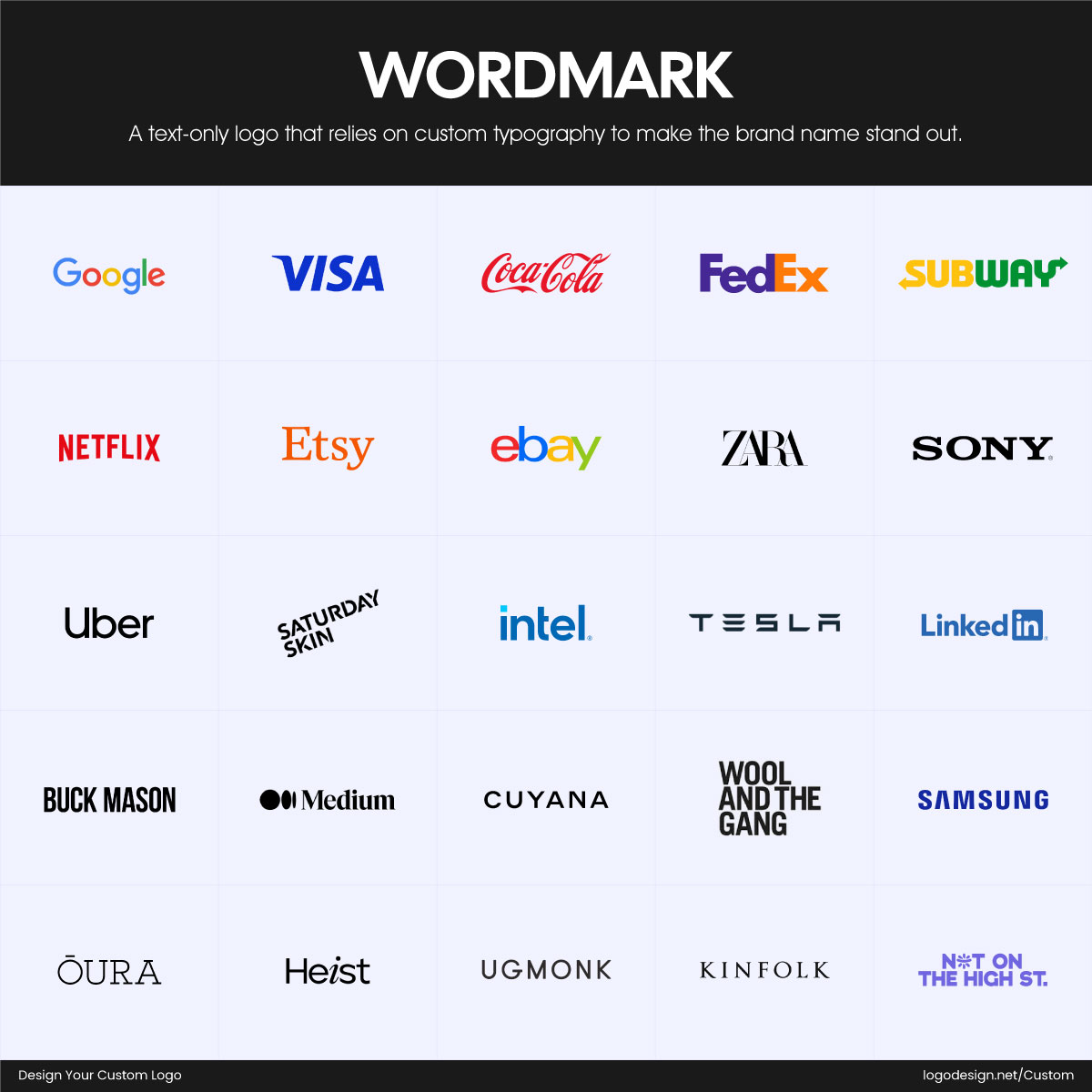
Logos of wordmark brands emphasizing distinctive typography, clarity, and strong brand recognition.
These are logos made entirely from the brand name. They rely on typography and spacing to create identity. Ideal for brands with distinctive names that want instant recognition.
FedEx logo with a hidden arrow conveys speed, reliability, and global delivery.
For instance, FedEx – the bold typeface and hidden arrow convey speed and reliability without any extra symbols.
2. Lettermarks (Monograms):
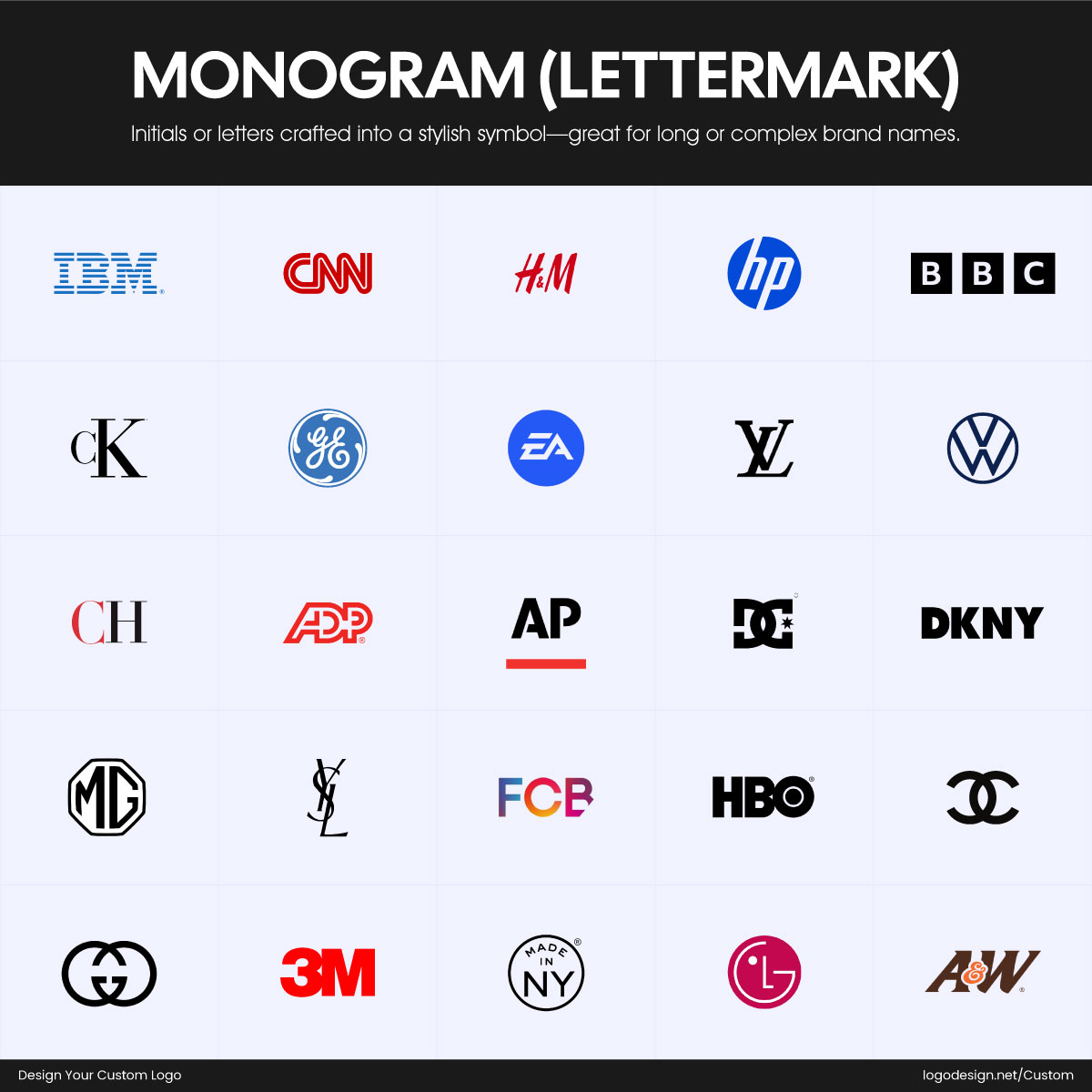
Logos built from initials or abbreviated letters, creating compact and recognizable brand symbols.
Logos that use initials instead of the full name. Best for long or complex brand names. They simplify the brand into a clean, memorable mark.
CNN’s bold red lettermark symbolizes urgency and authority.
Such as CNN, which is instantly recognizable and easy to reproduce across media.
3. Pictorial Marks (Icon or Symbol):
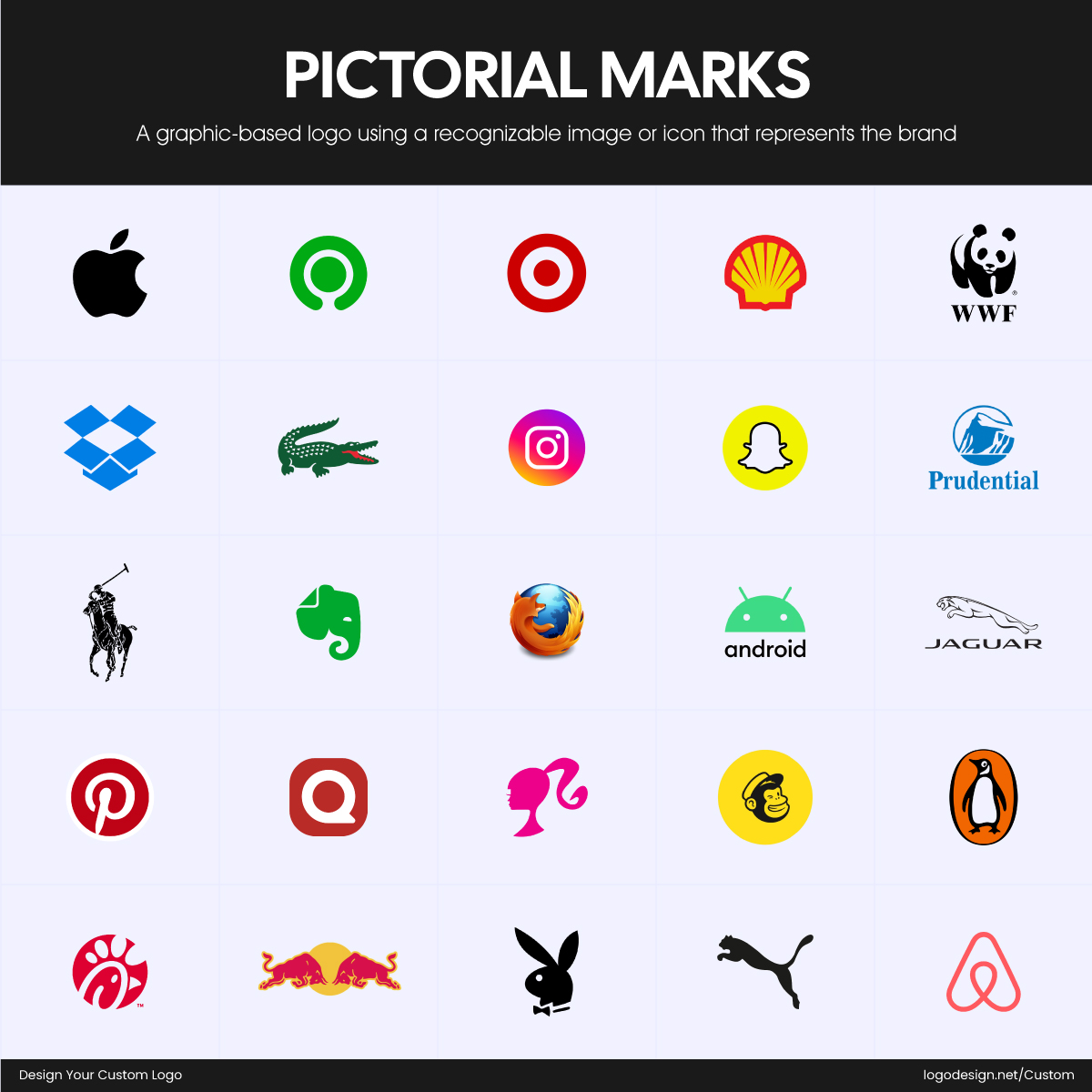
Logos that use a recognizable symbol or image to visually represent the brand without relying on text.
These rely on a single image or icon to represent the brand. A strong pictorial mark can stand alone without text.
Target’s popular bullseye illustrates focus, precision, and confidence.
Target’s red bullseye is instantly recognizable, versatile, and communicates focus and precision.
4. Abstract Marks:
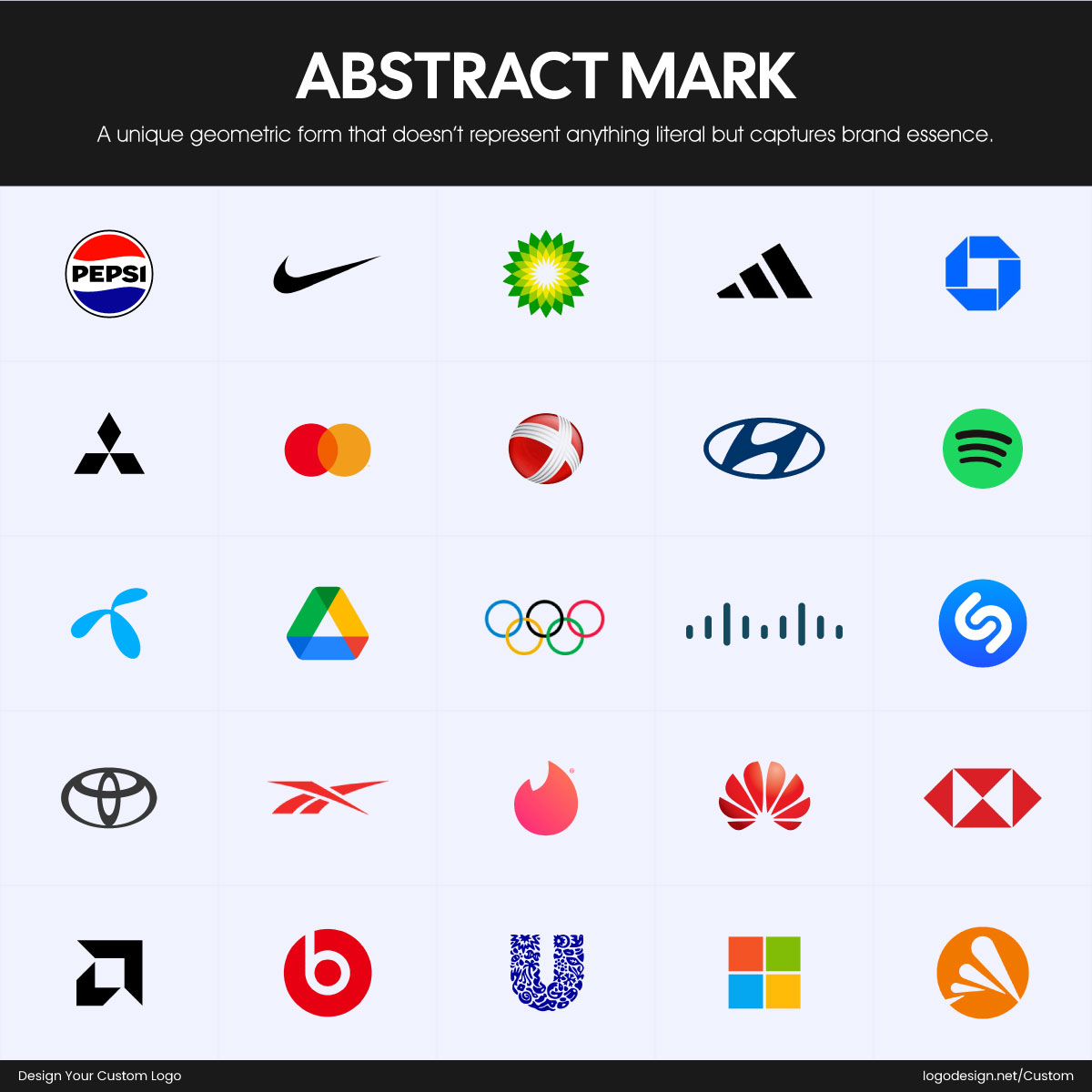
Logos that use abstract shapes or geometric forms to represent a brand’s identity rather than a literal image.
Instead of a literal object, abstract logos uses shapes or symbols to convey ideas or feelings. They’re versatile but require careful design to be memorable.
BP’s green and yellow emblem symbolizes energy and sustainability.
BP’s green-and-yellow helios symbol is abstract yet instantly recognizable, conveying energy, growth, and environmental awareness.
5. Combination Marks:
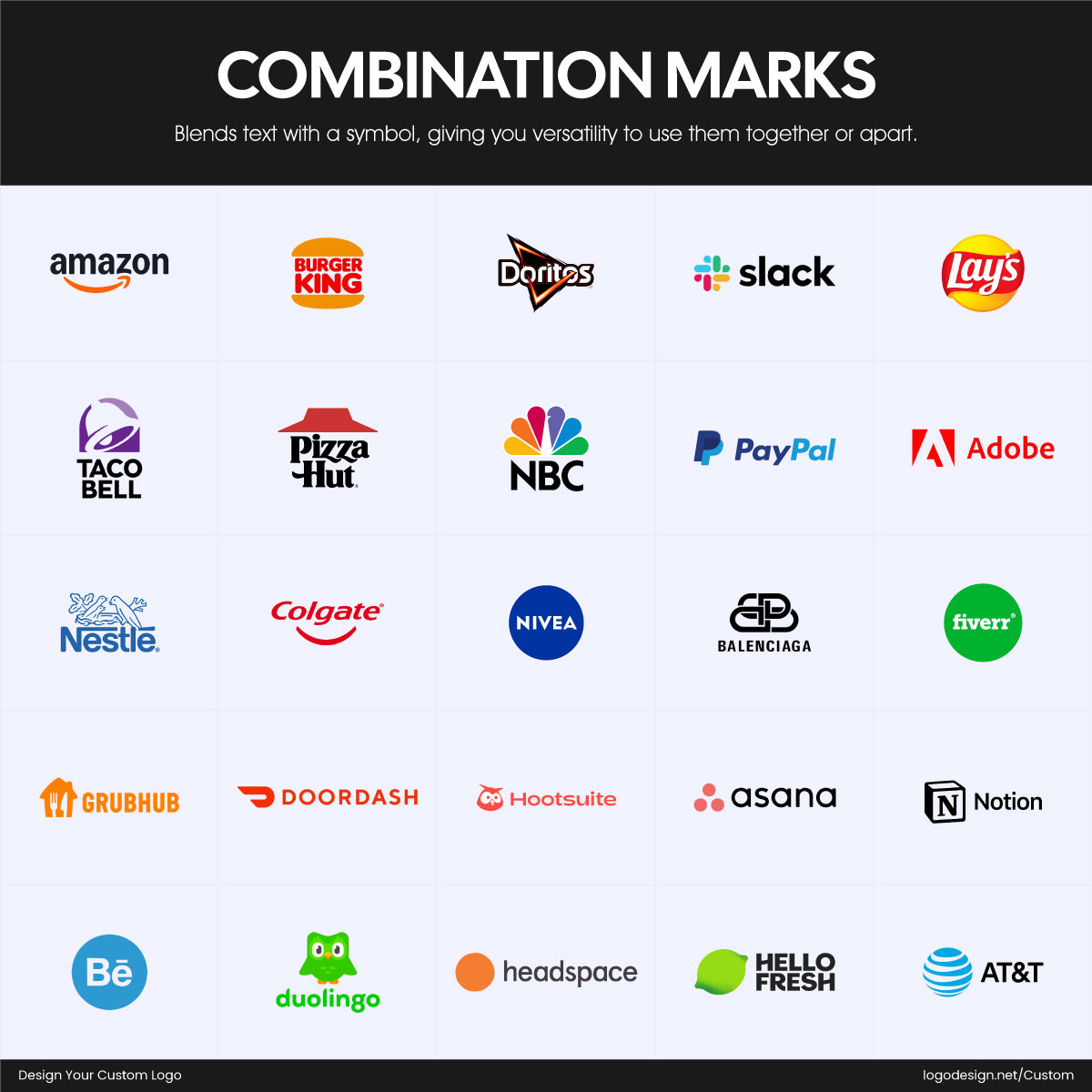
Logos that combine both text and a symbol, allowing the brand to use them together or separately.
These combine text and symbols, giving flexibility for different contexts. You can use the text, the icon, or both together.
Lacoste’s green crocodile avatar represents sporty elegance and heritage.
Lacoste is a good example – the crocodile icon paired with the brand name works across clothing labels, packaging, and advertising.
6. Emblems:
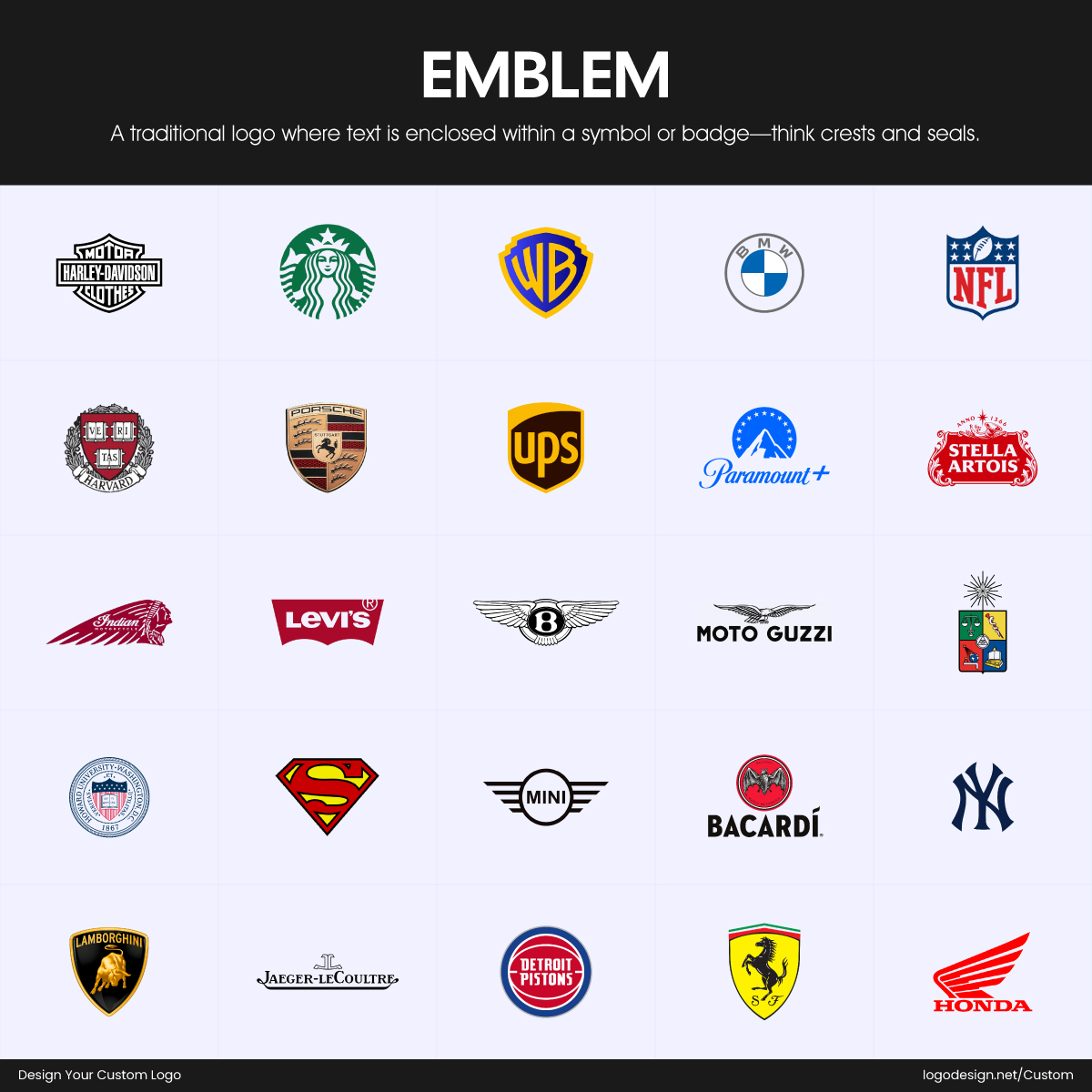
Logos where text is enclosed within a symbol, badge, or crest to create a classic and unified brand mark.
Text is embedded inside a shape or badge. Often used by institutions or heritage brands, emblems communicate authority, tradition, or craftsmanship.
Starbuck’s siren logo reflects premium coffee culture, warmth, and community experience.
Starbucks’ circular emblem with the siren conveys heritage, premium quality, and brand consistency across stores.
7. Mascot Logos:
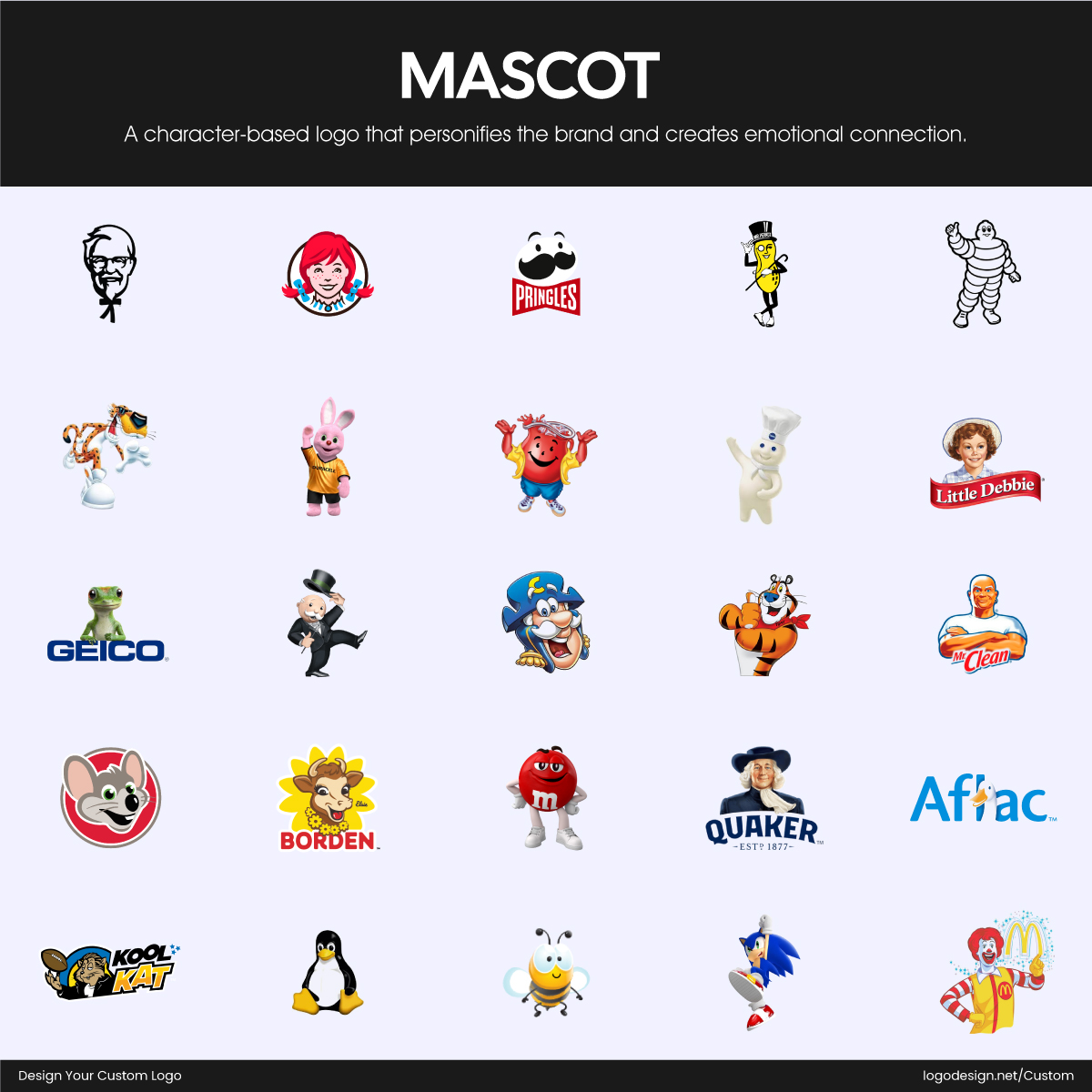
Logos that feature a character or illustrated figure used to represent and humanize the brand.
These feature a character or illustration that represents the brand. They add personality and approachability, often appealing to families or younger audiences.
KFC’s mascot logo highlights heritage, comfort food, and friendly brand personality.
KFC’s Colonel Sanders acts as a friendly, recognizable mascot that ties into the brand story and heritage.
8. Dynamic Logos:
Logos that change in appearance depending on context while maintaining core identity elements. They’re flexible and modern, great for brands that want a playful or adaptive presence.
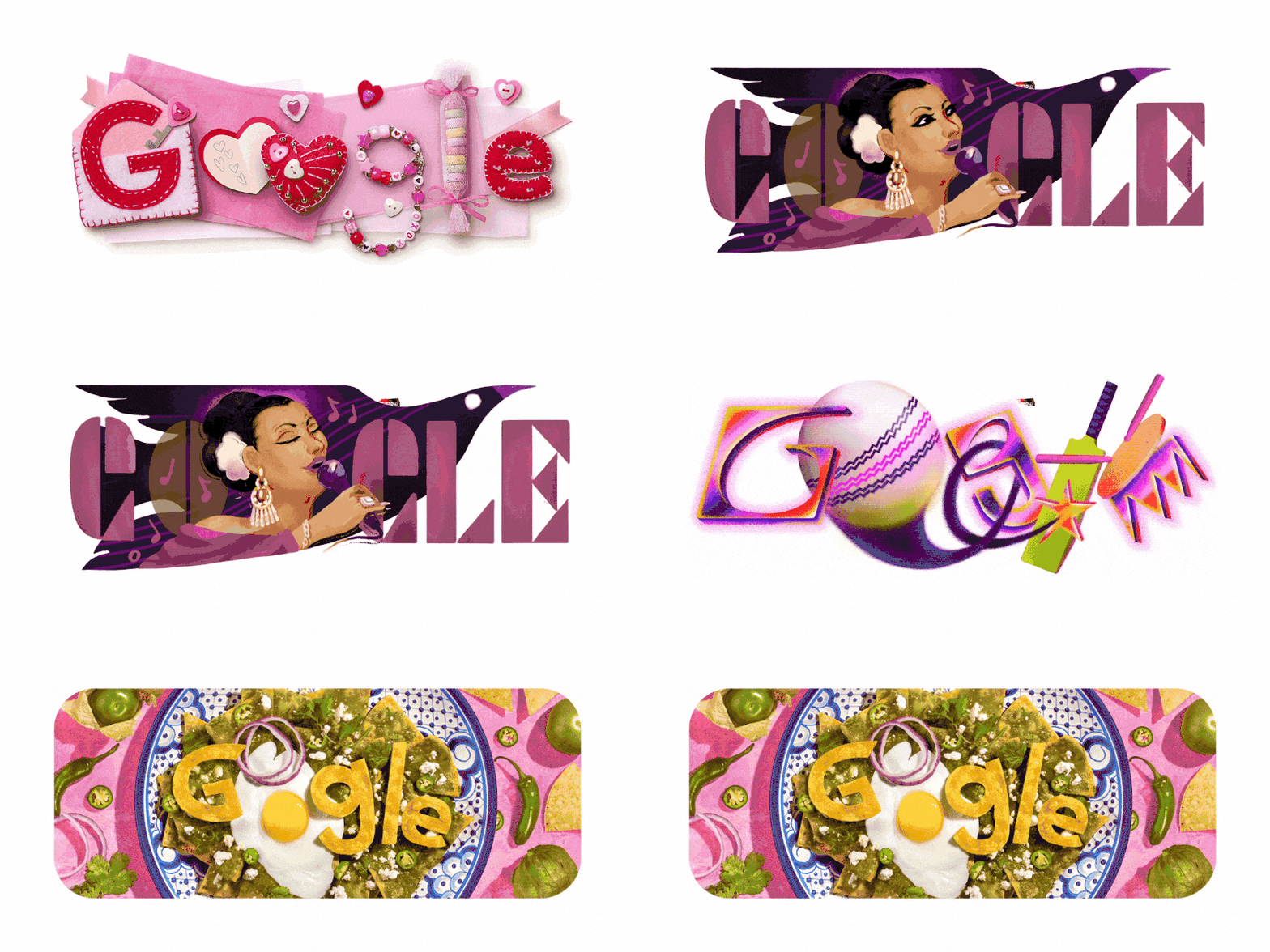
Think about Google Doodles – the logo shifts frequently to celebrate events while remaining recognizable.
Tip: When deciding on a logo type, think about where your logo will appear (web, print, packaging), how simple or complex it can be, and whether it needs to stand alone without text. A clear choice here prevents designers from guessing and speeds up the creative process.
• Decide on a Design Style
Once you know the logo type, think about the overall visual personality. This is where words like modern, fun, or quirky start to make sense. A clear design style tells the designer how to shape your logo’s lines, colors, and typography so it reflects your brand’s character. Here’s a breakdown of common styles:
1. Modern:
It is minimal, clean, and often geometric. It works well for tech companies, fashion brands, or startups aiming for a sophisticated, cutting-edge feel.
Hay’s minimal black wordmark reflects modern elegance, simplicity, and premium fashion style.
HAY’s clean wordmark matches its Scandinavian modern design aesthetic, where simplicity and functionality are core values.
Colorful Figma logo signifies collaboration and ease that comes with the use of platform.
Figma’s simplified, geometric mark conveys digital precision and collaborative modern workflows. The abstract shape feels contemporary and scalable across platforms.
Green circular Spotify logo features three curved lines symbolizing music streaming.
Spotify’s logo, with its simple icon and clean lines, scales perfectly across apps and digital platforms while staying instantly recognizable.
Minimalist black “COS” wordmark represents the contemporary side of fashion.
COS’s minimal wordmark complements its architectural approach to fashion design, signaling refined simplicity. The design’s balance and spacing evoke a sense of calm, modern luxury.
2. Playful&Fun:
These logos use curves, bright colors, and casual type to feel approachable and lively.
LEGO’s bold white letters on a red background shouts playfulness.
LEGO communicates creativity and excitement through bold, colorful typography that immediately connects with children and families.
Fanta logo with bold white letters, blue shape, and a green leaf above.
Fanta’s colorful, bubbly logo evokes fun and refreshment, aligning with its playful brand personality. The energetic shapes and bright colors speak directly to lighthearted enjoyment.
3. Quirky&Whimsical:
These designs rely on hand-drawn elements, unusual shapes, or unexpected compositions to feel unique and personal.
Tinybop logo with colorful top bars and a playful wind-up toy design.
Tinybop’s joyful logo uses soft, rounded forms that feel playful and child‑friendly, mirroring the brand’s interactive learning apps.
Minimal Blue Bottle Coffee logo with the namesake icon and minimal typography.
Blue Bottle Coffee’s quirky bottle icon feels friendly and slightly whimsical, reflecting its approachable specialty-coffee culture with personality.
Taco Bell logo features a stylized bell icon.
Taco Bell’s updated logo, with its playful, slightly abstract bell icon and vibrant colors, adds a fun and approachable vibe while staying modern and recognizable.
Elegant Maille logo with a gold crest and custom typography.
Maille’s hand-drawn crest style exudes artisanal charm and personality, reflecting its heritage in mustard and condiments.
Script-style “Blue Q” wordmark in black.
BlueQ’s playful wordmark and distinctive character icons instantly convey the brand’s irreverent, humorous personality. The logo’s quirky design reflects the fun, unconventional products it offers.
Bold circular “Petty Green” lettering arranged in a stacked design.
Pretty Green’s slightly decorative, retro‑inspired wordmark feels whimsical yet stylish, aligning with its fashion personality.
4. Luxury&Premium:
Luxury logos often feature elegant typography and restrained color palettes.
Iconic double-C Chanel logo.
Chanel’s black-and-white logo conveys timeless sophistication without needing embellishments, signaling exclusivity at a glance.
Minimalist Parisian fashion logo for Celine.
Celine’s stark, refined logotype reflects high fashion minimalism and timeless sophistication. The lack of ornamentation signals exclusivity.
Penhaligon’s logo reflects heritage, elegance, and timeless luxury.
Penhaligon’s combines a traditional serif with an ornate crest, communicating centuries of heritage behind its premium fragrances. The logo exudes elegance and timeless refinement.
Mikimoto wordmark reflects purity, elegance, and pearl craftsmanship.
Mikimoto’s clean, elegant wordmark reflects the purity and sophistication of its iconic pearls. The understated design signals high‑end craftsmanship and positions the brand as a benchmark of luxury jewelry.
5. Heritage&Traditional:
These logos lean on classic shapes, emblems, or serif fonts to communicate trust, stability, and craftsmanship.
Hudson’s Bay logo reflects heritage, trust, and retail authority.
As one of the oldest commercial brands in North America, Hudson’s Bay Company’s logo conveys centuries of trust and retail continuity. Its clean, classic design reinforces the brand’s long-standing authority in commerce.
Smithsonian sunburst symbolizes authority, knowledge, and historic credibility.
The Smithsonian’s iconic sunburst emblem communicates cultural authority, tradition, and enduring credibility. The logo reflects the institution’s role as a trusted custodian of knowledge and history.
Royal Mail logo featuring a royal crown above the brand name in red and gold.
The crowned emblem in Royal Mail’s logo embodies historical significance, state authority, and reliable service. It reflects the brand’s heritage as a cornerstone of British communication.
Classic black crest logo of Twinings with the text “Twinings of London.”
The Twinings classic wordmark paired with a traditional crest conveys long‑standing quality and trusted tradition. The elegant typography reinforces the brand’s reputation for premium teas for centuries.
6. Illustrative&Artistic:
Illustrative or artistic logos use custom illustrations or intricate details to create a distinctive, memorable look.
Bold wordmark logo of Patagonia displayed in a simple black serif font.
The crowned emblem in Patagonia’s mountain silhouette combines bold graphic design with storytelling, reflecting outdoor adventure and environmental stewardship.
Vintage script logo of Café du Monde written in gold lettering.
The Café Du Monde’s hand-illustrated script logo conveys nostalgia and artisanal heritage. The artistic styling evokes the historic charm of its New Orleans coffee and beignet tradition.
Circular green and black emblem logo of Brooklyn Brewery with a stylized “B.”
The crowned emblem in Brooklyn Brewery’s stylized “B” with artistic typography reflects its independent, craft-oriented culture. The hand-crafted feel of the logo conveys creativity and local authenticity.
La Colombe logo evokes craftsmanship, quality, and artisanal coffee.
The La Colombe’s hand-drawn dove illustration evokes artisanal coffee craftsmanship and a light, uplifting experience. The artistic logo connects directly to the brand’s dedication to quality and design.
Tip: Don’t just say “we want it modern” or “fun.” Describe why modern is meant to signal innovation, efficiency, or sophistication? Is fun meant to feel approachable, exciting, or playful? Adding a sentence about the feeling you want your audience to have can save hours of back-and-forth with designers.
• Logo Colors
Colors are one of the most powerful ways a logo communicates emotion before a single word is read. Each color evokes specific feelings, and choosing the right palette helps ensure the logo aligns with your brand’s personality and audience expectations.
1. Red:
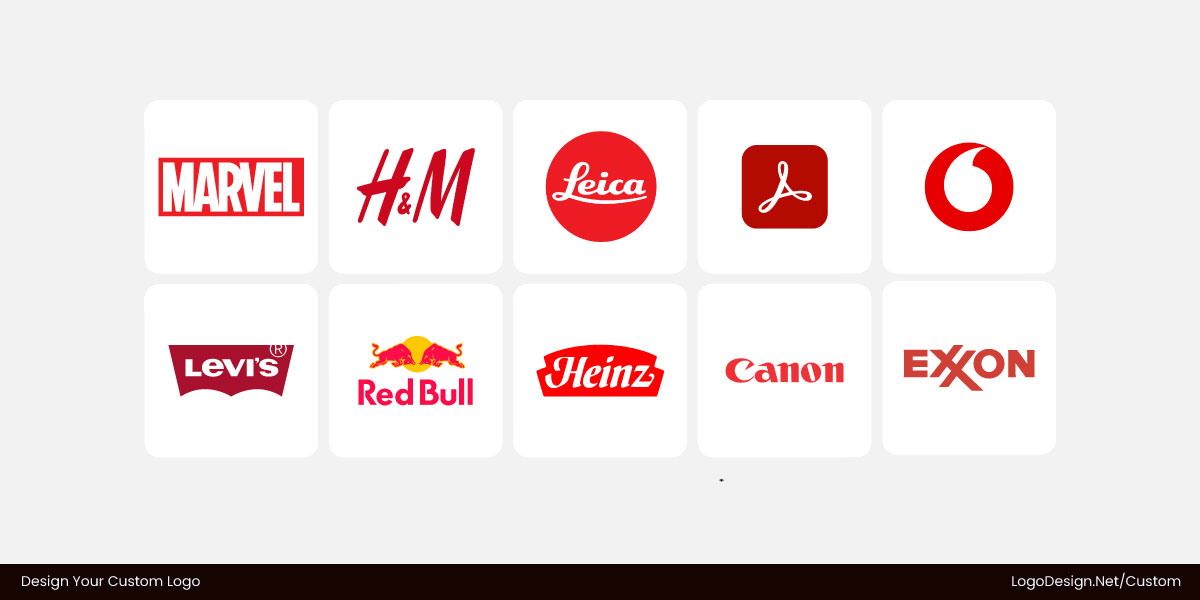
Brands using red to represent energy, passion, and excitement.
Passion, energy, excitement, and urgency. Bold red logos are often used for brands that want to grab attention or convey recklessness.
2. Blue:
Brands using blue to communicate trust, reliability, and professionalism.
Trust, stability, professionalism, and calm. Popular among tech companies, finance, and healthcare brands.
3. Green:
Brands using green to symbolize growth, health, and nature.
Growth, health, nature, and sustainability. Common for eco-friendly, wellness, or organic brands.
4. Yellow:
Optimism, warmth, friendliness, and creativity. Vibrant yellow logos work well for playful, energetic, or approachable brands.
5. Orange:
Brands using orange to show creativity, enthusiasm, and fun.
Fun, enthusiasm, confidence, and affordability. Often bridges the gap between youthful and professional tones.
6. Purple:
Brands using purple to convey luxury, creativity, and imagination.
Luxury, creativity, imagination, and wisdom. Frequently used for premium, artistic, or innovative brands.
7. Black:
Brands using black to represent elegance, power, and sophistication.
Sophistication, authority, elegance, and simplicity. Common in luxury, high-end, or minimalist designs.
8. White:
Brands using white to represent simplicity, purity, and minimalism.
Purity, clarity, simplicity, and balance. Often paired with darker tones to create contrast and space.
9. Brown:
Brands using brown to convey reliability, warmth, earthiness, and tradition.
Earthiness, reliability, and warmth. Suitable for heritage, artisanal, or rustic brands.
10. Multi-color palettes:
Brands using multiple colors to show diversity, innovation, and vibrancy.
Can express diversity, fun, and adaptability, especially for brands that want a vibrant, energetic presence.
• Logo Typography
Once you’ve chosen colors, typography is the next major tool in shaping perception. Fonts convey personality, hierarchy, and readability, and selecting the right type ensures your logo speaks in the right tone. Major types include:
1. Serif Fonts:
Brands using serif fonts with small strokes on letters to convey tradition, elegance, and authority.
Fonts with small lines or strokes at the ends of letters. They convey tradition, authority, and elegance, which is why brands rely on them to communicate credibility and timelessness.
2. Sans-Serif:
Brands using clean, simple fonts without strokes to create a modern and minimal look.
Clean, modern fonts without decorative strokes. Communicate simplicity, innovation, and approachability. Brands use sans-serif typefaces to convey a modern, sleek, and user-friendly image.
3. Script:
Brands using cursive or handwritten-style fonts to express elegance, creativity, and personality.
Flowing, cursive-like fonts that evoke elegance, creativity, or a personal touch. Fashion and beauty brands often use script to add personality and a whimsical, friendly feel instantly recognizable style.
4. Display&Decorative:
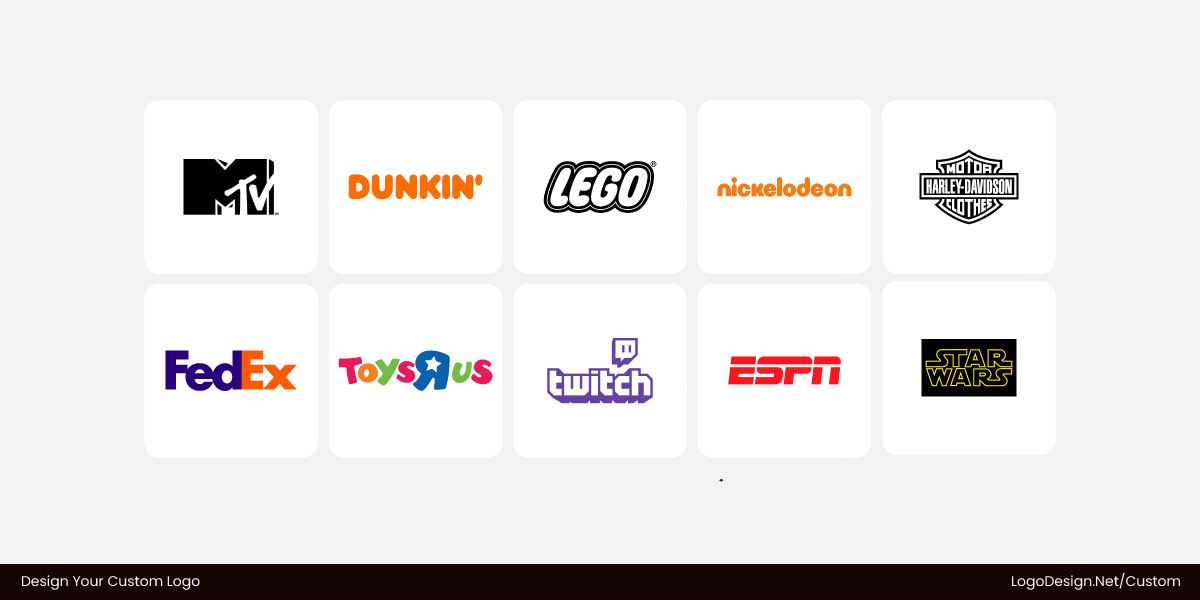
Brands using bold, decorative fonts designed to be unique, eye-catching, and expressive.
Unique, attention-grabbing fonts are used for branding headlines or distinctive logos. They carry a strong personality but should be used sparingly to maintain readability.
5. Slab Serif:
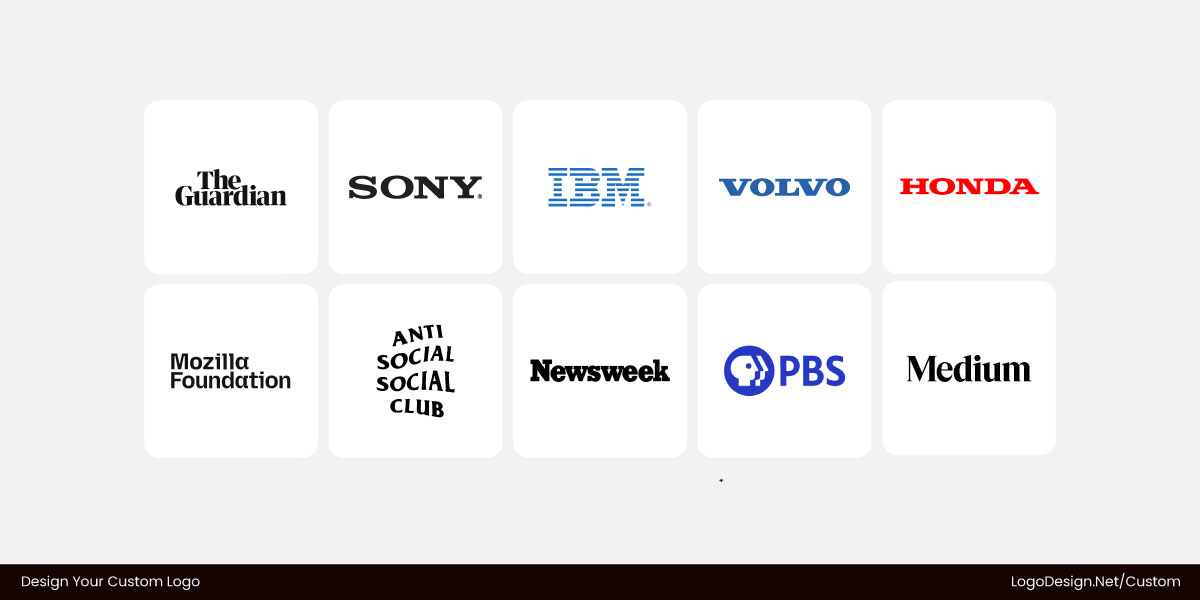
Brands using structured, evenly spaced fonts to convey technology, precision, and modernity.
Blocky, bold serifs that convey strength, confidence, and stability. They are ideal for brands needing a grounded, authoritative presence.
By thoughtfully pairing colors with the right typography style, you can ensure your logo communicates exactly the personality, tone, and emotions your brand wants to project. For example, combining a bold sans-serif with a vibrant orange conveys energy and modernity, while a serif font with deep navy communicates reliability and sophistication.
• Gather Inspiration and References
Providing visual references can help a designer understand what appeals to you—but it’s crucial to explain why you like them.
- Collect logos, colors, or typefaces you admire.
- Highlight what works: Is it the simplicity? The color palette? The symbol?
- Clarify what to avoid to prevent accidental copying.
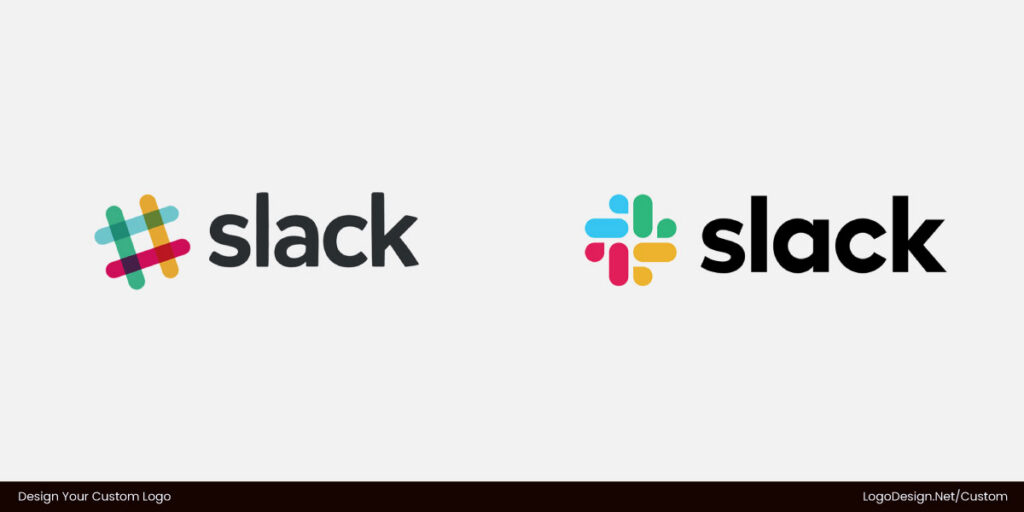
Logo redesign showing the evolution of the Slack brand logo.
For instance, Slack redesigned its logo from a busy, hash-shaped pattern to a simpler, cleaner mark. Inspiration came from digital accessibility and versatility, with a clear focus on simplicity.
Quick Tip: Avoid phrases like “make it modern” or “make it pop.” Instead, describe personality traits, audience reactions, and the feeling you want the logo to evoke. For instance, “We want a vibrant and playful logo that feels approachable to young urban professionals.”
Step 3: Clarify Timing, Budget, and Real-World Use
Once your brand and visual direction are clear, the final part of a logo brief covers practical realities. This is where you set expectations around schedule, budget, usage, and deliverables. Designers or design agencies do their best work when these boundaries are defined early. It prevents misunderstandings and keeps the project moving smoothly.
• Set a Realistic Timeframe
Every professional logo project moves through structured phases: research, strategic exploration, concept development, refinement, and final production.
Sharing your timeline helps designers allocate resources properly and avoid rushed decisions.
- Launch or deadline date
- Internal approval milestones
- Concept presentation date
- Revision windows
- Final file delivery deadline
- Level of flexibility, if any
For instance, a startup preparing for investor presentations may need a faster turnaround than a rebranding project tied to packaging cycles. Being transparent about urgency allows designers to adjust scope or resources accordingly.
• Define the Budget Range
Budget clarity removes guesswork and ensures proposals match expectations. A logo for a local service business and a full brand identity for a national company require very different levels of exploration and refinement.
Clearly outline:
- Estimated budget or budget range
- Whether the budget covers logo only or full brand identity
- If brand guidelines are included
- Number of initial concepts expected
- Number of revision rounds
- Flexibility for expanded scope
Also consider project complexity:
- Custom illustration or icon design
- Custom typography or hand-lettering
- Motion logo version
- Sub-brand architecture
- Additional brand assets (color system, typography system)
Clear budgets help designers suggest the right approach, whether that means a streamlined process or deeper strategic exploration.
• Practical Requirements and Usage
Logos rarely live in one place. Explaining where and how yours will appear helps designers create something functional across real-world contexts.
Mention key uses such as:
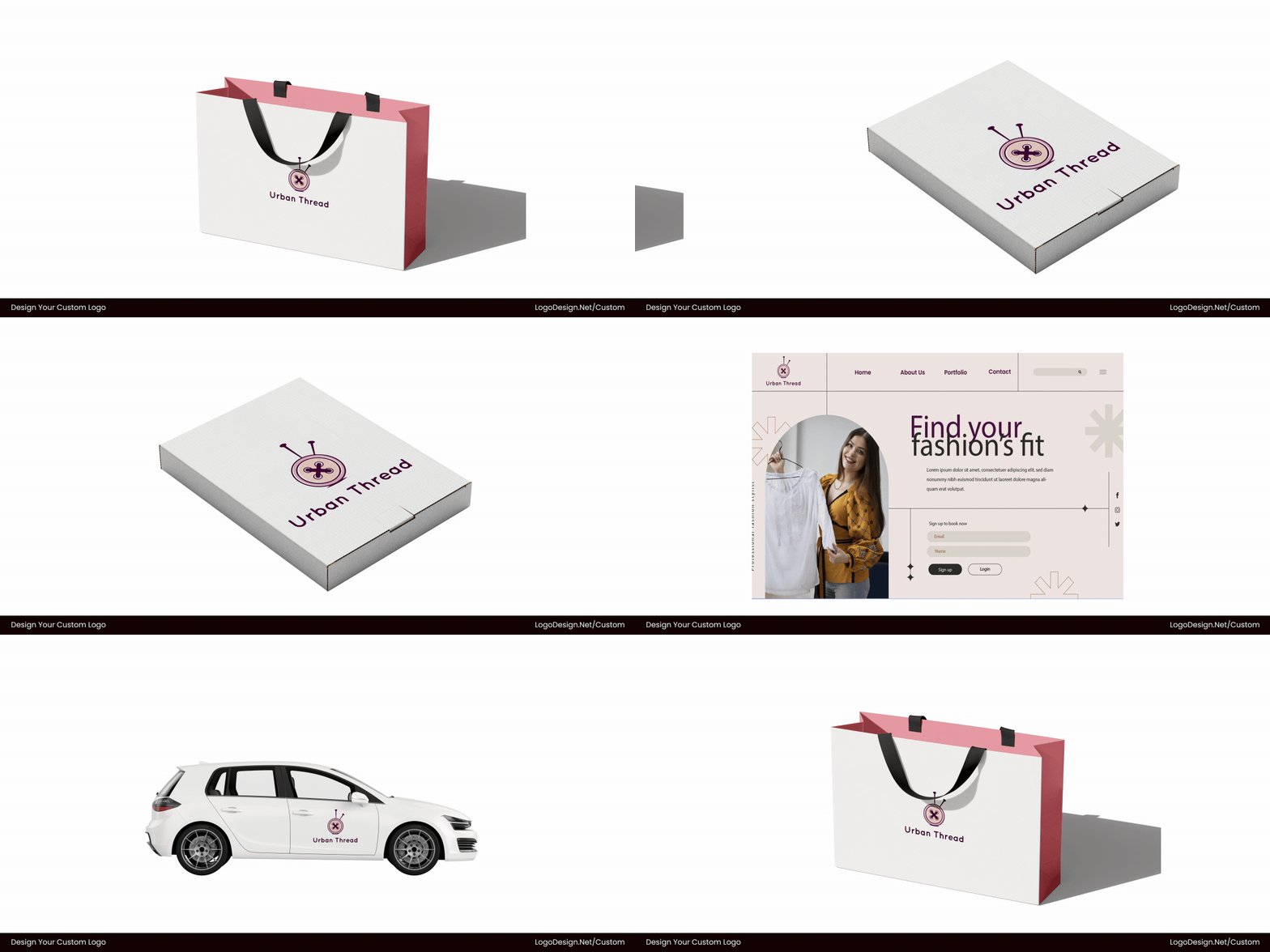
Logo packaging for the Urban Thread fashion brand.
- Website and social media
- Packaging or labels
- Signage or storefront
- Vehicle graphics
- Business cards and stationery
- App icons or digital platforms
- Merchandise or uniforms
- Embroidery or screen printing
A logo destined for embroidery or small app icons must remain legible at tiny sizes, while a storefront sign may allow more detail. These realities shape design decisions from the start.
• Deliverables and Expectations
Finally, clarify what you expect to receive at the end of the project. This ensures both sides define “finished” the same way.
Common deliverables include:
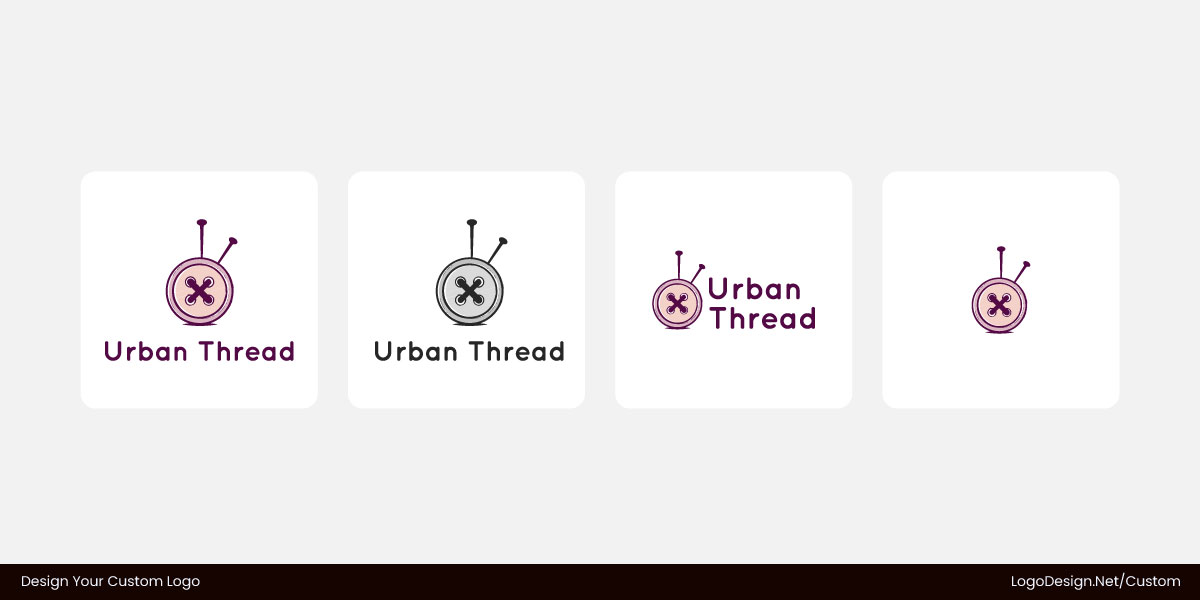
Different logo variations of the Urban Thread brand, including icon-only and text-based versions.
- Vector files (AI, EPS, SVG)
- Web-ready formats (PNG, JPG, WebP)
- Full-color, black, and white versions
- Horizontal and stacked layouts
- Icon or favicon version
- Print-ready files
You may also request:
- Brand guidelines PDF
- Typography recommendations
- Color codes (RGB, CMYK, HEX, Pantone)
- Social media profile versions
• Ownership and Usage Rights
Clarify who will legally own the final logo upon completion of the project and payment is made. Specify whether full copyright transfer is included or if usage is granted under a licensing agreement.
Clarify legal expectations upfront:
- Full copyright transfer or usage license
- Trademark readiness
- Geographic usage rights
- File ownership after final payment
Clear ownership terms protect both parties and prevent future disputes.
When the timeframe, budget, usage, and deliverables are clear, the designer can focus fully on creativity instead of logistics. This last step turns a good brief into a professional one—and greatly increases the chances of a logo that works everywhere it needs to.
Copy-and-Use Logo Design Brief Template
If you are not sure where to start, a simple fill-in template can make the process easier. You can copy this into a document or email and complete it in a few minutes. It covers the key information designers need while leaving room for your brand’s personality and preferences.
Logo Design Brief Template
1. Business Overview
- Business name:
- Industry:
- Location/markets served:
- Tagline or slogan (if any):
- What you offer:
- Mission or core values:
- Who you serve (age, role, lifestyle, etc.):
- What matters to them:
- How you want them to feel about your brand:
- 3–5 words that describe your brand:
- Brands or styles you like:
- Brands or styles you want to avoid:
- Main competitors:
- How you differ from them:
- Desired positioning (premium, accessible, bold, etc.):
2. Visual Direction
- Preferred logo type (wordmark, icon, combination, etc.):
- Color preferences or restrictions:
- Overall style (modern, playful, luxury, etc.):
- Typography feel (serif, sans-serif, script, etc.):
- Inspiration or references (if any):
- Anything to avoid:
3. Timing, Budget, and Use
- Project start date:
- Concept review date:
- Final delivery deadline:
- Budget or budget range:
- Where the logo will appear (web, social, print, signage, packaging, etc.):
- Required file formats (AI, EPS, PNG, SVG, etc.):
- Versions needed (color, black, white, icon, etc.):
You can adjust or expand any section based on your project. Even a brief filled out with short phrases gives designers a clear starting point and reduces rounds of revisions later.
The Final Word on Logo Briefs
A great logo starts with a great brief. When you clearly share your brand story, style, and goals, designers can create something that truly fits your vision. Skip the back-and-forth and bring your ideas to life—try LogoDesign.Net’s logo maker or launch a logo design contest today, and watch your perfect logo take shape.