Designing a massage logo? Let colors hug, symbols speak, and your brand shine—here’s how to turn ordinary logos into little invitations to relax and unwind.
Quick test: a leafy icon with a pair of hands—what pops into your mind? If you’re like most people, you instantly think “massage” or “wellness.” That’s the power of a good logo—it communicates without words and sets the tone for what clients can expect.
In the massage industry, logos do more than look pretty; they hint at calm, trust, and professionalism. A soft wave can suggest relaxation, a strong curve might signal therapeutic strength, and even color choices—from soothing greens to gentle purples—can shape perception before anyone steps inside. Crafting a logo that hits the right note takes thought, strategy, and a touch of creativity, making every design choice count.
The fun part? There’s no single formula. Some of the most memorable massage logos break the rules, while others prefer to go by the book. In this guide, we’re going to discuss it all.
The Visual Language of the Massage Industry
Before you pick up a pen or open a design file, it helps to see the bigger picture. The massage and wellness industry is growing fast, and so is the way brands communicate visually. People today don’t just look for a service; they look for an experience. That’s why logos in this space tend to lean toward:
- Calm
- Healing
- Trust
- Rejuvenation
These are traits that mirror what clients want from a massage session. Designers often use natural symbols like lotus flowers, flowing lines, and hands to signal care and relaxation right away. These visual cues help someone understand what the business offers without reading any text.
A few recognizable brands show how powerful this can be.
VIVAMAYR is an elite Austrian medical resort specializing in detoxification and therapeutic massage protocols. Its logo is a minimalist wordmark in a signature brick red, using clean, widely-spaced uppercase typography. This clinical, sans-serif design reflects the brand’s focus on professional medical precision and modern luxury.
Another strong example is the wellness platform Soothe, which combines its wordmark with a simple, abstract mark (often shown vertically with versions of the brand name). Its design relies on simplicity and balance, key traits in wellness branding that imply ease and user‑friendly service. Because Soothe operates digitally and caters to convenience, its logo leans toward a neutral, clean visual identity that matches modern wellness expectations.
These examples show how logos can signal different service types within the broader massage space.
Types of Massage Logos
In practice, massage and wellness logos often fall into a few recognizable visual styles. Each reflects a different kind of client experience, and several well-known brands illustrate how these visual cues work.
• Traditional spa brands
They use natural motifs such as lotus flowers, leaves, and stones to evoke calm and rejuvenation.
A clear example is Mandara Spa. Its logo features a stylized lotus flower, a symbol long associated with balance, renewal, and calm in wellness traditions. The floral emblem instantly signals a tranquil spa environment and aligns with the brand’s resort-style massage experiences offered in luxury hotels around the world.
• Therapeutic massage businesses
Therapeutic massage businesses employ a straightforward, minimal-symbol style to convey dependability and professionalism.
Elements Massage takes a much simpler route. The brand relies mainly on a clean wordmark with minimal decorative elements. This understated approach communicates expertise and reliability, which fits a therapeutic practice where clients often seek targeted relief rather than a spa escape.
• Mobile or modern wellness services
They favor clean, versatile marks that work both on apps and physical signage.
A strong modern example is Urban, a platform that allows customers to book massages and beauty treatments at home through an app. Its logo uses a simple monochrome wordmark with a stylized U icon. The clean design works well across digital interfaces, reflecting the brand’s focus on convenience and modern wellness services delivered on demand.
Understanding these associations helps you make intentional choices so your logo clearly fits your niche and brand promise.
A Step-by-Step Guide to Creating a Massage Logo
Designing a massage logo rarely starts with sketching icons. The strongest logos usually come from careful observation and a bit of curiosity about the industry itself. Before shapes, colors, or fonts enter the full picture, it helps to understand what already exists in the market and what kind of experience your business wants to communicate.
A spa that promises deep relaxation will look very different from a clinic focused on sports recovery. Taking time to study the landscape makes the design process clearer and prevents your logo from blending into the sea of generic leaf-and-hands symbols.
Step 1: Research and Inspiration
Before sketching anything, spend time studying how massage and wellness brands present themselves. Look at local spas, therapy clinics, and wellness centers to see what visual patterns appear again and again. Many brands rely on calming imagery from nature, soft color palettes, and gentle typography because these elements quickly signal relaxation and care. At the same time, understanding your target audience matters. A luxury spa may lean toward elegant, serene imagery, while a sports massage clinic might prefer cleaner, stronger visuals.
For example, Banyan Tree Spa uses a tree symbol in its logo, drawing directly from nature to represent balance and holistic wellness.
In contrast, Hand & Stone Massage and Facial Spa’s logo is primarily a wordmark that focuses on clean typography to project professionalism. It, however, includes subtle hand-and-stone imagery in its branding, reinforcing the tactile and therapeutic nature of its services.
Gathering references like these on a mood board helps clarify which visual direction feels right before design begins.
Step 2: Choosing the Right Logo Type
Once you understand the visual direction, the next step is deciding what kind of logo structure fits your brand. Different logo types communicate different things, and in the massage industry, the choice can influence how professional, calming, or modern a business appears.
Here are the most common picks:
• Wordmark
A wordmark logo relies entirely on the business name in a distinctive type style.
MassageLuXe is a good example. The logo is primarily typographic, with the brand name styled so that the “LuXe” portion stands out visually. This approach keeps the brand name front and center, which helps recognition as the business grows. The downside is that without a symbol, it may feel less expressive in visual marketing.
• Symbol / Pictorial Mark
A symbol or pictorial mark uses a recognizable graphic instead of text.
A good example is Angsana Spa. The brand uses a stylized frangipani flower as its main icon, a symbol widely associated with tropical wellness and relaxation. The floral mark instantly conveys a sense of calm, nature, and resort-style spa experiences, making it easy for people to associate the brand with luxury spa treatments and rejuvenation.
• Combination Mark
A combination mark blends both text and a symbol.
Massage Heights uses its brand name alongside a small graphic mark in its branding system. This structure offers flexibility because the icon and the name can appear together or separately across signage, websites, and promotional materials. For massage businesses, this format works well since the symbol can quickly signal relaxation or wellness while the name builds brand recognition.
• Emblem
An emblem logo places the name inside a badge or contained shape.
Thai Square Spa uses a crest-style emblem that feels refined and traditional. Emblems can convey heritage and luxury, though they sometimes lose clarity when scaled down.
• Abstract Mark
An abstract mark relies on shapes and forms rather than literal symbols.
Zen Massage USA’s logo features a geometric, abstract illustration of a bright orange flower, which doesn’t directly depict a hand or stone but still communicates energy, balance, and calm. The bold color and clean geometry give the brand a modern, memorable look that works everywhere. Abstract marks like this stand out visually, though they often require more brand exposure before people immediately associate the shape with the service offered.
• Lettermark / Monogram
A lettermark or monogram logo uses initials instead of the full brand name. This can be useful when the business name is long or difficult to remember, or when the brand wants a clean, minimalist identity.
The Massage Envy logo is a classic lettermark that centers on an interlocking "ME" monogram. This design cleverly serves as an abbreviation for the brand name while doubling as a symbol for "me-time," emphasizing the personal nature of self-care and wellness.
• Mascot
Some wellness brands also experiment with mascot logos, where a character represents the brand. These are less common in the massage industry but can work well for playful or family-friendly wellness services.
For example, SiaaSoo uses a friendly elephant mascot in its branding, giving the business a warm, approachable personality while symbolizing strength and wellness. Mascots like this create memorability and a humanized feel, though they may feel out of place for businesses positioning themselves as clinical or luxury services.
Step 3: Selecting Colors That Soothe and Attract
Color is a powerful part of any massage or wellness brand. It’s not just about looking pretty—color shapes perception, communicates mood, sets expectations, and can even influence how relaxed or confident a client feels before they book a session. Choosing the right color palette helps your logo resonate emotionally and ensures your brand stands out in a crowded wellness market.
•Greens: Nature, Balance, and Renewal
Green is strongly associated with nature, growth, and balance, making it a natural choice for massage and wellness brands that emphasize organic, holistic, or eco-friendly experiences. It conveys calmness, rejuvenation, and a sense of harmony, helping clients immediately feel that your service supports their well-being.
Massage Green SPA uses green prominently in its name and branding. The green in its logo and visual identity signals relaxation, organic wellness, and natural healing, reinforcing its promise of restorative experiences.
Massage & Myotherapy Australia incorporates green in its logo, representing growth, health, and professional care. The green element reinforces trust and wellness, reflecting the association’s focus on supporting massage and myotherapy practitioners across Australia.
The Oasis Day Spa features muted sage or sea foam green accents in its logo, suggesting a sterile, fresh, and professional environment.
Green shades also work well with neutral accents like beige or soft gray, creating a calming, nature-inspired palette that appeals to clients looking for rejuvenation.
• Blues: Calm, Trust, and Professionalism
Blue communicates tranquility, trust, and reliability. It’s especially effective for brands that want to feel professional and dependable while still delivering a calm, relaxing experience. Lighter blues feel soothing and approachable, while deeper blues suggest premium quality and stability.
Blue Haven Wellness uses cool blues to convey a serene and calming environment.
Bodymedics clinical massage uses blue in its logo to symbolize health, healing, and tranquility.
Seabreeze Therapeutic Massage uses deeper blue shades that hint at calm waters, giving a reassuring, trustworthy impression.
Blue works beautifully alongside neutral palettes or soft accent colors, reinforcing both professional reliability and emotional calm in wellness branding.
• Purples: Luxury, Creativity, and Balance
Purple often signals luxury, introspection, and spiritual well-being. It is commonly chosen by massage and spa brands aiming for a premium, refined, or slightly mystical feel. Muted or dusty purples are particularly effective at conveying calmness without feeling overwhelming.
Zen’d Out CBD uses a calm, purple-toned aesthetic to match the soothing nature of CBD massage.
Purple Mighty, a London-based mobile massage service, also uses bold purple in its identity to signify confidence and a premium, "mighty" service experience.
Sorbet, a well-known beauty and wellness franchise, uses a distinct, vibrant purple branding for its studios, which offer professional massage and skincare services.
Purple works best when paired with neutrals like soft gray or beige to avoid looking too intense and maintain a soothing visual identity.
• Neutrals: Warmth, Simplicity, and Elegance
Neutral colors—beige, taupe, soft gray—suggest understated sophistication, warmth, and simplicity. These tones let typography, symbols, and accent colors shine while creating a calm and grounded feeling for clients. Neutral palettes are versatile and timeless, making them perfect for boutique wellness brands.
Bare & Balanced Massage uses warm beige shades to communicate comfort and approachability.
Grand Central Bodywork uses a soft monotone, feather icon, conveying a luxury, neutral, and minimalist feel.
Sonoma Holistic Center uses muted, earthy neutrals that feel calm and grounded. The soft gray and beige tones help communicate serenity and professionalism, creating a welcoming atmosphere for massage, facials, and holistic wellness services.
Neutrals pair well with other color families and allow a logo to feel grounded, calming, and versatile across digital and print applications.
Color Palette Examples with HEX/RGB Codes
Colors are one of the first ways a massage or wellness brand communicates its mood and personality. These palettes are meant as inspiration for your logo, website, or marketing materials.
You can mix, match, or adapt these shades to suit your brand’s style while keeping the overall mood soothing and approachable.
Calming Green Palette
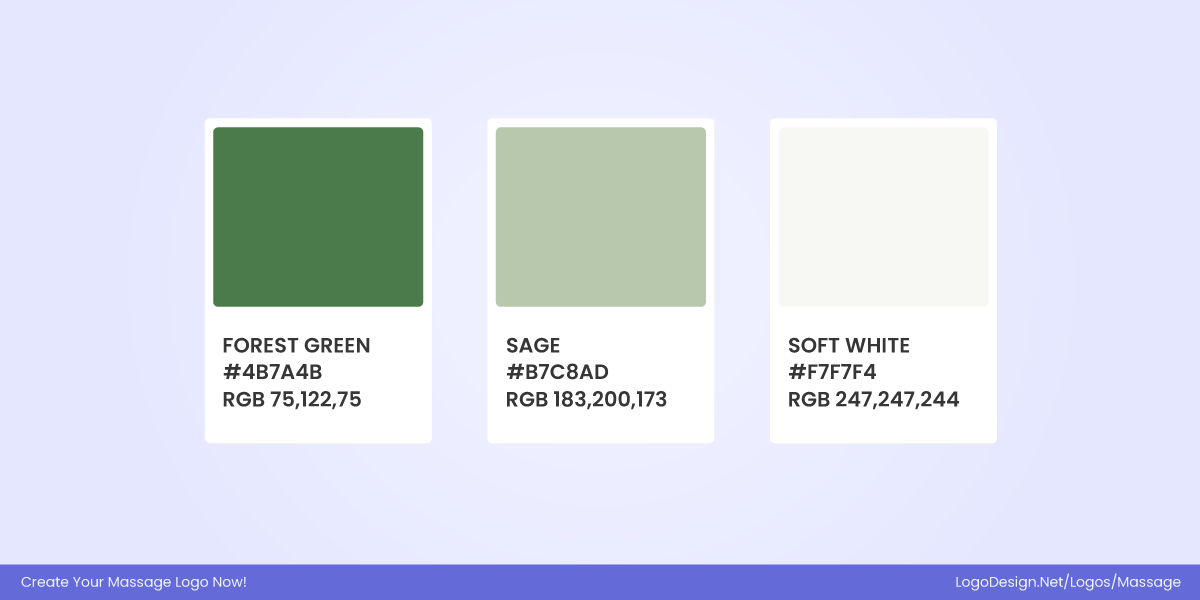
- Forest Green: #4B7A4B / RGB 75,122,75
- Sage: #B7C8AD / RGB 183,200,173
- Soft White: #F7F7F4 / RGB 247,247,244
Ocean Blue Palette
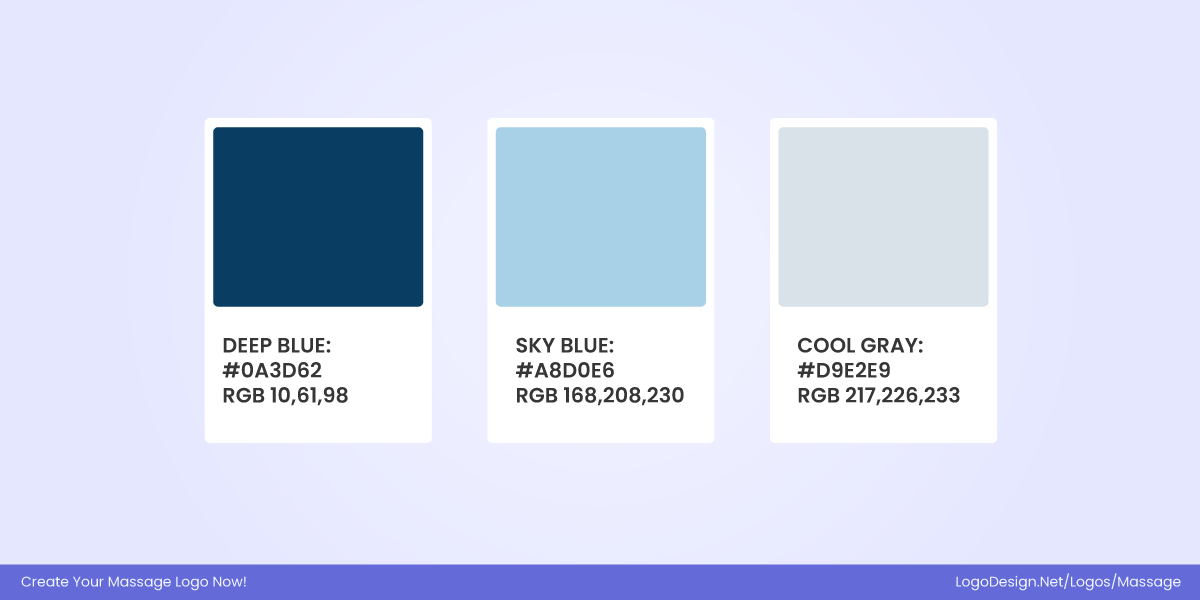
- Deep Blue: #0A3D62 / RGB 10,61,98
- Sky Blue: #A8D0E6 / RGB 168,208,230
- Cool Gray: #D9E2E9 / RGB 217,226,233
Relaxed Purple Palette
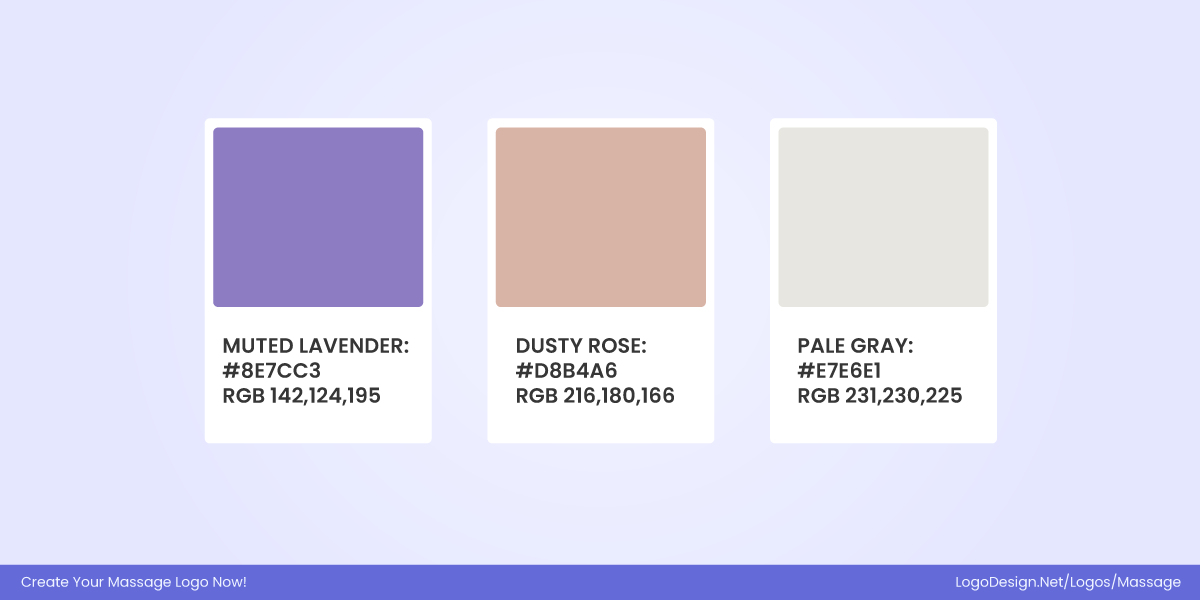
- Muted Lavender: #8E7CC3 / RGB 142,124,195
- Dusty Rose: #D8B4A6 / RGB 216,180,166
- Pale Gray: #E7E6E1 / RGB 231,230,225
Earth Neutral Palette
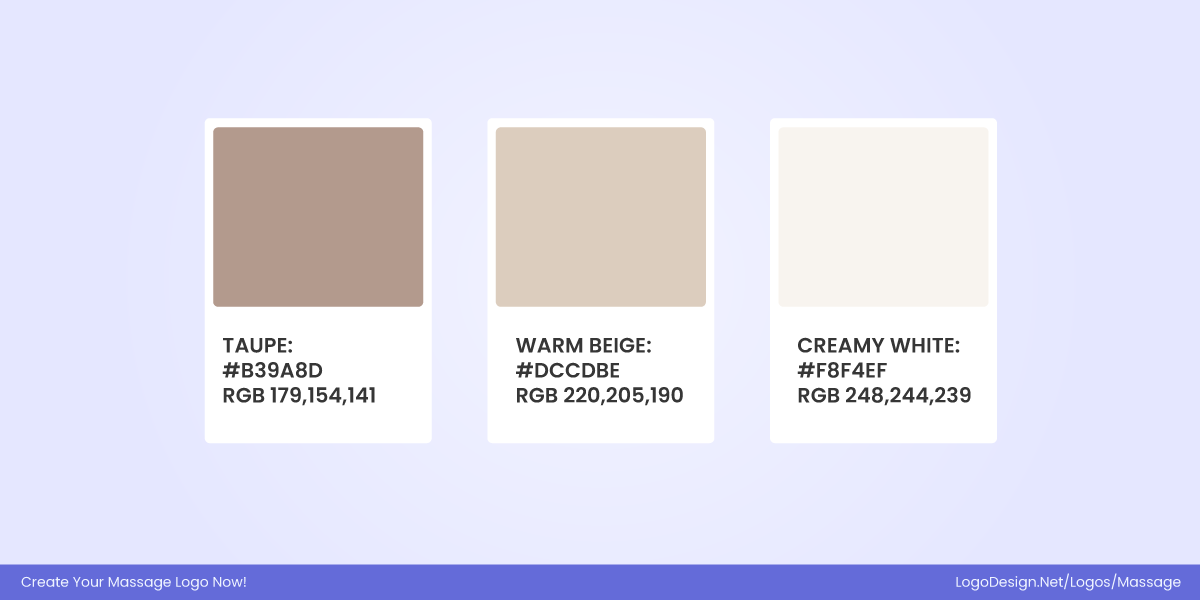
- Taupe: #B39A8D / RGB 179,154,141
- Warm Beige: #DCCDBE / RGB 220,205,190
- Creamy White: #F8F4EF / RGB 248,244,239
By thoughtfully combining these colors with your logo’s typography and symbols, you can craft a brand identity that immediately communicates calm, professionalism, and approachability, ensuring your clients feel at ease even before they book their first session.
Step 4: Choosing Fonts That Match the Brand Personality
Once you’ve settled on your logo type, colors, and overall visual direction, it’s time to think about typefaces. The fonts you choose influence how your brand feels — calm and elegant, modern and minimal, or warm and personal. In massage branding, the right typography supports your identity and makes your logo communicate clearly at a glance.
Below are the most frequent picks:
• Serif Fonts — Timeless and Trustworthy
Serif fonts have small finishing strokes on letters. They often feel classic, dependable, and professional — a good fit for massage businesses that emphasize expertise or therapeutic care.
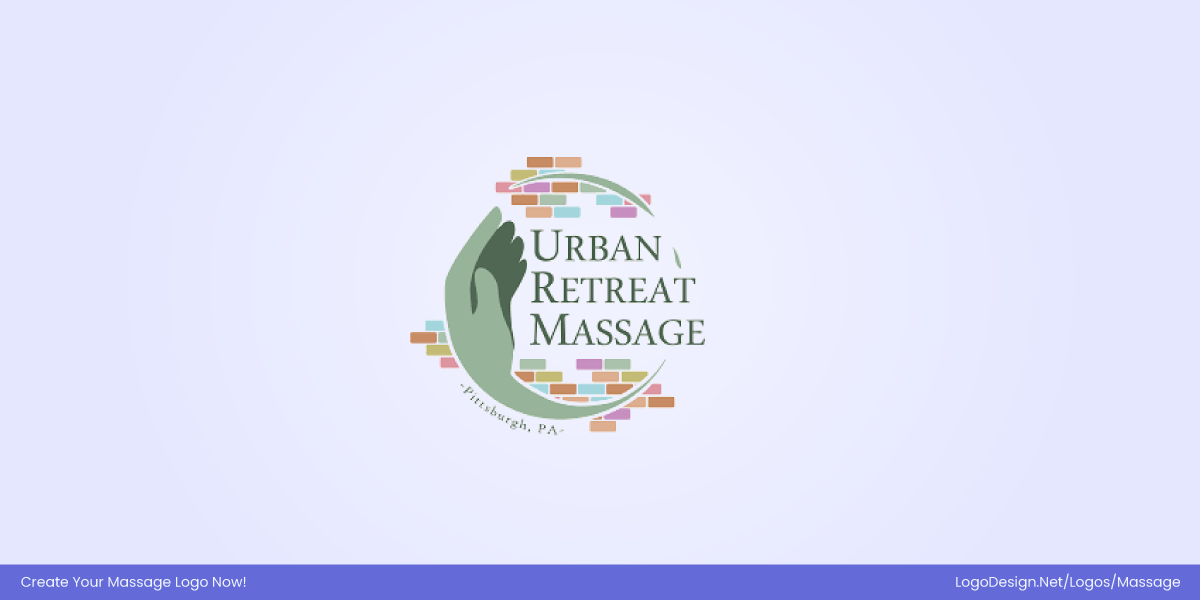
Urban Retreat Massage uses a refined serif in its signage and printed materials to convey professionalism and calm authority.
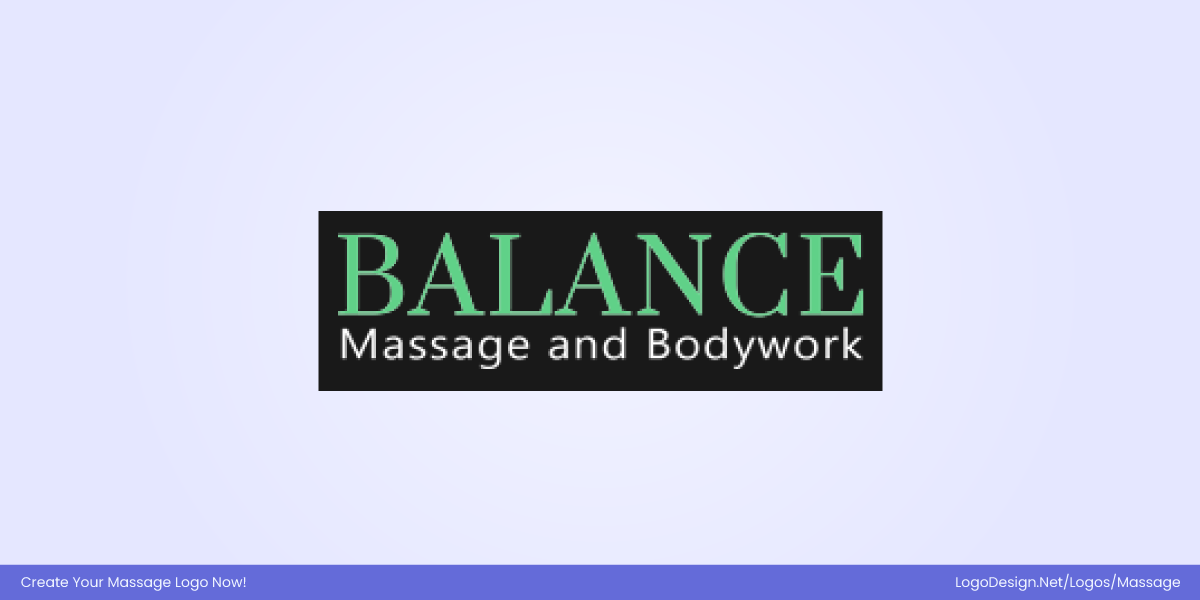
Balance – Massage and Bodywork pairs soft serif lettering with green tones to enhance a sense of tranquility and tradition.
• Sans-Serif Fonts — Clean and Contemporary
Sans‑serif fonts feel modern, open, and easy to read. They’re ideal for brands with a fresh, approachable identity.
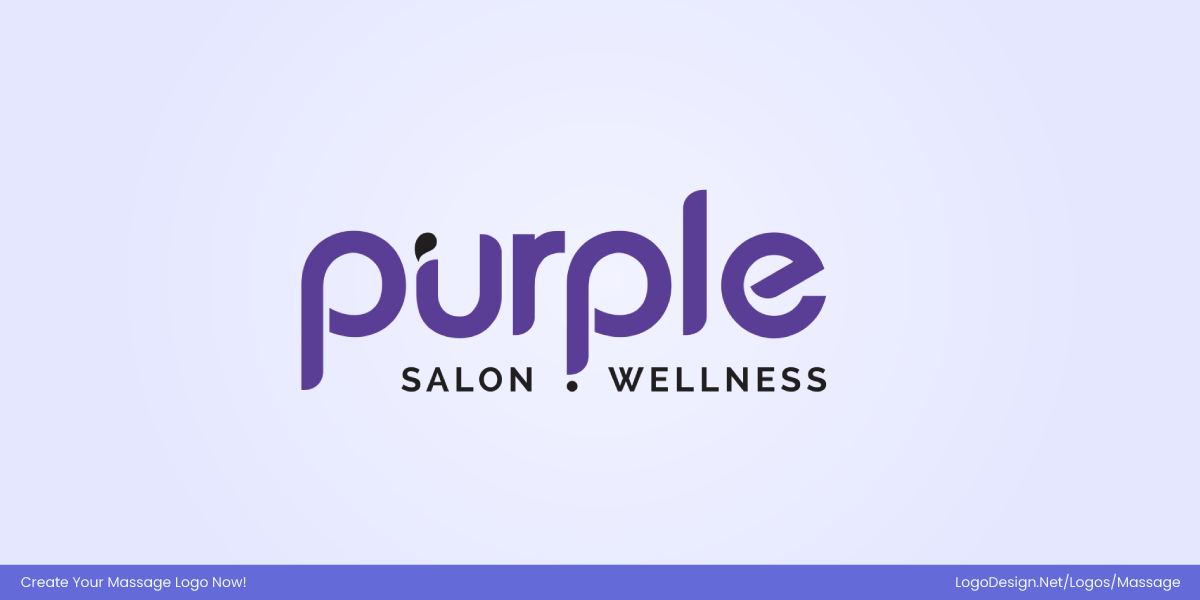
Purple Salon and Wellness uses a bold sans‑serif for clear legibility and a confident, modern vibe.
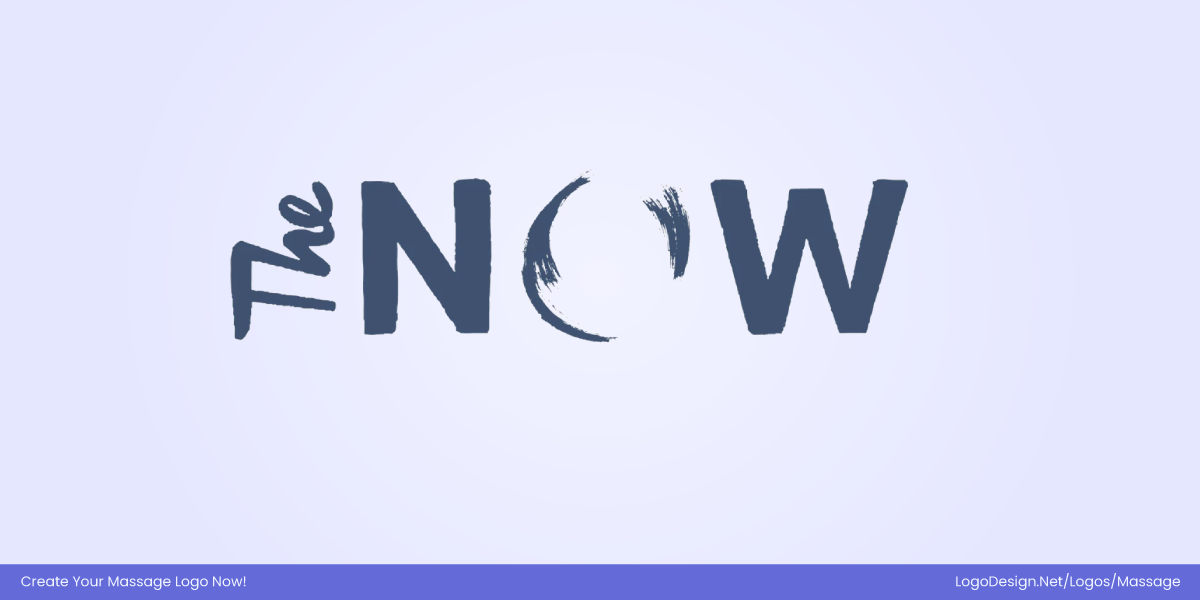
The NOW Massage features a highly minimalist, spaced-out sans-serif to create a trendy, boutique aesthetic that feels like a modern sanctuary.
• Script Fonts — Elegant and Personal
Script fonts mimic handwriting or calligraphy, adding fluidity, grace, and a human touch. They work well for brands that want to feel personal and calming.
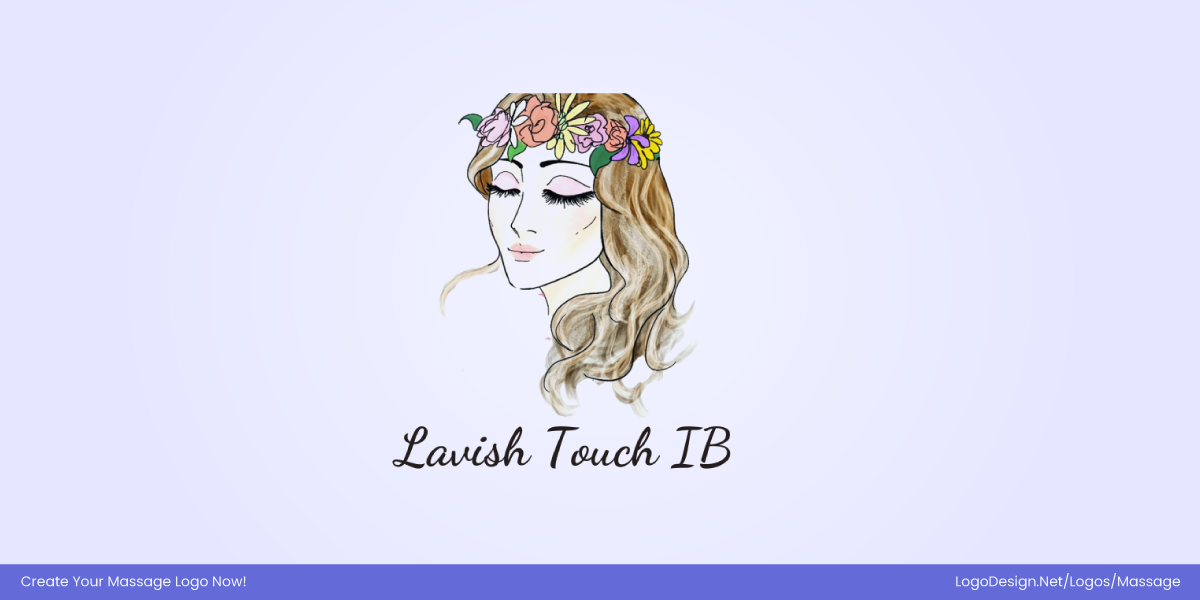
Lavish Touch IB logo features a soft script, reinforcing a sense of luxury and relaxation.
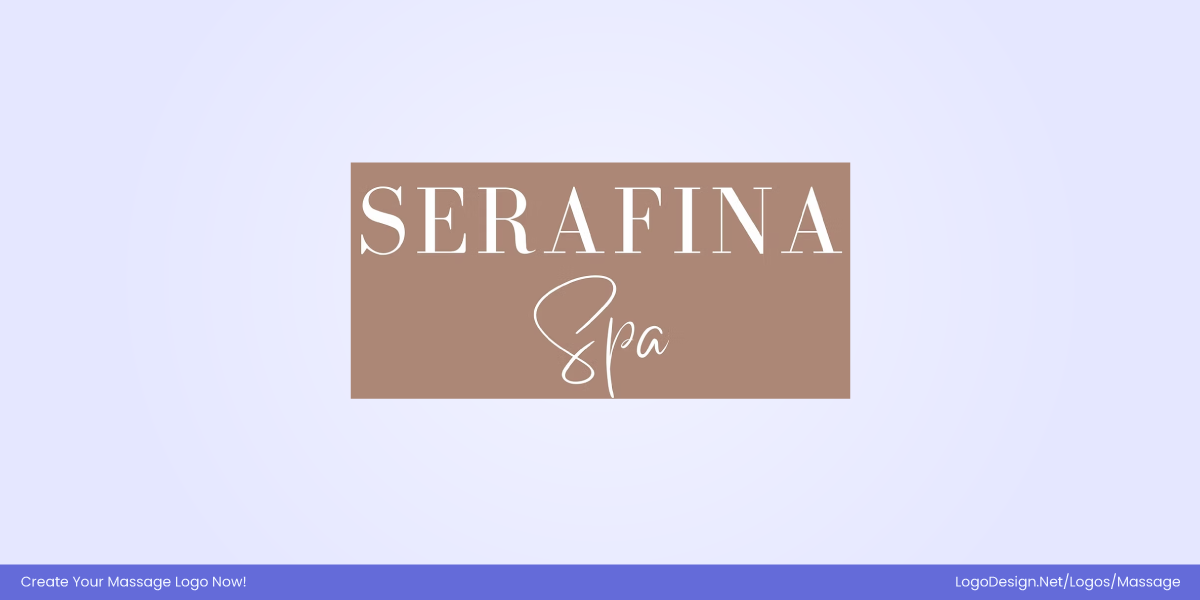
Serafina Spa employs calligraphic script to suggest a boutique, creative, and unique therapeutic experience.
Tips for Choosing Fonts That Work Well Together
Here are practical, easy‑to‑apply guidelines to make your typography feel intentional and balanced:
- Prioritize readability at all sizes: Test your fonts on signage, social icons, and business cards.
- Limit yourself to two fonts: Choose a primary for your logo and a secondary for supporting text — to keep things cohesive.
- Pair opposites thoughtfully: For example, a gentle script headline with a clean sans‑serif subtitle balances flair with clarity.
- Match the energy of your service: A luxury spa may lean into elegant scripts or refined serifs, while a modern wellness studio might choose a minimalist sans‑serif.
- Watch spacing and kerning: Even great fonts can look off if letters are too tight or too loose.
- Test in black and white: Doing so lets you judge the spacing and shapes in logos before color influences perception.
- Check performance across mediums: From web and print to signage and apparel, ensure the font holds up everywhere.
Typography might seem subtle, but it’s powerful. The right font choice strengthens your logo’s message, reinforces your brand personality, and helps clients feel the right thing — whether that’s calm, luxury, or comfort — before they even step inside.
Step 5: Designing Graphic Elements
A successful logo doesn’t rely on typography and color alone. The visual mark — the graphic element — is what catches the eye, conveys mood, and begins to tell your brand story before anyone reads a word. At this stage, you decide whether your logo will lean literal, symbolic, or completely abstract — and each choice sends a different message about your business.
Great graphic elements help a viewer feel your brand. In massage and wellness, that feeling is often calm, balanced, and reassuring. Whether you choose something familiar like hands or stones, something poetic like waves, or something completely abstract, the key is to make the symbol work in harmony with your colors and fonts. Let’s look at the common graphic elements used in the industry, along with some logo inspirations from LogoDesign.Net’s gallery.
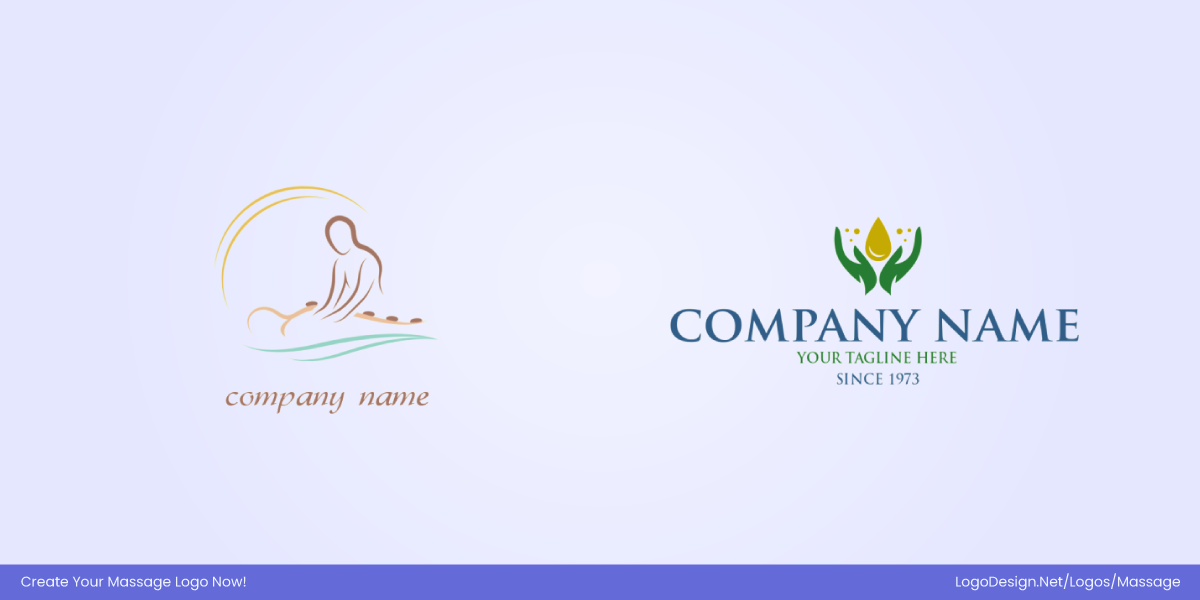
• Hands
Hands are the most literal and instantly understood symbol in wellness and massage branding. They communicate care, human touch, and healing without ambiguity. Well‑designed hand elements can feel nurturing and personal, which is particularly useful in therapeutic or hands‑on massage practices.
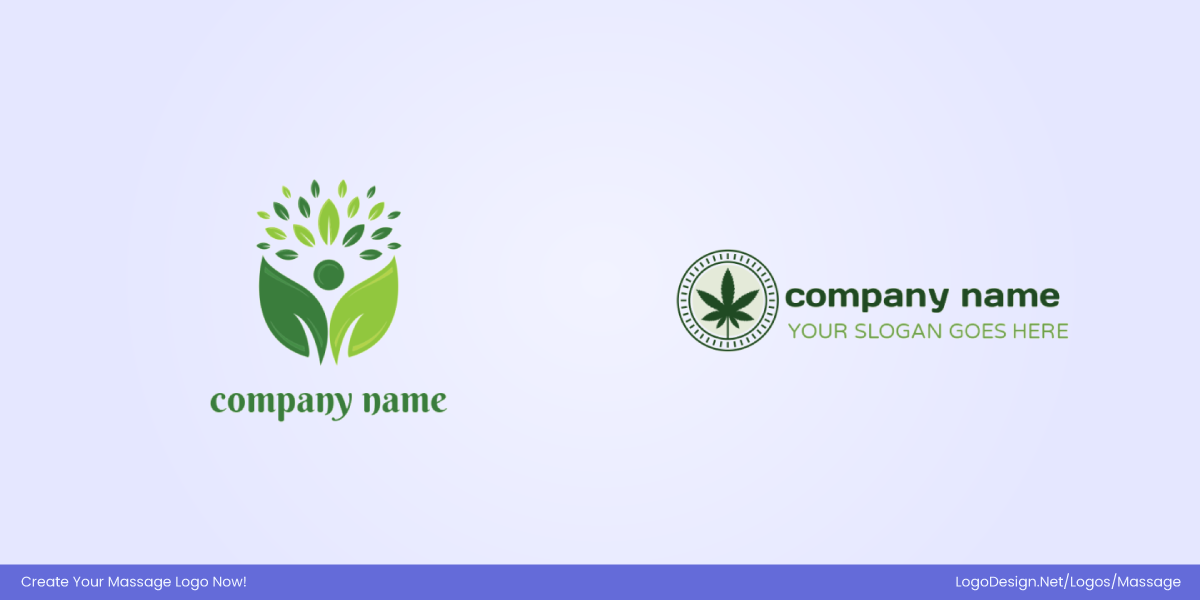
• Leaves and Nature Motifs
Leaves, branches, petals, and similar natural forms evoke growth, renewal, and holistic care. These symbols are common when a brand wants to align itself with organic, eco‑friendly, or holistic wellness services.
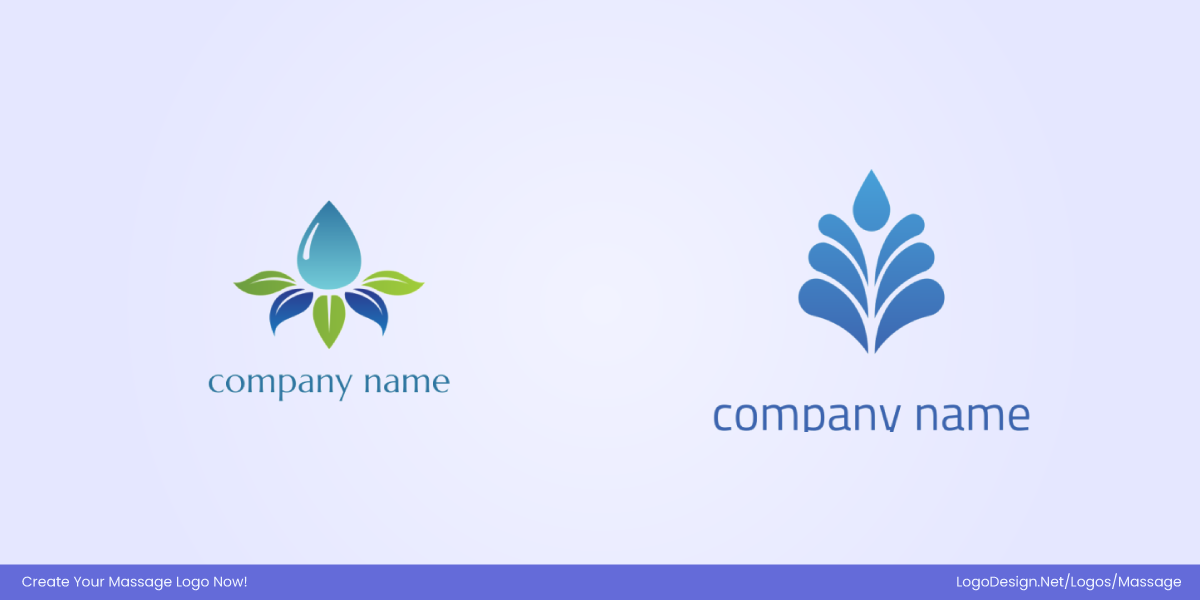
• Water and Waves
Water and wave imagery suggest flow, relaxation, and cleansing. These motifs are especially fitting for brands that combine massage with spa, hydrotherapy, aromatherapy, or body rituals.
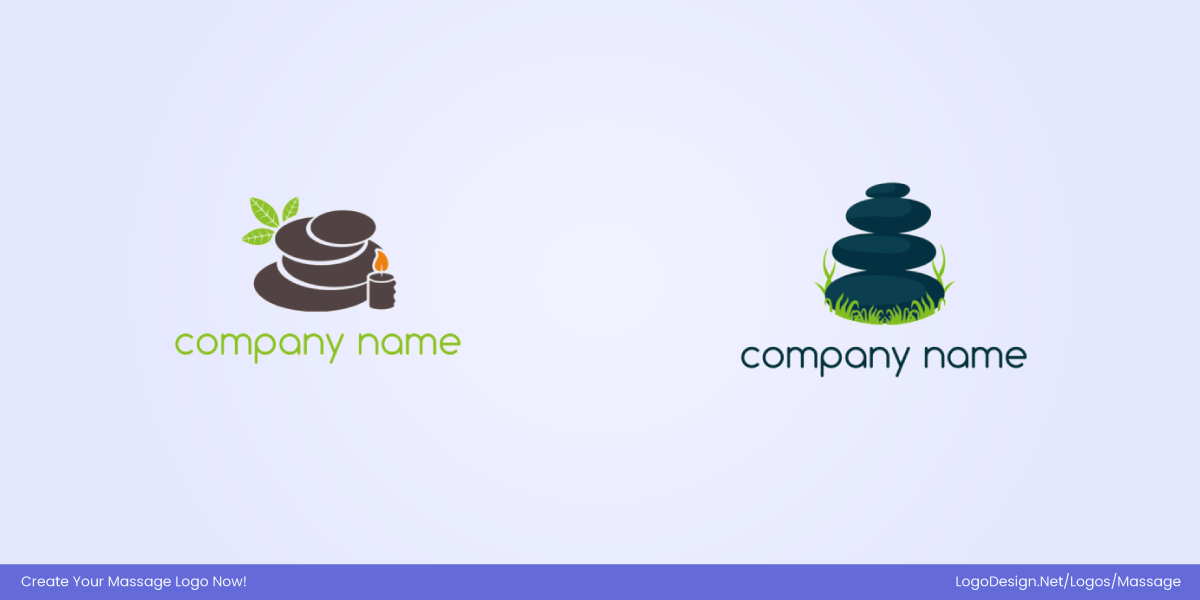
• Stones and Grounding Shapes
Stones, pebbles, and balanced geometric elements suggest stability, grounding, and therapeutic care. These are especially common for hot stone massage, deep tissue, or holistic wellness studios.
• Abstract Shapes
Abstract forms don’t represent anything literal but instead focus on feeling. These shapes can be curves, circles, or custom symbols that evoke balance, flow, or harmony without depicting any specific object.
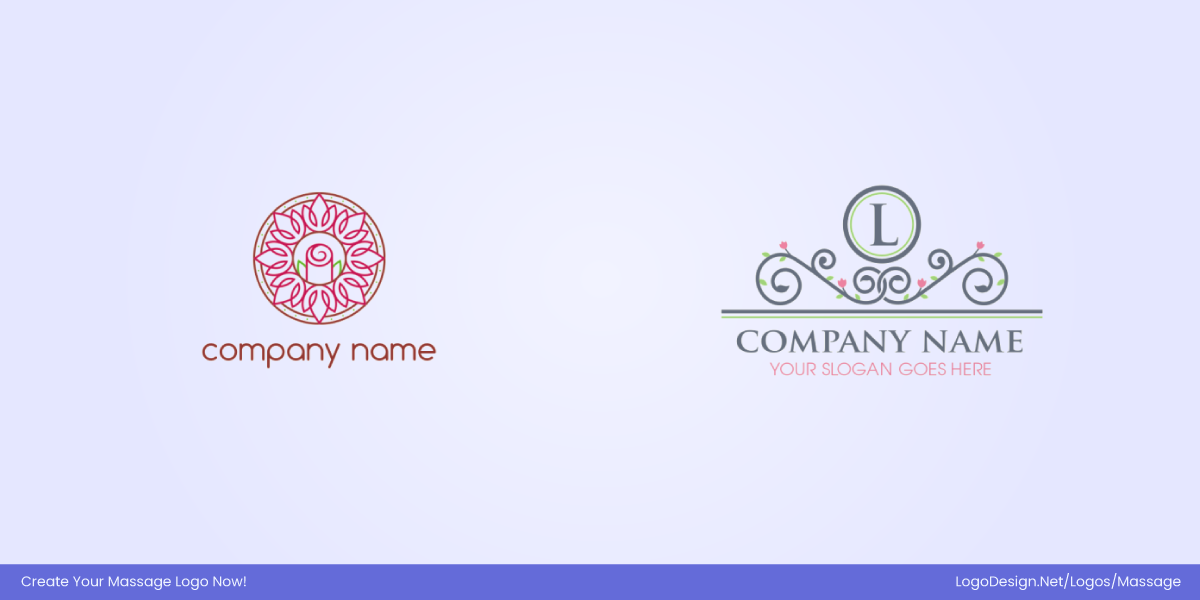
All of these graphic elements share a common purpose: to translate emotion into visual form. In massage branding, you’re not just selling a service — you’re promising an experience. Whether someone sees your logo online or on a sign, they should feel a sense of calm, trust, and professional care emerge from it.
Simpler symbols tend to work best because they are easier to recognize, more versatile in size, and less likely to distract from your core message.
Step 6: Integrating All Elements for Cohesion
By this stage, you have chosen your logo type, colors, fonts, and graphic elements. The next step is bringing these parts together so they feel unified rather than assembled. A strong massage logo should look balanced and natural, with every component supporting the same mood and message.
Start by checking how your symbol, typography, and colors interact. A calming leaf icon, for example, may pair well with a soft green palette and gentle script lettering, while a geometric wave symbol might feel more appropriate with a clean sans-serif font and cool blue tones. The goal is consistency. When these elements reinforce one another, the brand becomes easier to recognize and remember.
Another useful practice is viewing the logo in real-world mockups. Designers often place their logo designs onto materials such as:
- Business cards, where spacing and readability become immediately clear.
- Spa signage, which tests how the logo performs at a larger scale.
- Website / social headers and booking pages, ensuring the mark remains crisp and visible in digital environments.
Seeing the logo in context often reveals small adjustments that improve balance or clarity. Perhaps the icon needs more space around it, the colors appear too dark on signage, or the font feels too thin on a screen. These refinements help ensure the logo performs well across all touchpoints.
Step 7: Finalizing and Testing the Logo
Once the design feels cohesive, it is time to refine and test the logo before using it publicly. This step ensures that your mark works reliably across different formats, sizes, and environments.
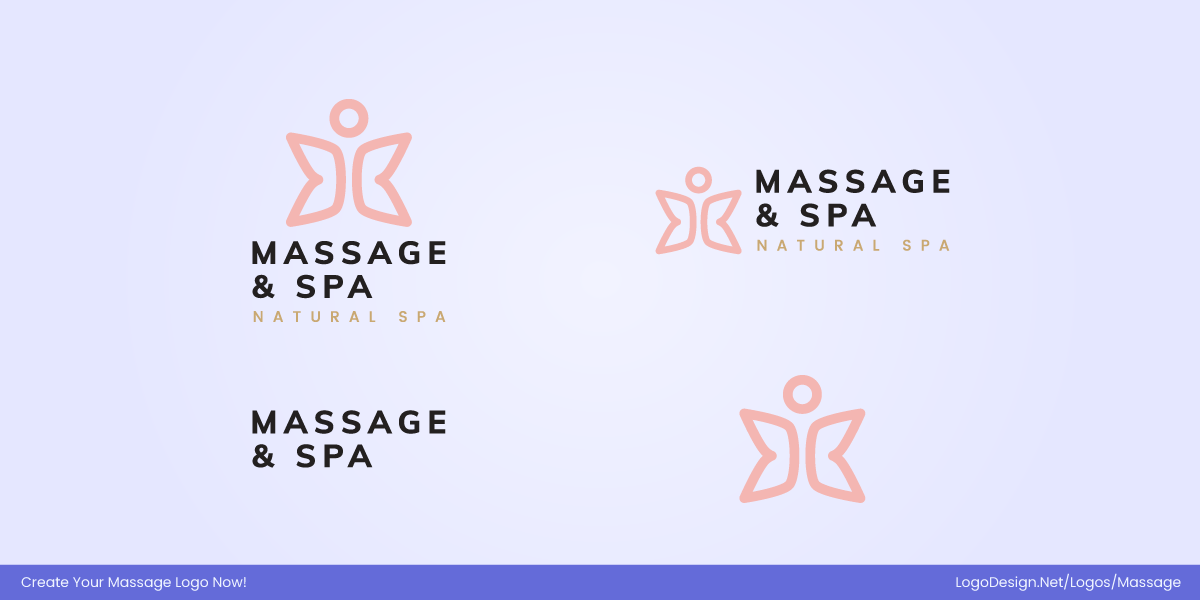
- A key consideration is logo scalability. Your logo should remain clear whether it appears on a storefront sign, a small mobile icon, or a social media profile image. Testing the design at multiple sizes can quickly reveal whether fine details disappear or letters become difficult to read.
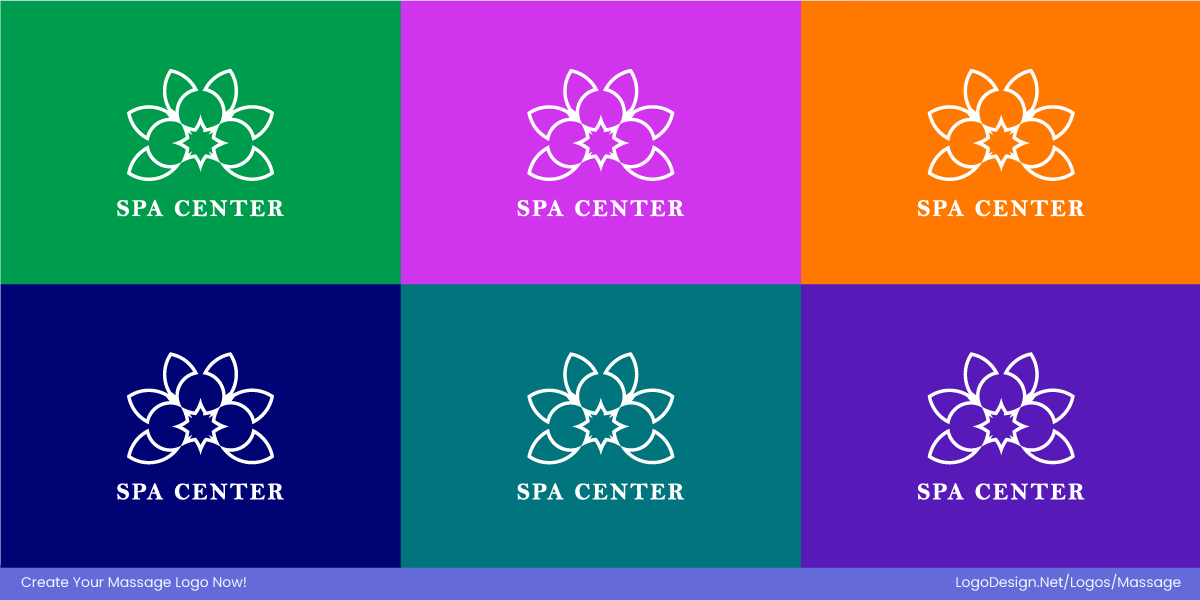
- Next is versatility. A good massage logo should function in color, black and white, and grayscale. Many materials, such as receipts, embossing, or merchandise, may require simplified versions of the design, so the logo must remain recognizable even without its full color palette.
It can also help to gather external feedback. Sharing the design with a few clients, colleagues, or small focus groups can reveal how people interpret the symbol and colors. Do they associate it with relaxation and wellness? Does the name remain easy to read at a glance? Honest reactions often highlight improvements a designer may overlook.
Finally, review the design in light of current wellness branding trends. While a logo should be timeless, small adjustments can help it remain contemporary and appealing to modern clients.
When the logo passes these tests, you will have a visual identity that works across digital platforms, print materials, and physical locations. More importantly, it will represent your massage brand with clarity, calm, and professionalism.
Tips for DIY Designers vs. Hiring a Professional
Not every wellness or massage business begins with a full branding budget. Many small studios and independent therapists design their first logo themselves, while others invest in a professional designer from the start. Both approaches can work, but it helps to understand the strengths and limits of each path before making a decision.
• Designing Your Logo Yourself
If you are creating a logo on your own, the goal should be clarity and simplicity. A clean wordmark, a restrained color palette, and one meaningful symbol often produce stronger results than complex designs. Several accessible tools allow beginners to create polished logos without advanced design skills:
Practical tips for DIY logo design
- Choose one clear symbol instead of combining several unrelated elements.
- Limit the design to two or three colors to maintain visual harmony.
- Select readable fonts that remain clear on small screens and printed materials.
- Test the logo in black and white to ensure it remains recognizable without color.
- Save versions suitable for both print and digital use.
DIY tools can produce a solid starting point, especially for new businesses that need a quick identity while focusing resources on equipment, space, and marketing.
• Hiring a Professional Designer
If you decide to work with a designer, the process usually begins with a logo design brief. This brief outlines the core details of your business, including your target clients, service style, preferred colors, and the overall mood you want the brand to convey.
Working with a professional designer or branding studio brings a deeper level of strategy and consistency. Designers do more than draw a logo. They study the market, analyze competitors, and build a visual identity that supports long-term growth.
A designer can also create supporting brand elements such as color systems, typography guidelines, and logo variations. This ensures that the brand looks consistent across business cards, websites, signage, packaging, and social media.
Another advantage is technical precision. Professional designers typically deliver logo files in formats suitable for large print, embroidery, digital use, and advertising, which prevents quality problems later.
Choosing the Right Approach
For many massage businesses, a simple self-designed logo works well during the early stages. As the business grows and begins investing more heavily in marketing and brand recognition, upgrading to a professionally developed identity can strengthen credibility and consistency.
The important thing is to ensure that whichever route you choose, the logo clearly communicates the same promise every brand hopes to convey: relaxation, care, and trust.
A Logo That Sets the Tone for Your Massage Spa
A massage logo may seem like a small design element, but it plays a powerful role in shaping how people perceive your business. Before a client experiences your service, they often encounter your brand through its logo. The colors, typography, and symbols you choose quietly communicate the kind of experience they can expect, whether it is calming, therapeutic, luxurious, or holistic.
The most effective massage logos are simple, balanced, and meaningful. They use thoughtful colors, clean typography, and carefully chosen symbols to create an identity that feels reassuring and professional. When these elements come together well, the logo becomes a recognizable visual signature that clients begin to associate with relaxation and care.
If you are ready to bring your brand to life, now is the perfect time to take the final step. Create a logo that reflects your services, personality, and the calming experience you offer your clients.