Ever noticed two big brands that feel like twins at first glance? Some logos are so alike they make you pause, squint, and wonder who copied whom.
Logos are meant to be understood in a split second. This thought alone pushes designers toward simple shapes, familiar symbols, and styles that people already recognize without thinking too hard. The catch is, when everyone is working with the same visual building blocks, some overlap is almost bound to happen.
On top of that, design trends move fast and tend to spread even faster. A style that works well in one place often starts showing up everywhere else, too, sometimes in a slightly different outfit, sometimes almost unchanged. Before you know it, unrelated brands can end up looking like they’ve had the same idea at the same time.
In this blog, we’ll walk through some of those moments where things look a little too close for comfort, and why that actually happens more often than most people realize.
Why Do Logos End Up Looking Alike?
Similarities in design mostly arise from shared design patterns that influence multiple brands simultaneously. When you start comparing similar-looking famous logos, clear patterns begin to emerge. Many logo lookalikes are tied to popular design trends, the repeated use of simple visual elements, and even the work of some agencies.
1. Design Trends
One of the main reasons logos start to look alike is the influence of design trends. When a particular style becomes popular, many brands adopt it to stay modern and relevant, which naturally reduces visual diversity.
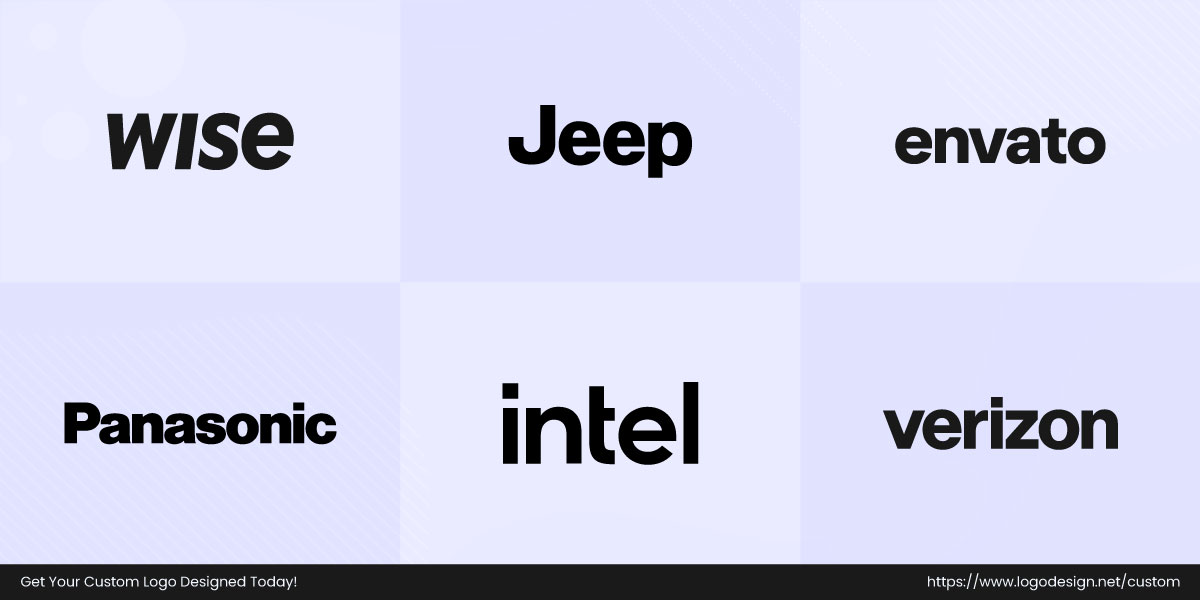
Minimalist Wordmark Logos that Have Similar Font Styles
Minimalism is one of the strongest examples of this. Clean shapes, flat icons, geometric structures, and sans-serif typography have become widely used because they work well across digital platforms and scale easily. However, this shared design approach also makes many logos feel similar. Brands like Verizon, Wise, Envato, Jeep, Panasonic, and Intel all reflect this shift toward simplified, minimal design language.
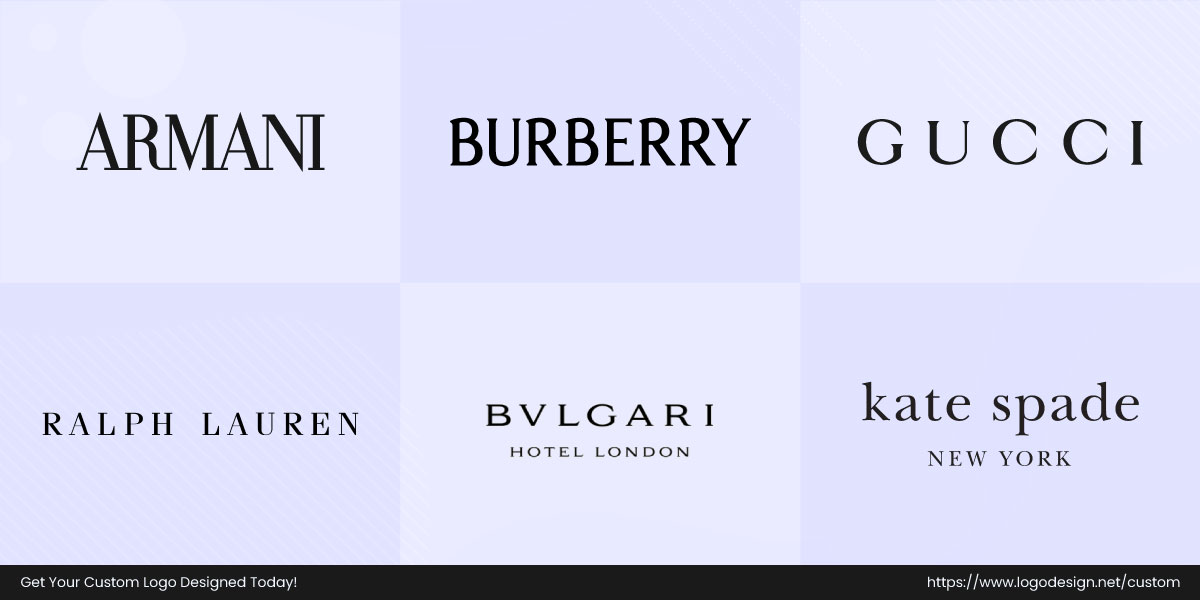
Logos of Luxury Fashion Brands in Similar Serif Styles
In some industries, similarity comes from shared identity rules rather than general design trends. For example, luxury fashion brands often use refined serif wordmarks to communicate heritage and elegance. Labels like Gucci, Burberry, BVLGARI, Ralph Lauren, Armani, and Kate Spade all follow a consistent typographic style, which strengthens brand positioning while also creating visual overlap across the industry.
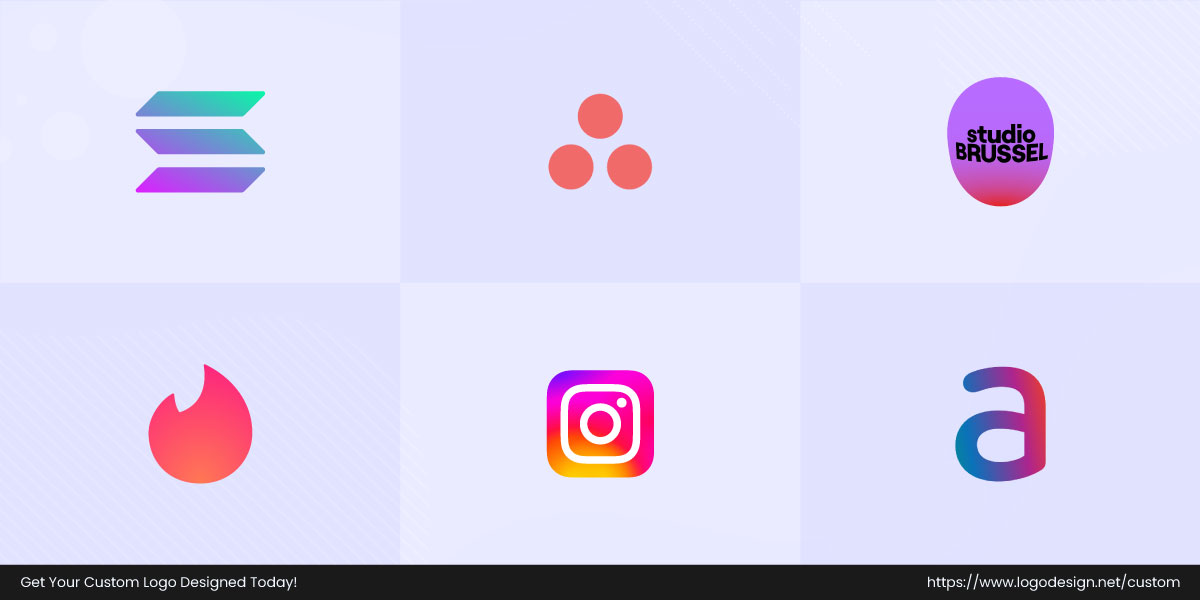
Gradient logos of Brands that Look Alike
Another major trend is the use of gradient-based logos, where smooth color transitions create a modern, dynamic feel. This style is common in digital-first brands such as Instagram, Tinder, Asana, and Adani Group. While gradients help logos stand out visually on screens, their widespread use also leads to a familiar, shared aesthetic across different brands.
Overall, design trends improve usability and modern appeal, but when widely adopted, they often reduce distinctiveness, making logos feel more similar than intended.
2. Limited Visual Language
Most logos are built on a shared ‘visual language’ of simple, universal elements such as circles, squares, lines, initials, and basic icons. Because these forms are easy to recognize and work well at different sizes, designers often rely on them when creating logos. However, this shared toolkit also limits how much a logo can vary visually, increasing the likelihood of overlap.
Logos with Circular Shapes to Show Similarity
A common example is the use of circular forms, which suggest unity, movement, and continuity. The circular logo shape is widely used across industries, sometimes resulting in very similar outcomes. For instance, the logos of Telgea and Will Bank both rely on minimal circular forms that feel visually close despite representing different brands.
Logos with two abstract circular shapes that look similar
Another example comes from playful or abstract icon systems built from simple shapes. The Brooklyn Museum logo and Snapchat’s ghost mark both use rounded, circular components that create a soft, minimal identity, even though their meanings are completely different.
Three logos with star symbols to show similarity
Symbol-based logos also tend to converge on similar shapes. The use of stars, for example, is common because it conveys quality, recognition, and aspiration. This is seen in logos like Aardman Animations, Macy’s, and Heineken, all of which incorporate a simplified star as a central visual element.
Overall, because designers draw from the same limited set of fundamental shapes and symbols, logo design often circles back to similar visual solutions—even when the brands themselves are very different.
3. Agency/Designer Influence
A major reason logos can feel similar is the influence of designers or agencies that develop strong, consistent design systems. When working across multiple brands, designers often refine and reuse effective approaches to typography, layout, and structure to ensure clarity, scalability, and visual impact. This can naturally result in logos that share certain stylistic qualities while still remaining unique to each brand.
One well-known historical example is Massimo Vignelli, who played a key role in shaping modern identity design through a disciplined, modernist approach. He frequently used Helvetica as the foundation of his visual systems, prioritizing clarity and consistency. This approach is evident in the identity work for American Airlines, Knoll, Benetton Group, and Heller, where typography and structure play central roles in defining the brands.
In contemporary practice, agencies also often develop recognizable design languages that can be adapted across different industries. For instance, the agency Koto is known for creating bold, typographic-led identities. Projects such as Kit, Lyft, Fluz, and Yazio all explore variations of strong wordmarks, clear proportions, and confident minimal designs. While each brand maintains its own identity, they often share a similar design philosophy focused on clarity and modern expression.
When designers apply proven systems and refined approaches across projects, it helps maintain consistency and usability—especially across digital platforms—while also shaping recognizable trends within logo design.
4. Globalization and Inspiration
As designers are constantly exposed to global brands, platforms, and visual references, design ideas naturally circulate across the industry. With so many influences overlapping, similar concepts can emerge—even without intentional imitation. A designer may be inspired by a familiar structure or style they’ve previously seen, which can unintentionally lead to visual similarities in final logos.
American Home Shield and DocuSign both use overlapping geometric shapes to form a shield-like structure, creating a clear sense of trust and verification. The similarity is reinforced by their shared use of red and blue tones and structured, corporate styling, which is commonly associated with security-focused brands.
A similar effect can be seen in Panda Security and Ubuntu, where both logos are built from simplified, circular arrangements of curved shapes. Even though one represents a panda and the other represents community and open-source collaboration, the use of segmented circular geometry creates a comparable visual rhythm and structure, making the icons feel related at a glance.
This overlap happens because designers often draw from the same global visual vocabulary—simple shapes, familiar structures, and widely used symbolic forms—which can lead to logos that feel visually connected even when their meanings are very different.
15+ Famous Logo Lookalikes from Global Brands
Some logo similarities are easy to miss, but others are so prominent that they instantly grab attention and start a debate. From nearly identical shapes and layouts to shared color schemes and typography, there are elements that feel linked closely. And this happens among major global brands as well. Sometimes, even visual hierarchy appears the same. There are actually quite a few examples of such logos; some you may have noticed, while others you might miss.
1. Pepsi vs Korean Air
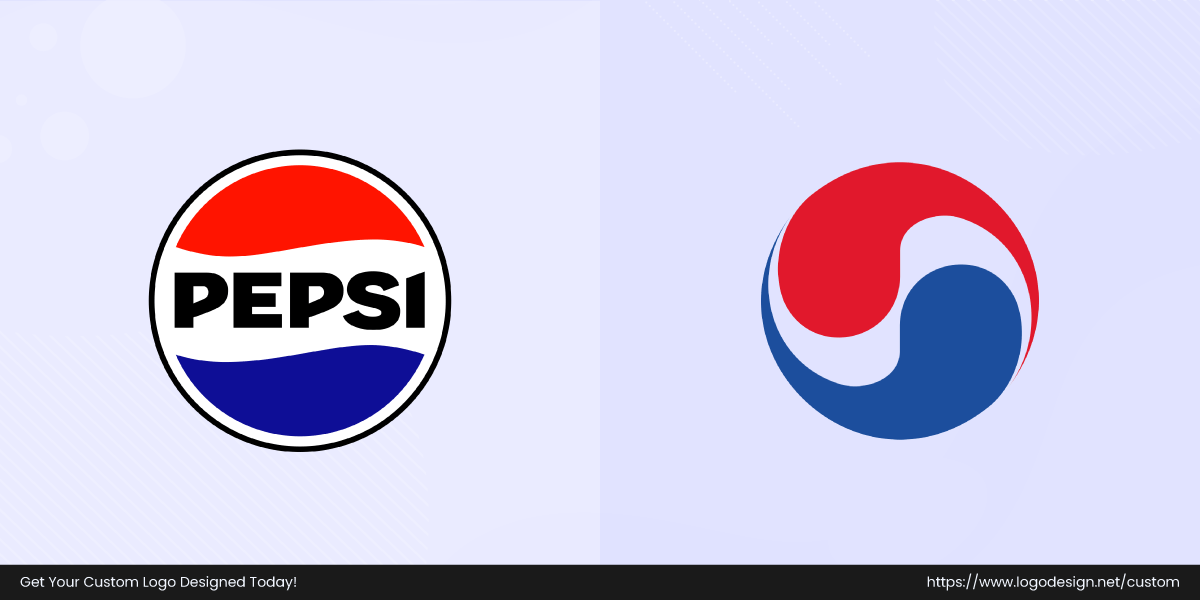
Pepsi Logo vs Korean Air’s old logo that looked the same
It’s hard to miss that the old Korean Air logo and the Pepsi monogram share a striking resemblance, both built around a circular form with flowing divisions. The curved separation creates a dynamic, almost wave-like motion, making the two icons look visually similar despite representing entirely different industries. Before Korean Air rebranded in 2025, even the color palette of both logos was almost the same red and blue.
This likeness stood out to viewers since the branding relied on bold color contrast and simple geometry to create a memorable identity. But this was largely coincidental. Korean Air’s symbol is derived from the traditional Korean ‘taegeuk,’ representing balance and harmony. Pepsi’s logo has evolved over time into a modern, stylized globe associated with energy and refreshment.
When basic geometry and bold color meet, overlap becomes almost unavoidable. Two unrelated ideas can still land on surprisingly similar visual ground when built from the same simple design language.
2. Pinterest vs Beats by Dre
Pinterest and Beats by Dr. Dre’s logo look-alikes
Just take a look at these brand symbols. You’ll see that they look similar. Both have a clean, minimal logo design where the letterform is merged with a rounded shape. The resemblance between the Pinterest logo and Beats by Dr. Dre’s icon becomes even more noticeable when displayed across apps or as favicons. Their simplified forms make them appear almost interchangeable to viewers.
Pinterest’s ‘P’ is designed to show a pin, tying directly into the platform’s concept of saving and organizing ideas. And Beats by Dre uses the circular ‘b’ to represent headphones placed over a head.
Minimal forms often blur boundaries between entirely different meanings. When logos are reduced to essentials, recognition can sometimes come from familiarity rather than distinction.
3. Mastercard vs Maestro
Maestro and Mastercard’s logos that appear like each other
The logos of Mastercard and the now-discontinued Maestro feature overlapping circular shapes in different colors, creating a clear sense of connection. This shared visual structure makes the two logos instantly comparable, especially since they were often seen in similar contexts, such as payment cards and terminals.
It’s worth noting that Maestro was a brand owned by Mastercard and has now been phased out globally. Because of this relationship, the overlapping circles also work as a way to visually link the two brands while still keeping them as separate identities. The designs differ in their color palettes, typography, and layouts, but they still share a common geometric base.
When two brands sit under the same umbrella, their visuals often speak the same design language. Even with different identities, structure alone can quietly reveal how closely they are connected.
4. Chanel vs Gucci
Logos for Gucci and Chanel that have similar monograms
It is interesting to see the similarities between these logos. Chanel has two interlocking initials, ‘C’ for Coco Chanel, and Gucci also has a double ‘G’ arranged in a symmetrical, overlapping style. The two logos may feel similar at first, especially in monochrome applications where logo typography becomes the primary focus.
Chanel’s icon stands for its founder and emphasizes timeless simplicity. In a way, Gucci also goes back to Guccio Gucci, who started the fashion house. So both the logos in the luxury space share the same design approach.
Luxury branding often leans on symmetry and initials, which can lead to visual echoes. Heritage-driven design choices tend to circle similar aesthetic ground over time.
5. The COOP vs NOOS
The Coop vs. NOOS’ logos that share typography styles
You’ll notice that both Coop and NOOS use bold, rounded typography where the two ‘O’s are interlinked, creating a strong sense of connection. Coop uses a soft, circular wordmark, where overlapping letterforms create unity and continuity, while NOOS uses thick, rounded lettering that feels friendly and approachable. Because both rely on similar circular shapes and soft geometry in the wordmark, the designs can appear visually similar at first glance.
Despite this, the brands serve completely different purposes and audiences. Coop focuses on retail and everyday consumer goods, with a visual identity that emphasizes accessibility and community. NOOS, on the other hand, uses its strong, simplified typography to highlight its humanitarian mission and impact-driven work.
Rounded typography tends to soften identity, but it also narrows visual variety. When the structure is similar, meaning must do the heavy lifting to separate brands.
6. Quaker Oats vs Little Debbie
Quaker Oats and Little Debbie’s Logos with Similar Mascots
The logos of Quaker Oats and Little Debbie are sometimes seen as similar because both feature a central human character as the face of the brand. Each uses a friendly, smiling figure dressed in traditional attire, creating a sense of warmth, trust, and heritage. This shared approach gives both brands a nostalgic, wholesome feel, and at a glance, the mascots can sometimes be confused—especially in smaller packaging or quick visual contexts.
Visually, the two logos also share similar design treatments, such as soft illustration styles, warm tones, and approachable facial expressions, which further strengthen the resemblance. The Quaker figure serves as a fictional mascot representing honesty and simplicity, while Little Debbie is based on a real person—the granddaughter of the brand’s founder—and is designed to feel personal and family-oriented.
Brand mascots bring brands to life. They carry emotional weight, which often pushes designs into familiar territory. Warmth, nostalgia, and trust can unintentionally produce similar visual storytelling.
7. NBC vs MSNBC
NBC and MSNBC logos with the same icons
Both NBC and MSNBC (now MS NOW) use variations of the iconic multicolored peacock, with its fanned feathers forming a vibrant, symmetrical mark. This shared symbol creates an immediate visual connection between the two, and viewers often associate them with the same broader network family.
This connection is also historically accurate, as MSNBC was originally launched as a joint venture involving NBC, and its branding reflects that relationship. While MSNBC typically pairs the peacock with a stronger wordmark to emphasize its news-focused identity, the core icon remains consistent and recognizable across both brands, reinforcing their shared origin while serving different editorial purposes.
When brands share a lineage, their symbols naturally carry echoes of that origin. Shared identity systems often prioritize recognition over visual separation.
8. LinkedIn vs Indeed
Logos for LinkedIn and Indeed that appear similar
At a glance, especially across digital interfaces, LinkedIn and Indeed use clean, professional wordmark styles and similar blue tones, which can make the two brands feel visually aligned. Both rely on simple sans-serif typography paired with minimal iconography to create a modern, trustworthy look.
LinkedIn incorporates its recognizable “in” icon within a square, reinforcing its identity as a networking platform. Whereas, Indeed features a subtle upward arc over the “i,” symbolizing growth and opportunity.
Professional platforms often lean on clean, familiar design choices that signal trust and ease of use. That shared visual restraint can make separate brands feel closely aligned, even when they compete in the same space.
9. PayPal vs Pandora Music
PayPal and Pandora’s logos with stylized lettermarks
Both PayPal and Pandora feature bold, stylized ‘P’ letterforms with a strong blue color palette. They use a modern, sans-serif approach with simplified typography designed to stand out clearly in app icons. The similar icon structures and color tones can make the two logos look alike at a glance.
PayPal’s overlapping “P” represents connection and the flow of transactions, reflecting its role in digital payments. Pandora’s single, solid lettermark focuses on clarity and recognition within the music industry. While both use alphabet-based designs combined with strong, recognizable color choices, their meanings and brand contexts remain distinct.
This shows that letter-based logos with bold color blocking tend to converge visually. Strong simplicity can sometimes erase boundaries between completely different industries.
10. Kik vs Kickstarter
Kik and Kickstarter’s Logos that look alike
The logos of Kik and Kickstarter use a playful, energetic visual style that leans into simple, approachable letterforms, giving both a casual feel. When viewed quickly, the similar color tones and typographic style can make the two logos feel quite alike.
This similarity is mostly the result of shared design choices rather than any direct connection. Kik’s logo focuses on simplicity and speed, reflecting its messaging-first experience, while Kickstarter’s wordmark uses bold uppercase lettering with subtle custom shapes to emphasize creativity and innovation.
Casual typography and energetic branding styles often overlap in fast-moving digital spaces. Similar visual tone can blur distinctions even when intent differs sharply.
11. Hyundai vs Honda
Hyundai and Honda’s logos that have similar icons
A stylized ‘H’ enclosed within an oval is common to both Hyundai and Honda logos. The emblems feature a sleek, metallic look with clean lines, giving them a modern and professional appearance. From a distance, the letterforms on the grilles of Hyundai and Honda cars can look quite similar, and their overall structure is one of the main reasons for the resemblance.
But for people familiar with car branding, the differences are clear. Hyundai’s slanted “H” is designed to represent two people shaking hands, symbolizing trust between the company and its customers. Honda’s upright “H” stands for strength, reliability, and simplicity. Since many automotive brands follow similar badge-style conventions, visual overlap can happen even when the meanings behind the logos are distinct.
Automotive or car logos frequently follow structural conventions that limit visual variety. Within those constraints, resemblance becomes more a matter of format than design intent.
12. Bentley vs Mini Cooper
Bentley and Mini’s icon with abstract wings that appear similar
It could be easy to mistake the central circular winged emblem of Bentley and Mini at a quick glance. Both feature stylized wings extending from a central badge, creating a sense of speed, freedom, and motion. The symmetry and horizontal spread of the wings can produce a similar silhouette, especially when viewed from a distance or in simplified formats.
Bentley’s wings are designed to emphasize luxury, craftsmanship, and heritage, while Mini’s winged badge reflects agility, fun, and its compact urban character. Despite these different meanings, the shared use of wing-inspired badge designs yields a comparable visual impression.
Winged emblems carry strong associations of speed and prestige, which naturally lead to shared visual cues. Different meanings can still ride on similar shapes.
13. Joby Aviation vs Meta
Joby Aviation and Meta’s infinity symbol that look alike
When Meta launched its logo, there was a lot of debate around it. One common factor was that it resembled Joby Aviation’s icon, as both have continuous, loop-like forms that resemble infinity symbols. Both designs rely on smooth curves and a fluid, minimalist style.
Meta’s symbol represents the metaverse and limitless connection. The messaging is very different from Joby Aviation’s mark, which represents motion and innovation in air mobility.
Continuous loop forms often signal connectivity and movement in modern branding. When abstraction is high, meaning becomes more conceptual than visual.
14. Tesla vs. Tennessee Titans
Tesla and Tennesee Titans’ icon that looks similar
The logos of Tesla and the Tennessee Titans feature a sharp, pointed form at the center, and both appear similar at a glance. The upward-reaching shape in each design conveys power, motion, and precision, and the sleek, angular design language makes the resemblance quite noticeable.
The likeness is purely visual. Tesla’s logo is inspired by a cross-section of an electric motor, while the Titans’ emblem is rooted in mythology and strength. Even so, dynamic, pointed shapes in branding can sometimes create similar visual impressions across completely different fields.
Sharp, directional shapes often communicate power and momentum across industries. That shared visual language can make unrelated identities feel unexpectedly aligned.
15. Greg Norman vs LPGA
Greg Norman and LPGA’s logo with similar color schemes
The logos of Greg Norman and the LPGA share a similar color palette. Each design showcases the dynamic swing of golfers. One has a simplified human figure to convey athleticism and precision, and the other is a shark symbol. The composition of both logos is somewhat similar, and one might remind you of the other.
The Greg Norman logo represents the golfer’s personal brand, and the LPGA logo represents the broader community of women’s professional golf. If you think about it, action-based silhouettes, especially in sports, can at times appear naturally similar.
Sports logos often rely on motion-driven silhouettes paired with bold, energetic color tones. When movement and color both aim to signal intensity, visual identities can start to feel unexpectedly alike.
16. Sun Microsystems vs Columbia Sportswear
Sun Microsystems and Columbia Sportswear have similar icons
Sun Microsystems and Columbia Sportswear logos share a similar visual rhythm based on repeated geometric elements arranged in a structured form. Both designs rely on clean symmetry and a compact, balanced composition that makes the logos feel visually related at a glance.
Sun Microsystems and Columbia Sportswear logos share a similar visual rhythm based on repeated geometric elements arranged in a structured form. Both designs rely on clean symmetry and a compact, balanced composition that makes the logos feel visually related at a glance.
Repetition and symmetry create strong structural rhythm in logos. But when form takes priority, meaning often has to work harder to stand apart.
17. Amazon vs Workday
Amazon and Workday’s logo with curved lines that appear similar
Amazon and Workday logos share a similar curved arrow and smile-inspired visual language that creates a sense of motion and positivity. Both designs use simple, clean typography paired with a directional curve that guides the eye and adds personality to the wordmark.
Amazon’s arrow runs from “A to Z,” symbolizing everything the platform offers, while Workday’s curved shape represents forward movement and progress within workplace systems.
Curved directional elements are widely used to express progress and flow. When that visual cue becomes common, brand stories start to feel subtly interconnected.
Why Similar Logos Can Hurt Your Brand?
Lookalike logos can create legal challenges, weaken brand identity, and confuse customers, all of which directly impact business growth. As competition increases and markets become more saturated, the risks associated with non-distinctive design become harder to ignore. It is very important for any brand aiming to build a strong, recognizable, and legally secure identity to understand these.
1. Trademark Infringement
When two logos appear similar, it can lead to trademark disputes and potential lawsuits. Companies invest heavily in protecting their visual identity, and any perceived imitation can be challenged in court. Design similarities became a central issue in broader intellectual property disputes and cost the brands millions of dollars in case of infringement.
2. Brand Dilution
Even without legal action, logos that look alike can impact a brand’s uniqueness. The distinctiveness of each brand begins to fade over time if its logo resembles another. This is particularly risky for emerging businesses trying to establish recognition. For instance, overlaps in minimalist wordmarks across tech startups, inspired by companies like Google, can make it harder for any single brand to stand out.
3. Customer Confusion
One of the most immediate risks of logo lookalikes is customer confusion. If logos use identical colors, shapes, or typography, consumers may mistakenly associate them with different brands. This can lead to misdirected trust, incorrect purchases, or even reputational damage. Maestro may be launched by Mastercard, but its identity can cause confusion, no matter the relationship between the two.
Adidas vs Payless ShoeSource — Three Stripe Dispute
One of the most well-known trademark disputes in logo and brand identity design involved Adidas and Payless ShoeSource. The conflict centered on Adidas’ iconic three-stripe design, a core, legally protected element of its brand identity.
Adidas argued that Payless sold footwear with stripe patterns similar to its own, which could confuse consumers and dilute the distinctiveness of its trademark. Payless, on the other hand, argued that stripes are a common decorative element in footwear design and should not be monopolized by a single brand.
The case was ultimately resolved in favor of Adidas. A U.S. jury ruled that Payless had willfully infringed on Adidas’ trademark, awarding significant damages to Adidas. The outcome reinforced the legal protection of distinctive brand elements, especially when they have a strong public association and recognition.
How to Keep Your Logo Unique in a Crowded Market?
While many logo similarities occur unintentionally, they are often preventable with a structured, thoughtful approach. Here are some key factors to consider when creating a truly distinctive identity:
1. Research Competitors Thoroughly
Industries often develop shared visual cues—repeating colors, symbols, and styles—which makes it easy for new logos to blend in. A strong research phase goes beyond direct competitors and includes emerging players, adjacent industries, and even international brands. Identifying overused icons or predictable typography helps you spot gaps and move in a more original direction.
2. Work With the Right Design Approach
Templates and logo generators are a great starting point, offering speed, flexibility, and accessibility. However, since many designs are built from widely used elements, there’s a chance of visual overlap. Taking time to customize and refine your logo—whether independently or with professional input—can help create a more distinctive, scalable, and brand-aligned identity.
3. Test for Visual Confusion
Show your logo to people outside your team and gather unbiased feedback. Fresh perspectives can reveal whether the design reminds them of another brand or feels too familiar. Since these associations often occur subconsciously, testing early helps you catch overlaps and refine the design before launch.
Godrej vs. Guerrilla—Logo Similarity Debate
A recent case that sparked discussion in logo and brand identity design involved Godrej Industries and Guerrilla Agency. The conversation centered on Godrej’s new geometric “G” logo, which drew comparisons to Guerrilla’s existing logo, a Sydney-based creative agency.
After the rebrand was made public, users online began pointing out visual similarities between the two logos. The comparison focused on the overall form, minimal geometric style, and typographic structure, with many noting that the marks appeared quite similar at a glance.
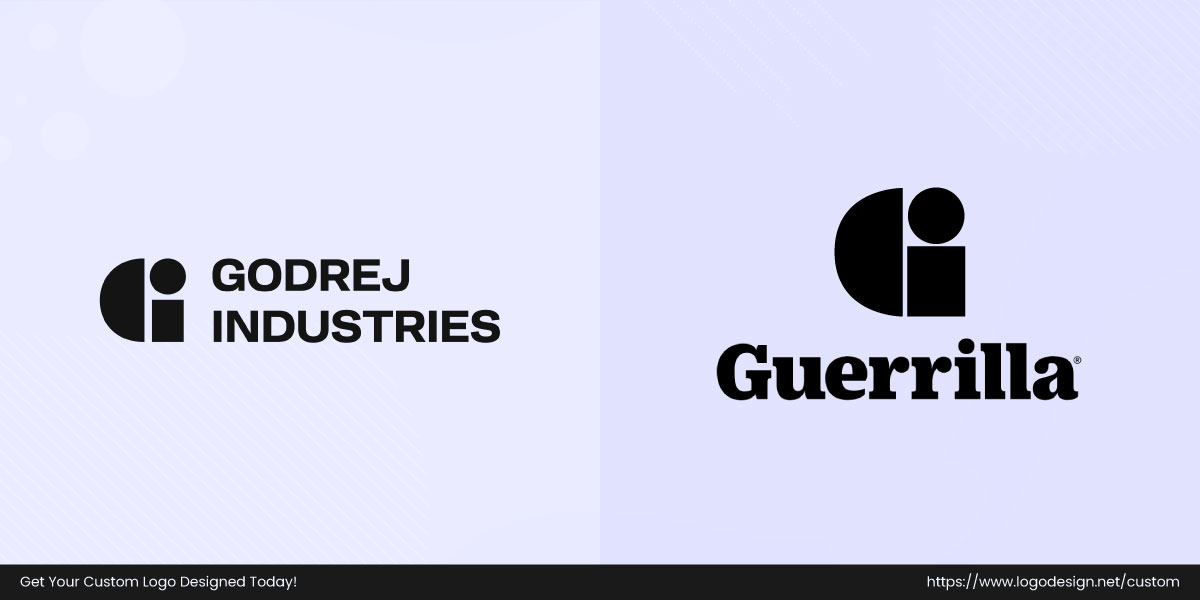
Godrej clarified that the new identity was part of a broader brand system developed through a structured design process. The company also stated that geometric forms are widely used in modern identity design and that such similarities can occur without direct copying.
Unlike traditional trademark disputes, this situation did not result in legal action. However, it highlighted how quickly design comparisons can gain attention, especially when large brands introduce new identities. It also underscored the importance of originality and thorough design validation in large-scale rebranding efforts.
4. Secure Trademark Protection Early
Registering your logo early helps protect your brand and avoid legal complications. Conduct a trademark search before finalizing the design and monitor for potential conflicts after registration. Securing legal ownership reduces the risk of disputes and prevents costly rebranding later on.
5. Evolve Without Losing Distinction
Keeping a logo modern is important, but following trends too closely can reduce uniqueness. The strongest updates build on existing identity rather than replacing it entirely. Retaining core visual elements while improving clarity and adaptability ensures your logo evolves without losing what makes it recognizable.
The Human Element
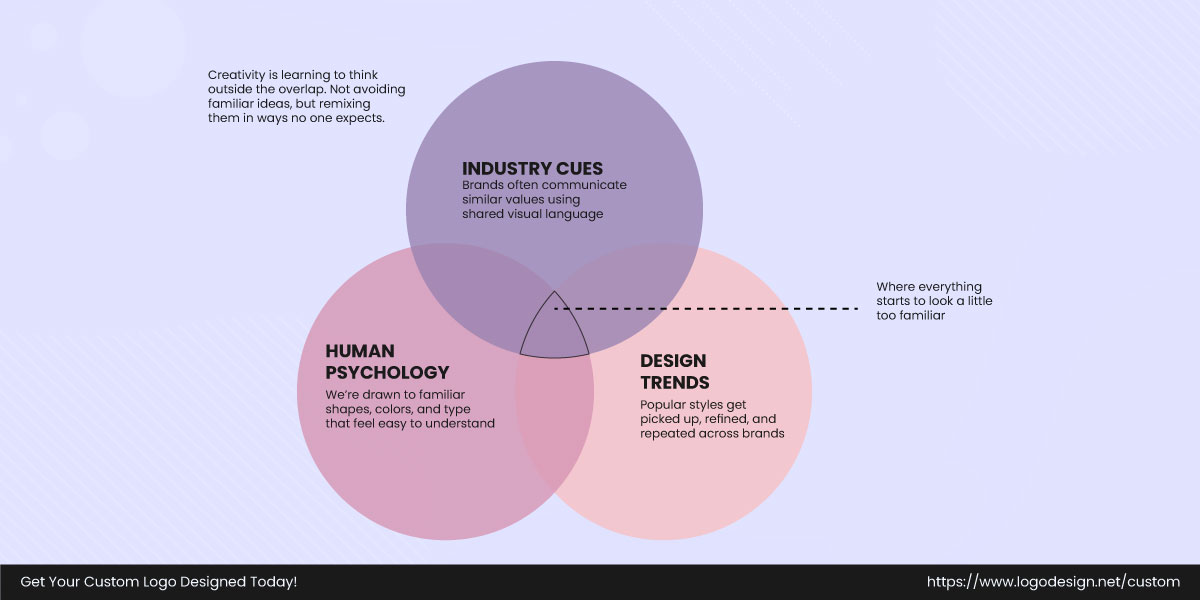
People naturally respond to familiar visual patterns, which is why certain shapes, colors, and typographic styles appear repeatedly across brands. These elements carry strong psychological associations—colors can signal trust, energy, or reliability, while type styles and forms influence how modern, friendly, or authoritative a brand feels.
Because these cues are widely understood, designers often rely on them to communicate meaning quickly. As a result, many brands end up using similar visual signals, especially when they aim to convey comparable values such as innovation, security, or simplicity.
The challenge lies in using these familiar elements without blending in. True distinction comes from how creatively these cues are combined, adapted, and expressed to form a unique visual identity.
Conclusion
Logo similarity is mostly the result of shared industry practices, human psychology, and the growing influence of design trends. As more and more brands are competing for attention across crowded digital and physical spaces, even small visual overlaps can lead to confusion, weaken identity, or invite legal complications. So it’s important to understand how these logos have made it work. Some have changed a bit, while others continue to make a visual impact.