Smooth, sharp, and perfectly scalable—logos owe their flawless curves to Bezier paths. Designers rely on these invisible guides to turn simple shapes into timeless, professional visuals.
Zoom in on a professionally designed logo, and the curves will always be smooth to perfection, be it on a business card or on a billboard. It is not accidental that it is so accurate. It is a product of Bezier curve mathematics and vector graphics.
Unlike pixel-based images, which become fuzzy when expanded, a vector logo is represented as a mathematical path. The software simply re-computes the curves to maintain ideal proportions and acuity during image resizing. This scalability is required in the modern logo design, where the brands must be visible in all contexts.
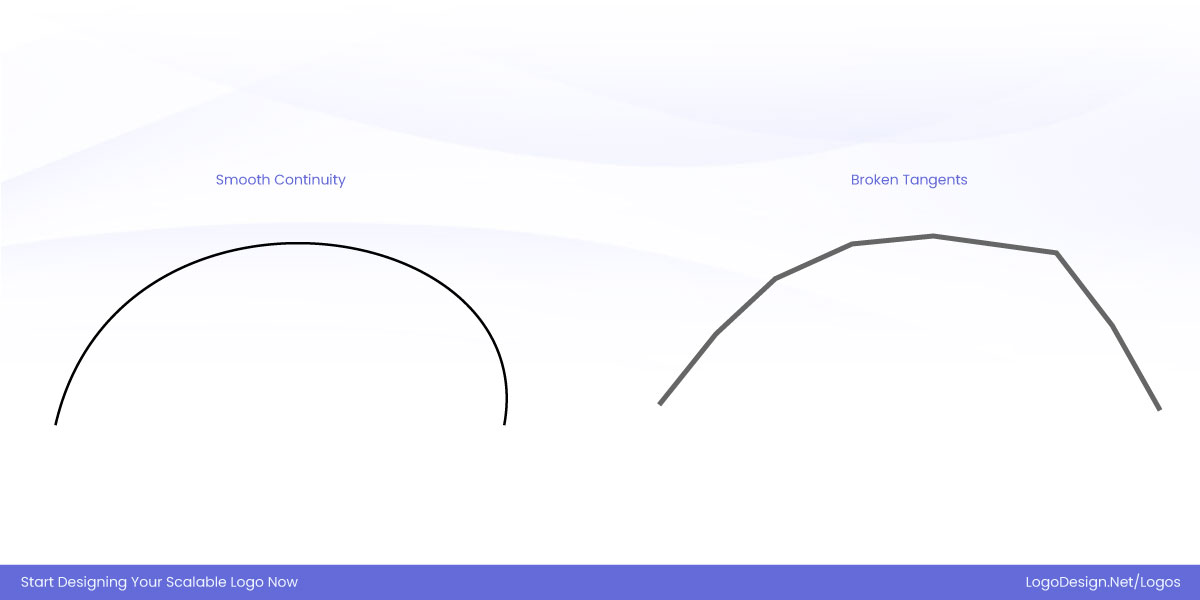
The smooth curves are not merely a matter of size, but of quality. The human eye is very sensitive to small irregularities. The smallest details or unbalanced strain will render a logo amateurish. Hygienic curves are full of professionalism, taste, and confidence.
The difference between amateur and professional logo design is often reduced to a matter of curve-drawing. Amateurs put marks; experts cut currents. Knowing Bézier curves will take a designer to the next stage of drawing shapes, to the stage of engineering precision, and that is the trick to having really smooth and scalable logos.
What Are Bézier Curves?
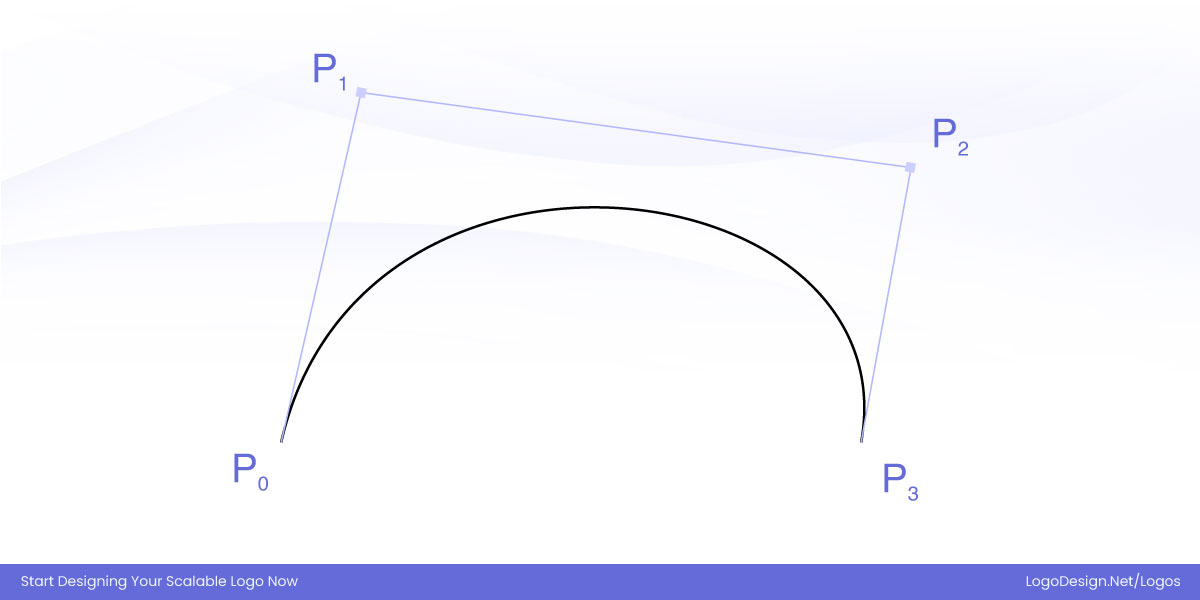
Bézier curves are parametric curves used in computer graphics to draw smooth, scalable shapes.
The concept of Bézier curves originated in the 1960s with French engineer Pierre Bézier, who used mathematical modeling to design automobile bodies with precision. Today, Bézier curves are fundamental to vector graphics and form the backbone of accurate, good logo design.
Core Components of Bézier Curves
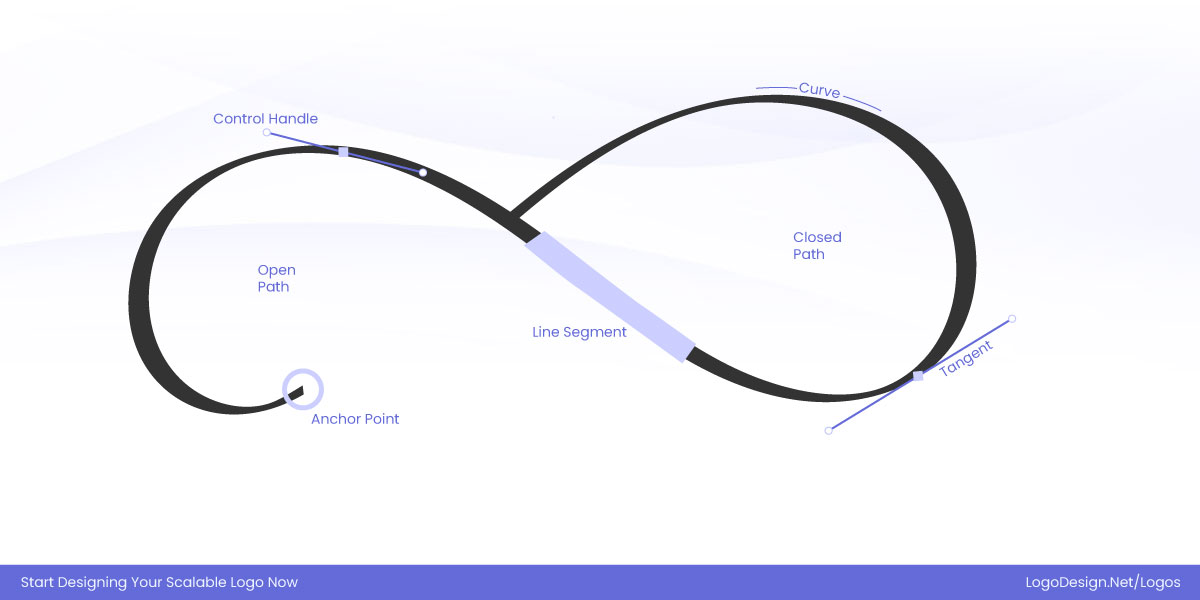
Bézier curves are constructed out of a limited set of basic components:
• Anchor Points
Anchor points mark the start and end of a curve, shaping the design’s contour. Moving an anchor point alters the form and proportions, so precise placement is essential for symmetry and strong geometry in logo design.
• Direction Handles
Direction handles extend from anchor points to control a curve’s angle and strength. Their length and orientation determine whether a curve is sharp or subtle, making logo curves intentional, balanced, and visually flowing.
• Tangents and Curve Flow
The handles create the anchor points, which set the direction of the curve transition. The proper alignment of tangents makes a curve flow. This consistency is paramount to the concept of professional logos, in which a minimal deviation can lower the perceived value.
• Open vs. Closed Paths
Open paths have distinct start and end points, whereas closed paths reconnect to create complete shapes. In logo design, closed paths are typically used to create solid, scalable marks, while open paths are used to define strokes, details, and motion in a composition.
| • Open paths have distinct start and end points (such as a curved line). | • Closed paths connect the final anchor point back to the first, forming complete shapes (such as circles or custom logo marks). |
Rather than drawing these elements manually, designers manipulate them to generate curves mathematically. The result is a fluent, predictable form that can be resized indefinitely without loss of quality.
Types of Bézier Curves
There are various Bézier curves based on the level of complexity and control:
1. Linear Bézier (Line Segment)
This curve is characterized by two points, namely a start point and an end point, making it a straight line with no curvature. It is used in logo design to create acute edges, geometric shapes, alignments, and formatting, where clarity and simplicity are needed.
The Adidas “Performance” logo uses straight line segments in its iconic three-stripe mark, emphasizing bold geometry and clarity through linear Bézier construction.
Inventure’s logo features bold diagonal strokes and sharp angles, creating a dynamic, geometric wordmark that conveys momentum and forward movement via linear Bézier lines.
2. Quadratic Bézier Curve
This curve is provided by three points, namely, a start point, a control point, and an end point, and it forms a curvy simple arc that depends on one control handle. It is employed in the logo design by gentle curves, slight bends, and basic rounded shapes that do not need intricate shaping.
The Coca-Cola logo relies on quadratic Bézier curves to form its flowing, wave-like letters, giving the brand its signature smooth, continuous motion.
The Joby Aviation logo incorporates an infinity-shaped icon and a curved logotype, using quadratic Bézier curves to convey fluidity, connectivity, and aerodynamic movement.
3. Cubic Bézier Curve
This curve is characterized by four control points – a start point, two control points, and an end point, which gives this curve more flexibility and control over the curvature. In logo design, it is commonly used to create intricate, flowing designs, elegant letterforms, and dynamic curves that characterize contemporary scalable vector graphics.
The Apple logo silhouette is crafted with cubic Bézier curves, combining smooth arcs and sharp transitions to create a balanced, iconic bitten-apple shape.
The Kleenex logo uses cubic Bézier curves in both its wordmark and crown-inspired icon, producing rounded, flowing forms that lend the brand a friendly, approachable identity.
Why Bézier Curves Are Essential in Logo Design?
1. Infinite Scalability
Logos must work everywhere, even on social media icons, packaging, signage, websites, and print ads. The pixels upon which the raster images (such as JPEGs or PNGs) are built are not crisp and, therefore, not definite when enlarged.
Bézier curves are the foundation of vector graphics based on mathematical equations rather than pixels.
This means:
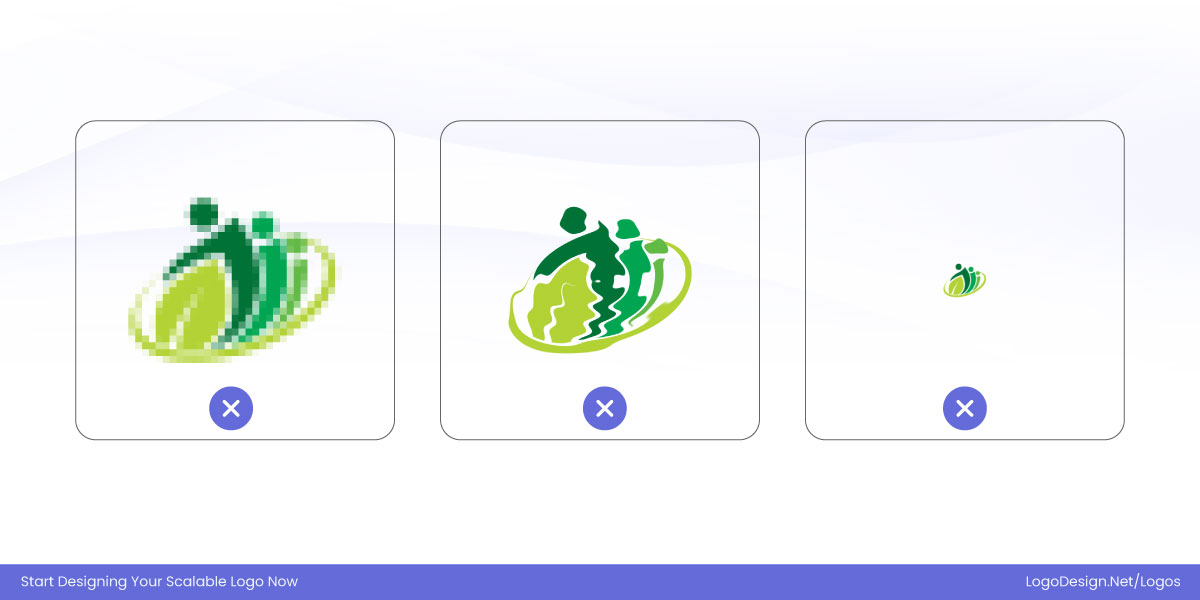
- No pixelation
- No distortion
- Perfect clarity at any size
The vector graphic is resolution-independent; it is specified by mathematical functions and no longer by pixel counts.
2. Perfectly Smooth Curves
The human eye is rather sensitive to irregularities. Even slight bumps or uneven curves can make a logo feel unpolished.
Bézier curves allow designers to:
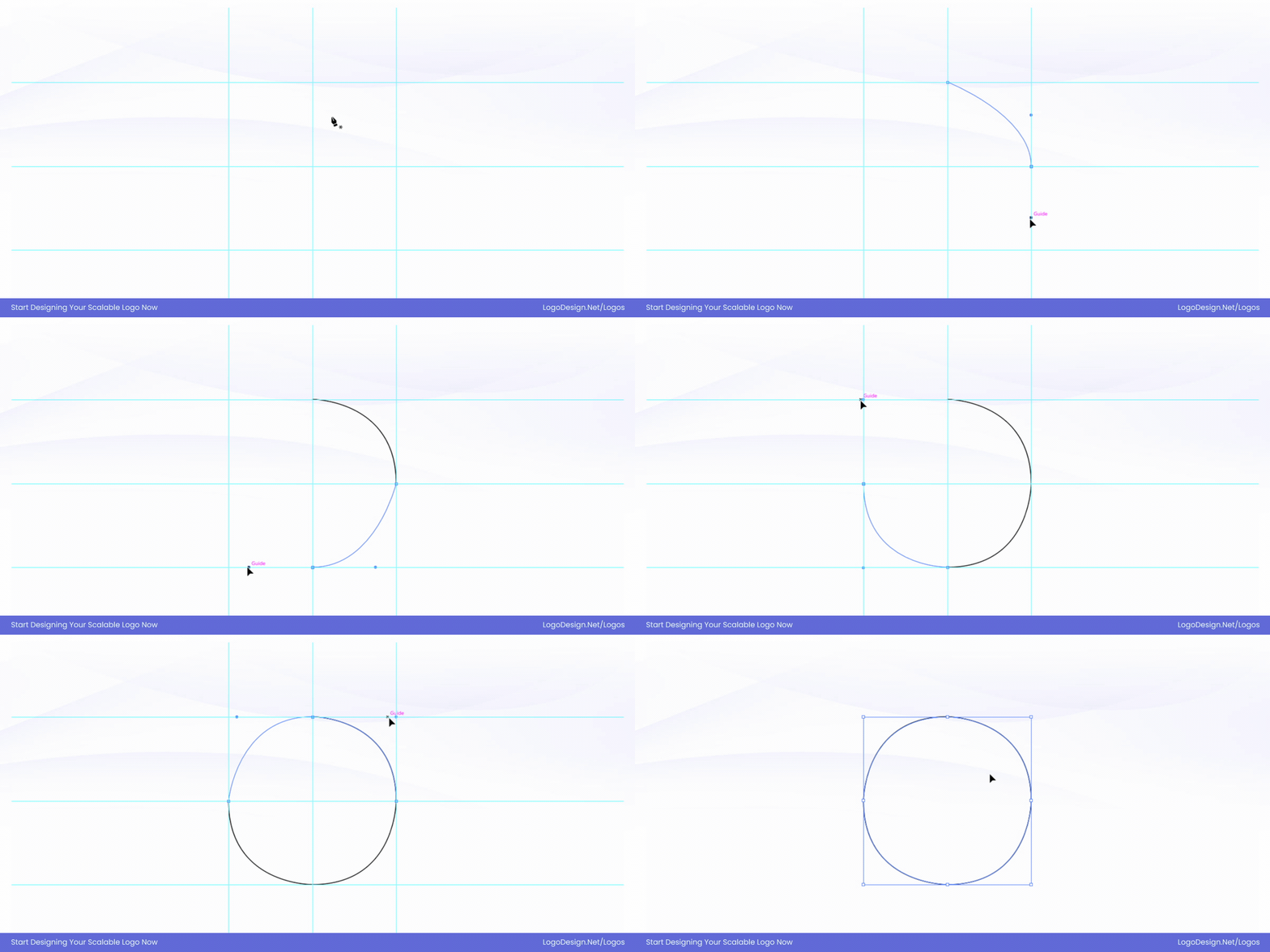
- Adjust curvature precisely
- Maintain symmetry
- Create balanced geometric forms
Since each curve is mathematically calculated, a designer can refine the curve to the microscopic level, and the result is that such brand marks will look beautiful and meaningful.
3. Geometric Precision and Brand Consistency
Numerous famous logos have a geometric basis, such as circles, grids, and proportional systems.
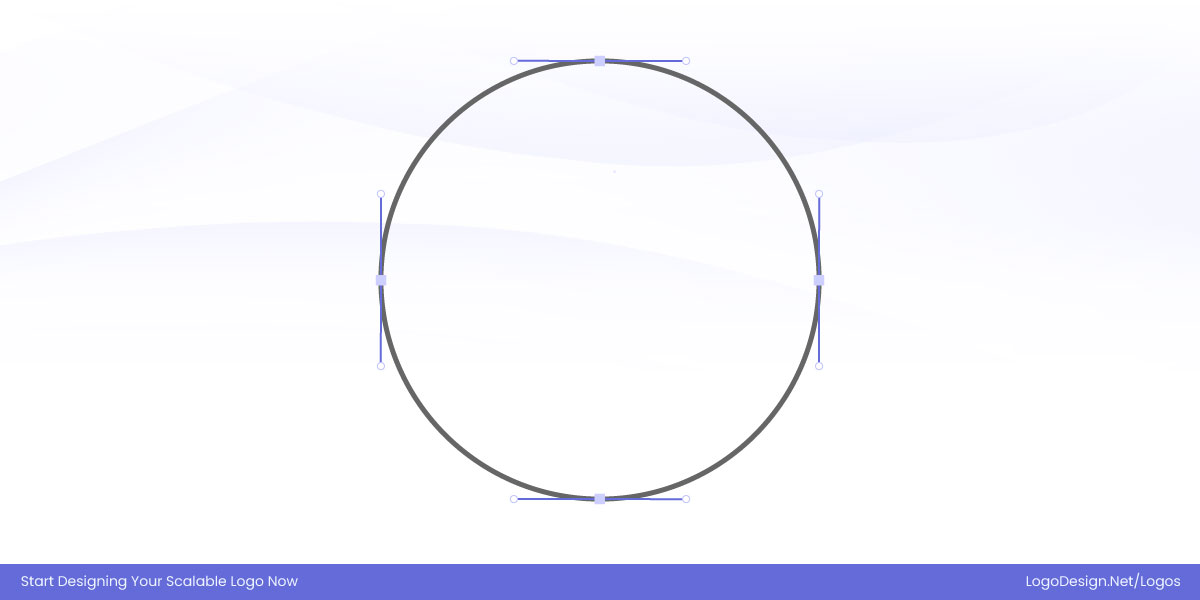
Bézier curves are compatible with these systems, allowing:
- Consistent spacing
- Controlled curvature transitions
- Alignment with grid systems
To achieve visual harmony, designers often combine Bézier curves with modular grids or the “golden ratio”. This rigidity of the methodology contributes to the formation of logos that appear balanced and permanent.
How Bézier Curves Work in Logo Design?
To truly understand their importance, it is better to consider how designers strategically use Bézier curves when designing logos. Professional logo design is not about randomly adding points and moving handles; it is about control, restraint, and mathematical flow.
Strategic Anchor Placement
The arrangement of a curve is determined by anchor points, although where they are placed will make a logo look sophisticated or rough. The difference between strong and weak vector design lies not in adding points but in their correct placement. The balance, tension, and clean mathematical flow are formed by the strategic placement.
• Why Fewer Points Create Smoother Logos?
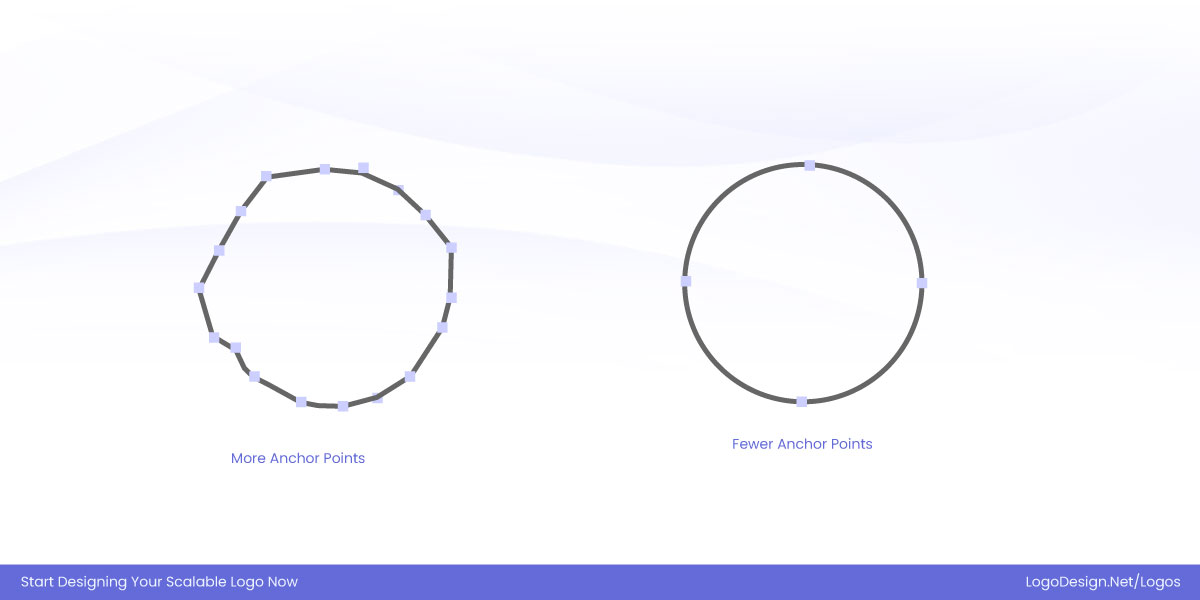
One fundamental working principle of the design of vectors is straightforward: as few anchor points as possible. Over-points cause irregular bumps, irregular curvature, and uneven tension. They also render shapes more difficult to modify and decrease accuracy.
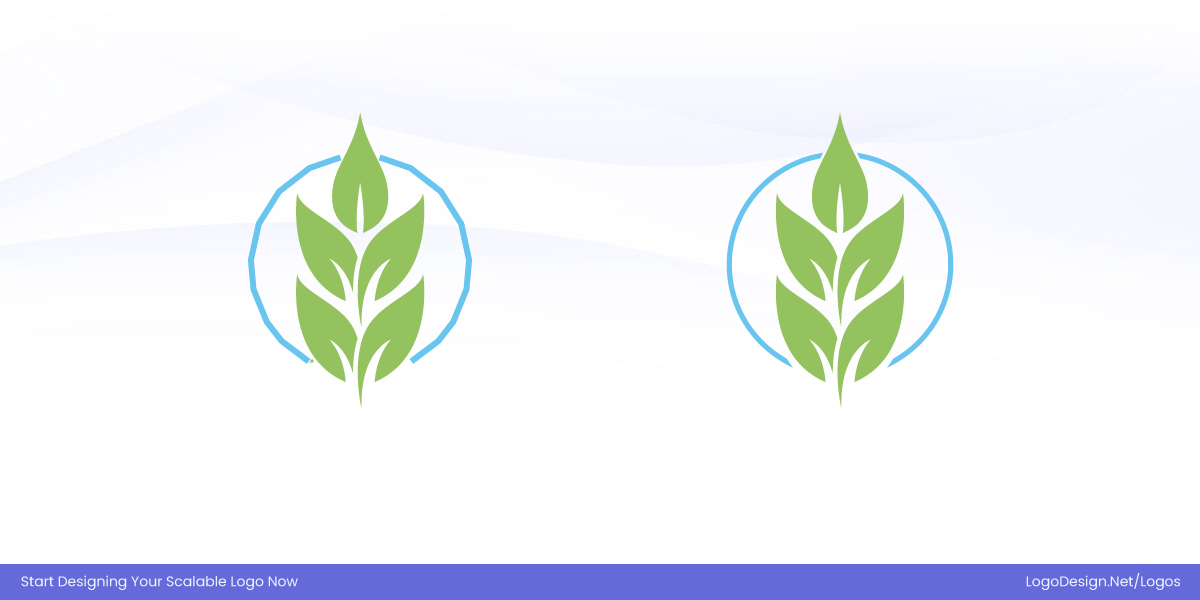
The reduced number of points yields smoother mathematical curves. This gives less jaggy outlines, enhanced scale, and finer control. It is the simplicity of composition that directly results in the elegance of form.
• Where to Place Anchor Points on Curves?
The anchor points must be positioned at structural extremes of the curve, at the top, bottom, leftmost, and rightmost, and at real corners or direction-sharp turns. These postures determine the geometry of the form and enable the movement of the curve between them.
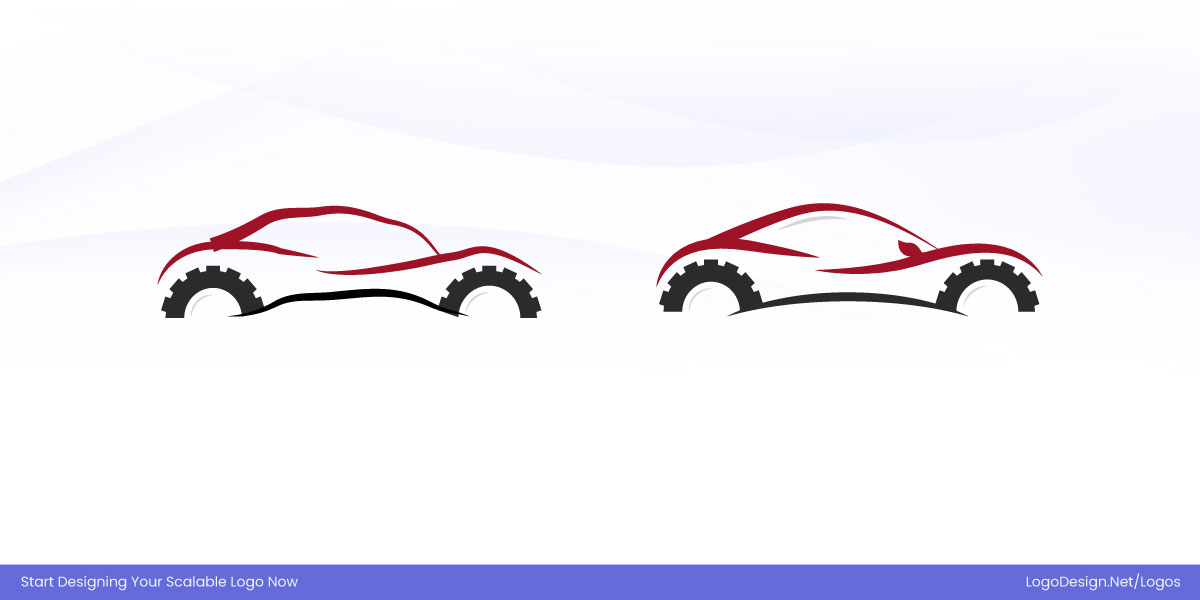
Avoid placing points in the middle of smooth arcs unless absolutely necessary. Allow the Bézier handles to form the curve between extremes. This methodology retains editability, mathematical clarity, and long-term accuracy in the construction of a logo.
Handle Control Principles
Anchor points characterize structure, and handles characterize personality. Whereas anchors control the starting and the ending of a curve, the movement between them is controlled by handles. What makes the shape technically correct and visually perfect is mastery of handle control.
• Symmetrical vs Asymmetrical Handles
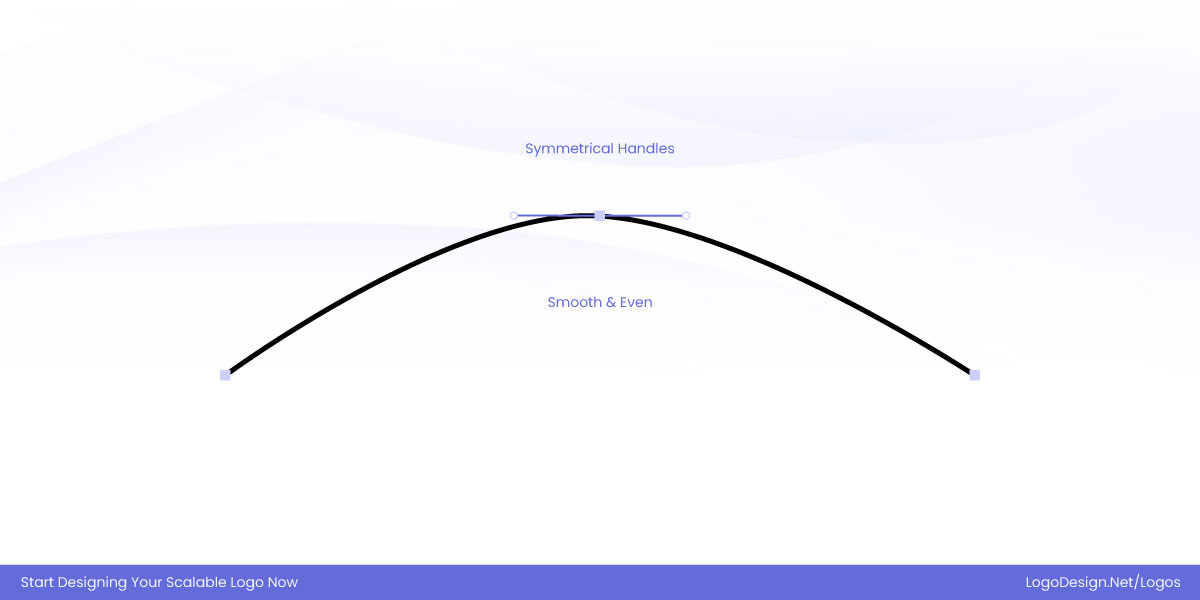
Symmetrical handles are the same length and face opposite sides of the same axis. The purpose of this is to generate a balanced and consistent curvature that is best suited to circular, geometric, or highly structured logos. Symmetry brings about stability, harmony, and mathematical accuracy.
Google has rounded letters based on manipulated geometric balance.
The round BMW logo, made of symmetrical curve management to create the ultimate proportion.
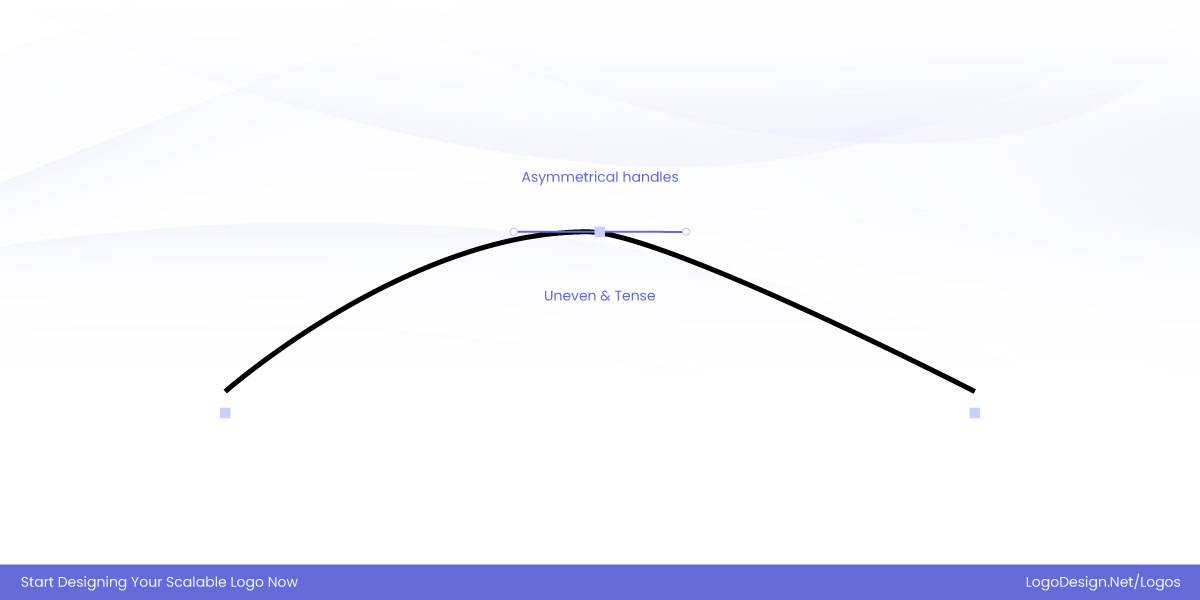
Asymmetrical handles vary in length or angle, giving different tension and directional movement. This method brings energy, personality, and expressiveness, which is typical of script logos and bespoke typography. Man-made asymmetry creates a deliberately dynamic tension rather than disequilibrium.
Ford Motor’s flowing script incorporates variable motion of the curve to form a smooth flow in its oval-shaped word mark.
It is the expressive handling manipulations that form the handwritten-style Disney logotype.
• Handle Length and Curve Tension
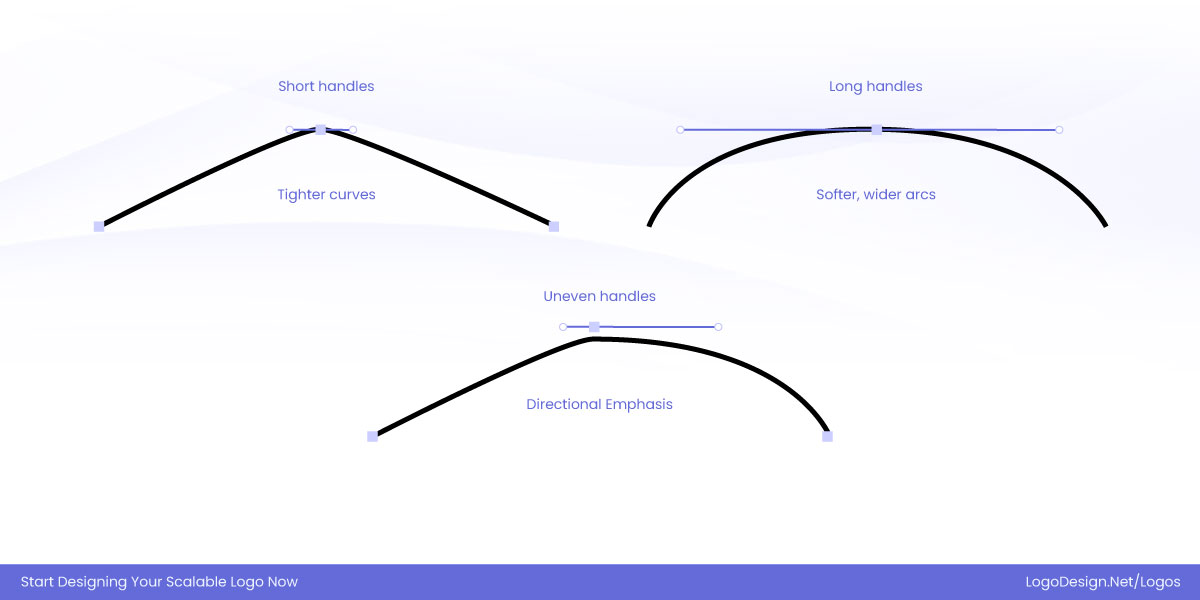
Curve tension and softness are directly proportional to handle length. Tighter, sharper curvature is formed by the short handles, and broader, smoother arcs are made by the long handles. The uneven lengths of the handles provide directional cues and lead the viewer across the form.
Optical harmony in the handle length is fine-tuned by the professional designers. Minor inconsistencies can form flat spots or bumps, which decrease the perceived quality of a logo. Accuracy at this degree is the difference between amateur curves and professional ones.
• Maintaining Smooth Transitions
When two sections of the curve are joined, the handles must face the same way and be in proportion. Sudden inclinations or tension mismatches cause distinct kinks that stop the flow. Connected points alone are not sufficient for smooth transitions, as continuous curvature is required.
Directional alignment ensures the smooth flow of motion throughout the shape. This continuity is needed to ensure scalability, refinement, and visual polish in logo construction.
Curve Continuity
Continuity defines how smoothly two curve segments connect. In logo design, this determines whether a shape feels seamless and refined or uneven and mechanical. Higher continuity creates smoother visual flow and elevates perceived quality.
There are three types of continuity:
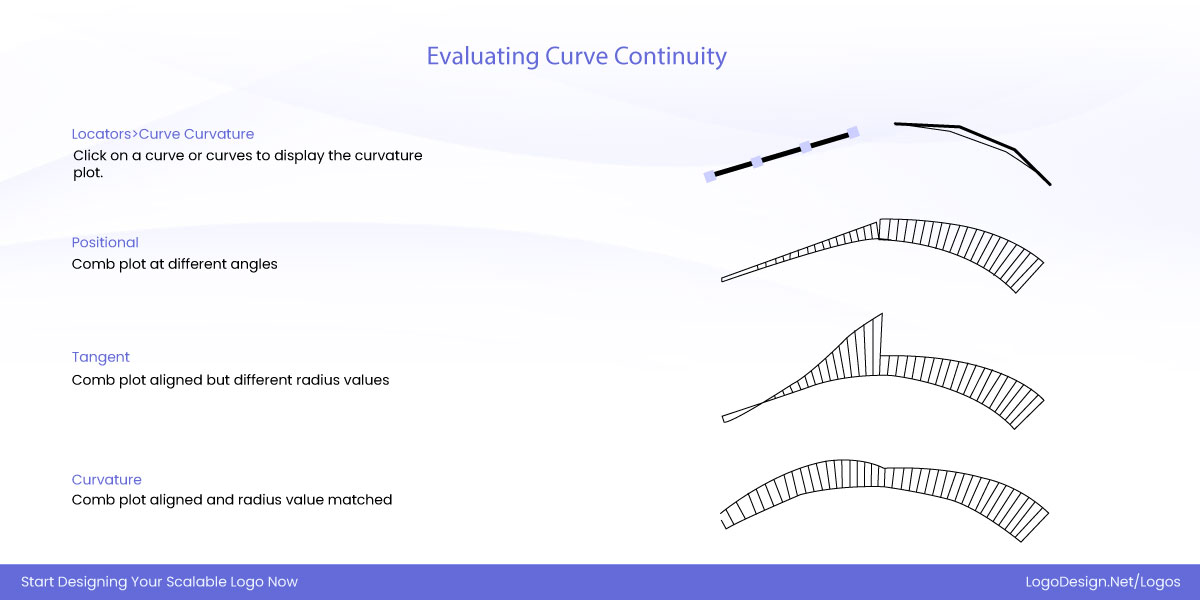
a. Positional Continuity (C0)
Positional continuity implies that there is overlapping of two curve segments of an anchor point. They are literally attached but can be oriented in different directions to create an apparent corner or jagged edge.
This is the primal continuity level. The curve could be broken or abrupt, even though it is technically joined.
b. Tangent Continuity (C1)
Tangent continuity occurs when the connected segments have the same direction at the anchor point. The directional flow of the handles is harmonized, so the angles are removed, and the direction is smooth.
This is the lowest level of professional curved logo work. The curve flows freely, although the curvature tension may vary marginally.
c. Curvature Continuity (C2)
Curvature continuity guarantees that the segments are in the same direction and that the rate of curvature change is equal at the junction point. This eliminates the slightest bumps and ensures a seamless transition.
This grade yields top-quality polish and optical refinement. The curve does not just flow; it is natural and mathematically correct.
Why Continuity Matters for Logos?
The human eye subconsciously recognises even small anomalies in curves. A viewer might not see the flaw, but s/he will feel it. Minor irregularities, disproportionate tension, or fractured flow may implicitly diminish the perceived quality of a logo.
Poor continuity can:
- Make a logo feel amateur
- Introduce unwanted visual tension
- Reduce perceived craftsmanship
Strong continuity:
- Enhances elegance
- Improves scalability across sizes
- Reinforces brand professionalism
The Importance of Smooth Curves in Branding
Curved lines affect a brand’s emotional perception. Balanced, symmetrical forms are also associated with harmony, stability, and trust, which are innate to human beings. Asymmetrical or jagged lines add a slight sense of friction, which can undermine brand confidence.
• Improve Memorability
Uninterrupted lines with clean edges form simple, recognizable silhouettes that are easier to remember.
The GoJek circular icon uses continuous, smooth curves to form a simple and instantly recognizable silhouette, making the brand easy to recall.
The Instagram rounded square icon and flowing interior curves rely on smooth, continuous shapes that create a distinct and memorable brand mark.
• Enhance Visual Balance
Consistent curvature maintains geometric harmony across the mark.
The round and intersecting curves of the Slack logo preserve the balance and visual unity, which provide the brand with a coherent and balanced look.
The Observe.AI logo incorporates a circular rhythm through smooth curvy lines in horizontal and vertical lines, a geometrical balance, and stability.
• Convey Professionalism
Handles with poor placement or inadequate arcs are uncultured, whereas disciplined curves express relevant experience and accuracy.

The Bloomscape wordmark is made up of the slightest, smooth lines in its text, and it sends an image of a more refined and business-like appearance to the brand.
The Robinhood eather design uses curved lines of movement which express a prudent workmanship and skill.
• Build Trust Through Refined Aesthetics
Psychological reliability and stability are achieved because the shapes are painted in the same color.

The HealthSherpa logo uses oft and curved geometry to make it seem to be easily approachable and reliable, which makes the brand trustworthy.
The Alan smile character is based on harmony and consistency through consistent curves to bring forth warmth and reliability, reinforcing the relationship with the brand.
Bézier Curves vs. Geometric Construction
Bézier curves are mathematically accurate, yet good logo design needs more than precision; it needs to be visually harmonious. The reason designers strike a balance between technical construction and optical judgment is to ensure that curves do not feel wrong to the human eye, even though they are just right on a grid. The balance of perception is not always mathematical perfection.
• Organic Curves for Personality
Organic curves give more priority to expression rather than structure. They create tension, rhythm, and variation in flow, giving it a distinctive nature and emotional warmth. These curves are natural and human, as they are not bound to rigid geometric systems.
This style is best suited when personalities, narratives, or originality take precedence over symmetry.
The Royal Queen Seeds lion avatar is drawn with flowing, sinuous lines that give the mark a natural, lively energy. The organic curves in the lion’s mane and body convey vitality and approachability, avoiding the rigid psychology of shapes.
The Melon Foundation “M” mark features hand-drawn, slightly uneven curves that feel handwritten, giving the logo warmth and personality. Organic curvature creates a sense of movement and human touch, emphasizing creativity and openness.
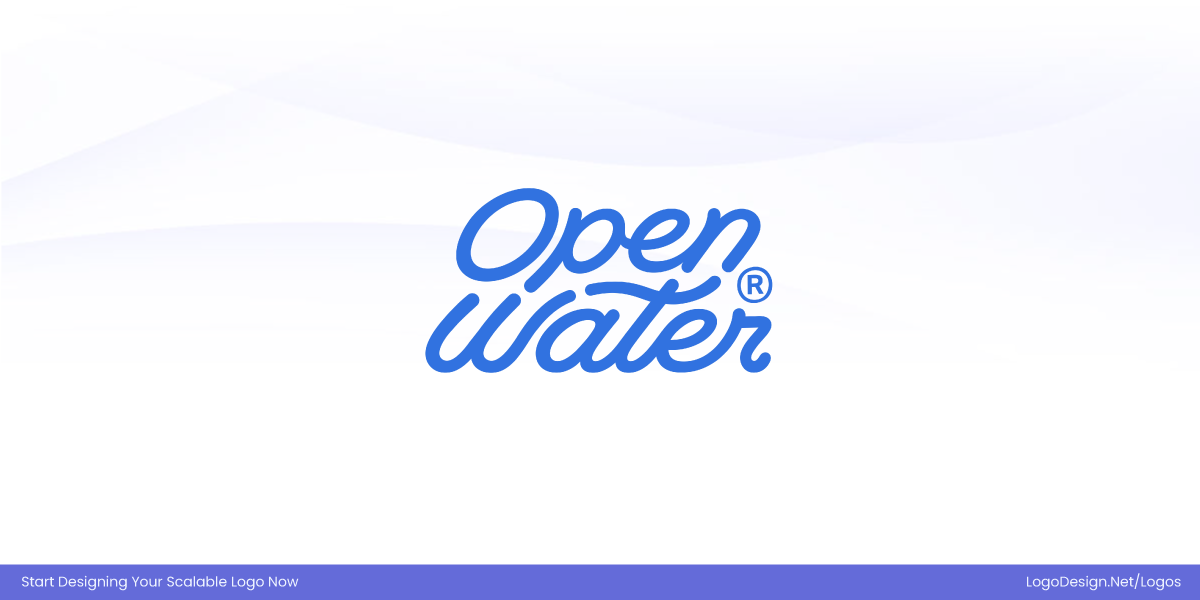
The Open Water wordmark incorporates gentle wave-like curves in the lettering that evoke flowing water. The organic arcs create a fluid, natural rhythm, reinforcing the brand’s association with purity and movement.
The Bombardier wing-shaped emblem is composed of smooth, sweeping curves that mimic the flow of aerodynamic forces. The organic curvature conveys speed, elegance, and a natural sense of motion, in contrast to strict geometric precision.
• Structured Geometry for Balance
Strict geometry is based on circles, grids, and measured relationships to produce clarity and equilibrium. The marks created using this technique are stable, long-lasting, and extremely scalable. Geometric systems are clean, enhancing visual order and brand authority.
It works especially well with corporate, institutional, or minimalist and simple brand identities, where balance and accuracy are key.
The Grubhub logo features a tall, condensed wordmark built on strict geometric proportions. Its precise vertical and horizontal alignment gives the mark a stable, structured appearance that communicates efficiency and reliability.
The Allsides icon uses minimal geometric shapes arranged in a clean, modular pattern. The simple, measured forms create visual balance and clarity, emphasizing impartiality and order.
The GoFundMe logo incorporates geometric elements in its wordmark and icon, using clean lines and proportional spacing. The structured forms create a sense of stability and trust, supporting the brand’s credibility and accessibility.
• Optical Adjustments for Visual Accuracy
A geometrically perfect logo can still appear distorted due to optical illusions. The designer does make minor changes to techniques, such as moving, rotating, thickening, or refining curves, to make the shape look balanced.
Optical correction provides perceived symmetry, not measured symmetry.
The Wooly Organic wordmark was refined so that the smooth connections between letters feel visually balanced and avoid uneven visual tension. Subtle adjustments to the spacing, curve thickness, and letter junctions ensure the curves read as uniform and comfortable to the eye rather than purely mathematically spaced, making the mark feel calm and coherent.
The Peer Gynt Festival custom type was optically tuned to visually align rounded elements and straight segments despite their differing geometric shapes. Designers likely adjusted letter spacing and curve transitions to maintain perceived consistency across the font family, ensuring motifs feel evenly weighted and harmonious when viewed as a system rather than laid out on strict geometric axes.
• Using Proportions and Grids
Rectangular and proportional systems provide guidelines for alignment, spacing, and repetition. They facilitate coherence between applications and guarantee predictable scale.
The Cartoon Network logo is designed on an austere grid of squares and blocks so that all the elements are proportionate and consistent. Such a grid structure supports visual repetition and helps create harmony and unity across all applications.
The Method Security identity is based on a stable, controlled visual language, with a hexagonal grid and a modular, proportional structure, in its emblem and type system. The quantified relationships between shapes indicate strength and precision and support the brand’s focus on structure and reliability.
The Mokslo Sala logo system uses a rigid grid of dotted circles, and all the visuals are based on them, establishing a pattern of spacing and repetition. This austerity of proportions brings the identity to the field of scientific methodology and establishes clarity and consistency.
The EdgeCore logo is based on geometric proportions and modular forms that align with the grid structure. Structural integrity in the identity enables consistent, measured inter-spacing and proportioned shapes, which support scalability and visual harmony, allowing the identity to be adapted to any media.
When not to use: Strict geometrical constraints may destroy personality and natural movement in an expressive, flowing hand-lettering logo. In such instances, visual rhythm and character are overruled by modular precision.
How to choose the right approach for your logo?
The brand’s goals and personality should be taken into consideration before settling on a particular approach to building your logo. Various styles focus on different attributes, with some more emotional and organic, whereas others emphasize precision, symmetry, and visual harmony. Using the right technique is the way to make sure that your logo works not only mathematically but also perceptually and emotionally appeals to the viewers.
| Design Need | Best Method | Why |
| Organic expression | Freehand curves | Feels natural and human |
| Technical balance | Structured geometry | Ensures symmetry and consistency |
| Perceived visual balance | Optical correction | Fixes distortions that math alone can’t |
| Proportional structure | Golden ratio/grid systems | Supports harmony in geometric marks |
Common Mistakes When Working with Bézier Curves in Logo Design
Bézier curves offer mathematical precision; however, this precision only holds when applied properly. Even a small technical mistake in logo design can lead to noticeable defects, scalability issues, and an amateurish brand mark.
The errors that plague logo creation and the effect they have on brand quality are the most prevalent Bézier-related mistakes designers commit.
1. Excessive Anchor Points
The excessive addition of points to bend a curve may leave a logo jiggly and difficult to work with. The fewer strategically placed points, the better the curves, which are easily scaled to any size.
2. Uneven or Broken Handles
Handles control the direction and flow of curves. The imprecise handles may cause the shapes not to line up, making the logo appear unbalanced or clumsy, even when it looks balanced at first sight.
3. Wobbly or Lumpy Curves
Inconsistent anchor placement or handle angles can create bumps or uneven curves, making text or shapes in a logo appear less memorable and unprofessional.
4. Auto-Trace Distortions
Automatically tracing a sketch often produces jagged lines, additional points, and spacing irregularities. Although handy, it may give logos a rough, unfinished appearance.
5. Overcorrected Curves
Attempts to make a curve perfect may make a curve flat. Over-tight or totally circular forms are possible, but they can be hard and unfriendly rather than friendly.
6. Misaligned Symmetry
Balance can be lost by even minute variations in the shape or handle of mirrors. Symmetry-based logos, such as badges or alphabetic monograms, seem out of place when such symmetry is not done with care.
7. Inconsistent Curve Tension
A lack of balance on the curve may make letters or symbols look clumsy or stretched. The use of tension is essential to making logos appear to flow naturally.
8. Improper Curve Continuity (C0/C1/C2)
If connected curve segments don’t share direction or curvature, subtle kinks appear. Smooth transitions are essential for script logos, icons, and flowing shapes.
9. Ignoring Optical Illusions
Even a curve that is mathematically perfect may appear naked to the eye when your eye does not sense that it is balanced. Little optical adjustments make logos look more natural and professional.
10. Unequal Stroke Widths on Curves
Inconsistent line thickness can make a logo appear sloppy or unpolished. Smooth, uniform strokes ensure clarity, especially for wordmarks and icons.
11. Overcomplicating Shapes
Extra curves or twists can be visually appealing, but can decrease legibility and recognizability, especially on smaller sizes or on packages.
12. Disconnected or Floating Segments
Curves that do not fit together leave gaps in the image, making the logo appear incomplete or disjointed. All relationships must be deliberate and smooth.
The Power of Bézier Curves in Modern Design
The Bézier curves are the foundation of digital design, enabling designers and companies to create smooth, scalable, and adaptable graphics for use across all platforms. The precision of their curves is mathematical and thus clean and consistent, and the flexibility of their technique ensures that logos and graphics feel aesthetically balanced even when scaled to extremes or when used on other devices.
Beyond Logos: Where Bézier Curves Shine?
Bézier curves are not limited to logos: they are necessary throughout the digital design realm:
- Typography: Create crisp, scalable letterforms that remain legible at any size, from business cards to billboards.
- Web Graphics: Vector shapes adapt perfectly to responsive layouts, keeping graphics sharp on any screen.
- App Interfaces: Icons and interactive elements remain precise and consistent across different devices.
- Animation Paths: Curves allow smooth, controlled motion in both 2D and 3D animation.
Bézier curves are also behind flexible file formats such as SVG, EPS, and PDF, enabling designers to provide graphics that are fully scalable, editable, and forward-looking for use in website design, print, and interactive applications.
Versatility: Smooth Everywhere, Every Size
Logos should be flexible in the modern world, and Bézier curves can help achieve that. Curved masonry logos do not sacrifice visual integrity in any application:
- Web & Mobile: Logos remain sharp and well defined even at high screen resolutions.
- Social Media: Small avatars and icons are not lost in detail and recognizability.
- Print & Signage: From packaging to large-format banners, curves remain smooth and elegant.
- Brand Consistency: The same vector-based logo reproduces predictably across platforms, ensuring a unified brand identity.
Bézier curves also help increase brand recognition because the shapes used are always the same, readable, and aesthetically balanced; hence, your audience immediately recognizes your logo, online or in print.
Future-Proof Logos: Built to Last
A logo that is made of Bézier curves is an investment in the future. Well-shaped curves enable logos to evolve smoothly with time:
- High-Resolution Screens: Logos stay sharp on Retina, 4K, and future display technologies.
- Large-Format Printing: Curves remain smooth on posters, billboards, and merchandise.
- Brand Growth: One vector logo works across all current and future platforms without losing quality.
- Responsive Design: Logos scale elegantly to fit different layouts or applications without distortion.
This flexibility ensures that your logo remains professional, polished, and recognizable, supporting both immediate branding needs and long-term growth across digital and physical media.
How LogoDesign.Net Logos Leverage Bézier Curve Principles?
Even template-based logos can achieve professional polish because LogoDesign.Net relies on vector foundations powered by Bézier curves. As the users play with an intuitive interface, the technology behind it all is the same curve logic used by professional designers to develop smooth, scalable, and visually balanced logos.
1. Automatic Curve Smoothing for Clean Shapes
Behind the scenes, Bézier curves define every shape and letterform. When you adjust a logo:
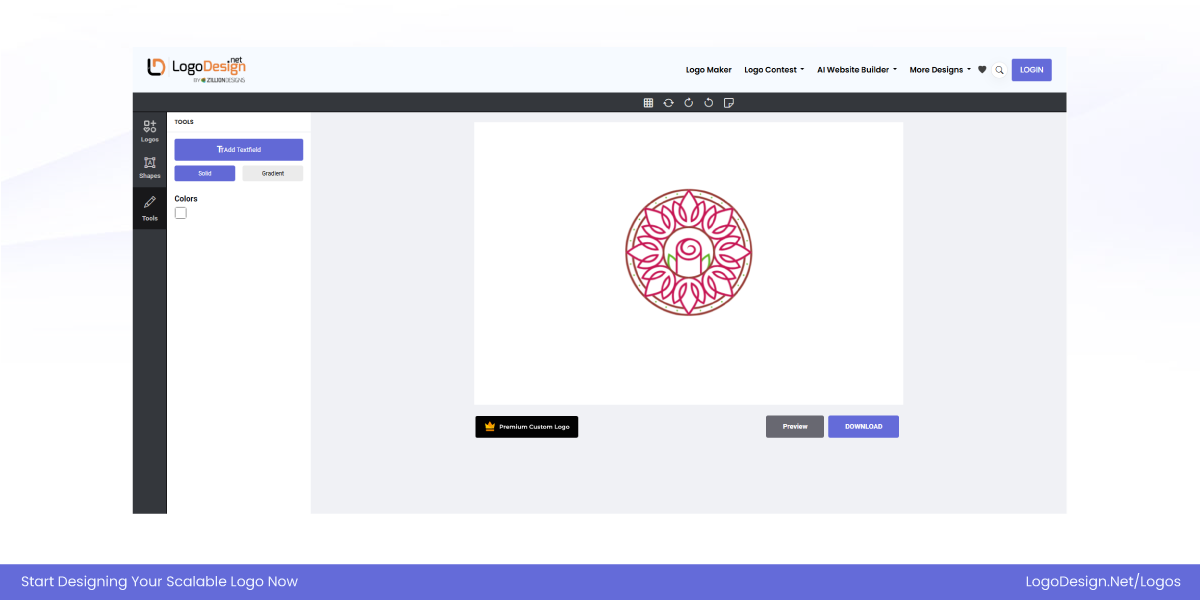
- Curves are automatically smoothed for consistent flow.
- Unnecessary anchor points are minimized, keeping shapes clean and editable.
This ensures logos avoid uneven bumps and jagged edges, even without manual handle adjustments.
2. Built-In Proportion and Alignment
Templates often use grids and structured geometry to position elements:
- Shapes and text are proportioned to create visual balance.
- Symmetry and spacing are maintained without requiring expert adjustments.
This reflects professional design principles, where geometric alignment helps logos feel stable, timeless, and coherent.
3. Vector-Based Scalability Across Platforms
LogoDesign.Net allows logos to be exported in vector formats like SVG and EPS, which preserve Bézier data:
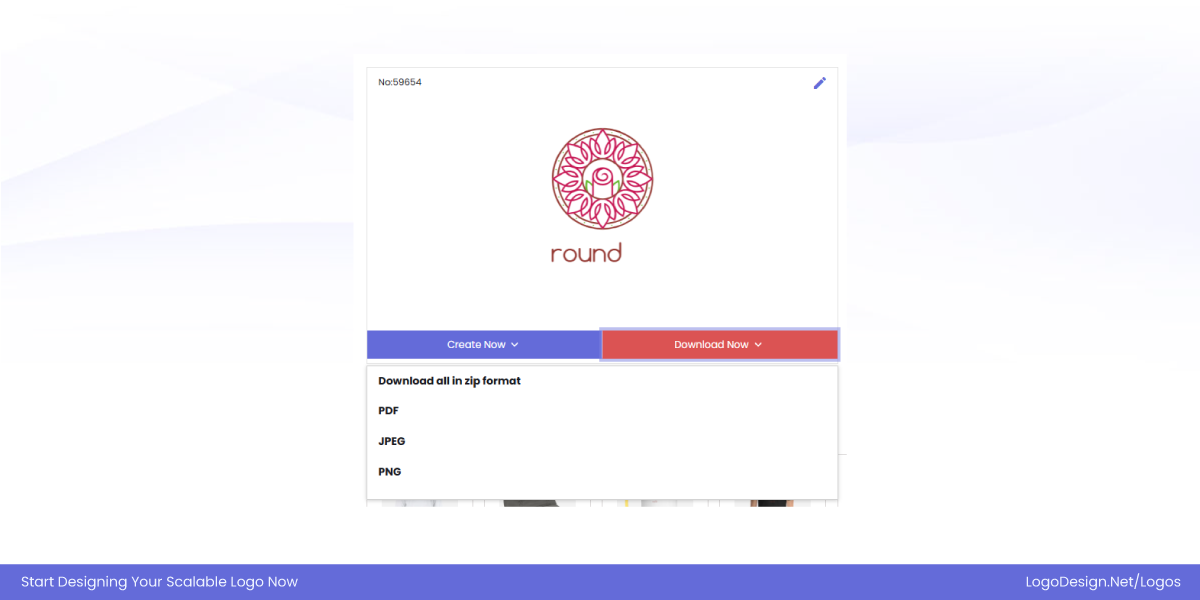
- Logos remain sharp and smooth on screens of all sizes.
- Printed materials, from business cards to large banners, retain clean curves.
This ensures your logo works consistently across digital and physical platforms, future-proofing your brand.
4. Consistency and Brand Recognizability
By relying on Bézier curves and vector geometry, LogoDesign.Net logos:
- Maintain consistent curves, shapes, and proportions across multiple applications.
- Support instant recognizability, whether on a tiny app icon or a billboard.
This reinforces brand professionalism and audience trust.
5. Understanding the Limitations
While automatic Bézier handling makes logos look polished, professional designers still add value through:
- Fine-tuning curve tension for expressive, unique shapes.
- Applying optical corrections to account for human visual perception.
Continuity of curves (C1/C2): perfect, smooth flowing marks.
LogoDesign.Net provides brands with a good launching point, combining the accuracy of Bezier curves with the ease and simplicity of the user interface; however, the finesse of a professional designer can also take a logo to the next level.
The Invisible Framework Behind Every Great Logo
Behind all the smooth, scalable, and professional logos is an underlying mathematical structure that is based on Bézier curves. The curves enable designers to create crisp forms that are geometry-balanced and aesthetically upscale, regardless of size.
For business, you can either hire professional designers or use an excellent vector-based logo maker that uses Bézier curve technology to design a logo that is clear, versatile, and consistent with your brand.