From roadside signs to moving fleets, transport logos must stay bold, clear, and recognizable everywhere. Here’s the secret to building one that performs well in the real world.
From highway trailers to cargo aircraft, transport logos must stay clear, legible, and recognizable in motion and at scale. Designing one that performs in real-world logistics environments requires more than adding a truck icon or bold lettering.
If you run a logistics or transport company, or you’ve been asked to design a logo for one, the brief can seem straightforward. Goods move. Vehicles carry them. So the logo should probably show a truck, a road, or an arrow. Done.
That thinking is exactly why so many transport logos look interchangeable. The same block lettering. The same swoosh. The same highway motif stretched across the sides of the trailer. They signal the category, but rarely the company behind it.
In transport, customers make fast judgments. Before trusting a carrier with cargo or choosing a delivery partner, they look for cues of reliability, coordination, and scale. Those cues often come from the logo.
So while the visuals may appear simple, the difference between a forgettable mark and a credible logistics brand comes down to deliberate choices in color, typography, and structure.
Why Having a Great Transport Logo Matters
Transport businesses operate in one of the most competitive visual landscapes. Every highway corridor, warehouse district, and port region contains fleets of trucks and logistics providers competing for attention. In the United States alone, more than 700,000 registered trucking companies operate as of 2025, ranging from single-vehicle operators to national carriers.
To customers, services often appear similar. Most carriers promise speed, coverage, and reliability. The logo becomes the first point of distinction. It signals whether a company feels established, efficient, regional, or large-scale before any conversation begins.
There is also a trust factor unique to logistics. Businesses hand over goods, inventory, or shipments expecting safe delivery across distances. A weak or generic logo quietly suggests disorganization. A well-built mark signals coordination and operational control.
That instant recognition is exactly what the strongest transport logos achieve. They are often seen briefly and at speed, yet the business function remains obvious.
UPS shield logo signals security, reliability, and global authority.
Take UPS. The brown shield, compact lettering, and contained shape feel secure and protective. Even without context, the shield logo suggests custody and reliability, which fit a company responsible for handling parcels and freight worldwide. The emblem has enough authority that it reads clearly on uniforms, vans, and aircraft with equal strength.
FedEx wordmark and hidden arrow express speed and precision.
FedEx works differently but just as quickly. The clean wordmark and forward arrow hidden between the letters create an immediate sense of motion and direction. The mark looks fast and precise, which mirrors the company’s promise of rapid, coordinated delivery across distances. One glance, and the function is obvious.
Both marks show how transport branding succeeds when elements are chosen to communicate purpose instantly, even at speed or distance.
Transport Company Logos: Signaling Motion, Scale, and Network
Transport logos’ focus is movement, distance, and coordination. You see horizontal layouts, directional forms, arrows, and streamlined typography. The design needs to read clearly across long trailer sides or moving vehicles, so it often stretches wider and feels more open. The message is not “we fix vehicles” but “we move things efficiently from one place to another.”
JB Hunt’s bold yellow logo signals scale and strength.
JB Hunt uses a bold yellow rectangle with heavy black lettering. It reads clearly from highway distance and feels industrial and large-scale. The logo suggests fleet power and nationwide coverage.
Schneider National’s orange logo signals movement and logistics power.
Schneider National uses strong orange with a simplified carrier form. The color is visible on moving trucks, and the shape echoes freight equipment. It communicates logistics, delivery, and movement rather than repair.
DHL’s bold yellow-red logo signals speed and global reach.
DHL uses a bright yellow and red palette with a clean wordmark. The horizontal layout maximizes visibility on vehicles and shipping containers, conveying speed, global reach, and reliability.
Essential Components of an Effective Transport Logo
Strong transport logos rarely rely on a single feature. They are built from a deliberate combination of color, symbols, typography, and structure that together signal capability and trust.
Each element carries industry meaning shaped by decades of visual convention. Understanding how these components work individually and in combination is what turns a basic mark into one that feels credible, durable, and instantly recognizable in real-world settings.
1. Color Palette: Industry Codes and Meaning
Different industries use color in logos and branding in different ways. Color carries unusual weight in transport branding because these businesses operate in outdoor, moving, and industrial environments.
The palette must convey meaning quickly while remaining visible across trailers, containers, terminals, uniforms, and roadside signage. Over time, certain colors have become strongly associated with specific qualities in this sector.
Red-and-black branding projects strength, urgency, and authority.
- Red-and-black combinations signal strength, urgency, and authority
Blue branding signals reliability and organized transport services.
- Blue is widely used in transport and service chains because it conveys reliability and organization
Yellow and orange branding highlights visibility and motion.
- Yellow and orange emphasize visibility, caution, and motion, especially in fleets operating on highways or ports.
You can see how these codes play out across established brands.
Maersk’s blue-and-white branding signals global maritime authority.
Maersk uses maritime blue paired with white. The colors communicate global reliability, professionalism, and calm authority, reflecting its international shipping network.
COSCO Shipping’s blue-red logo signals reliability, energy, and maritime presence.
COSCO Shipping features a bright blue and red palette. The blue emphasizes reliability and maritime authority, while red adds energy, visibility, and presence across ports and vessels.
Toll Group’s red-and-white logo conveys strength, visibility, and clarity.
Toll Group uses a deep red with white lettering. The bold red conveys strength, action, and visibility across delivery vehicles and shipping containers, while white ensures clarity and readability.
Across all these examples, color is functional and strategic. It is never decorative. Well-chosen palettes position the brand in terms of strength, visibility, scale, and reliability before anyone reads the text.
2. Symbols and Graphic Elements
Symbols in transport branding serve a specific purpose: to communicate movement, distance, network flow, and operational scale at a glance. Symbols are chosen to suggest coordination, logistics, and reliability.
The use of symbols in this sector typically falls into two categories:
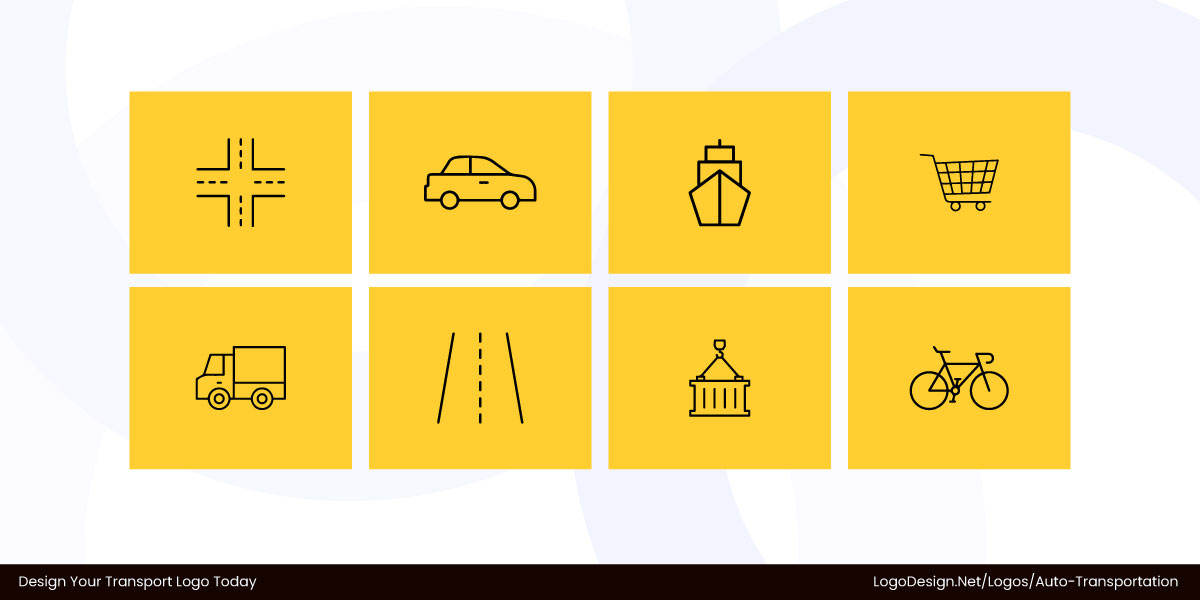
Transport logos use vehicles or roads for clear, literal imagery.
- Literal transport imagery – depicting vehicles, roads, or shipping forms in a simplified way.
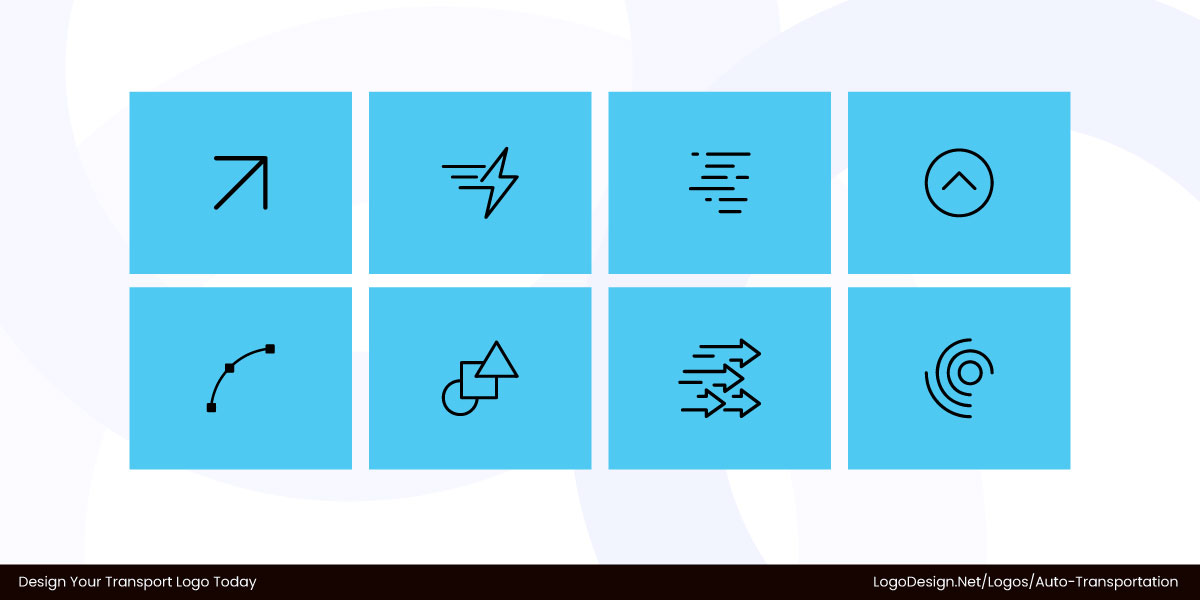
Logos use abstract shapes to convey motion, connectivity, and scale.
- Abstract motion or network cues – shapes, arcs, or geometric forms that imply flow, connectivity, or scale.
The choice between literal and abstract often reflects brand scope. Regional or local transport companies may favor more literal icons, while multinational logistics networks often simplify shapes into abstract, scalable symbols that communicate reliability without clutter.
Some clear examples from the transport sector:
Nippon Express’s globe logo signals global coverage and network connectivity.
Nippon Express uses a stylized globe as its symbol. The circular design represents global coverage and network connectivity, suggesting worldwide shipping routes while remaining clean and instantly recognizable.
Hapag-Lloyd’s wave logo conveys maritime motion and dynamic cargo movement.
Hapag-Lloyd features a simple, abstract wave motif. The wave implies maritime motion and cargo movement without depicting ships, giving the logo a dynamic yet minimal feel suitable for international shipping containers.
Union Pacific’s shield logo signals rail heritage and national transport authority.
Union Pacific uses a shield form tied to transport heritage and rail authority. The symbol signals infrastructure and national scale rather than mechanical detail.
These examples show how transport brands move along a spectrum from literal parts imagery to abstract motion or strength cues.
3. Typography Styles for Transport Brands
Logo typography in this sector must withstand distance, motion, and surface texture. Logos appear on trailers, containers, railcars, ports, terminals, and uniforms. For this reason, transport fonts tend to be bold, wide, or condensed with strong strokes. The styling communicates reliability, operational scale, and efficiency.
Transport brands often use:
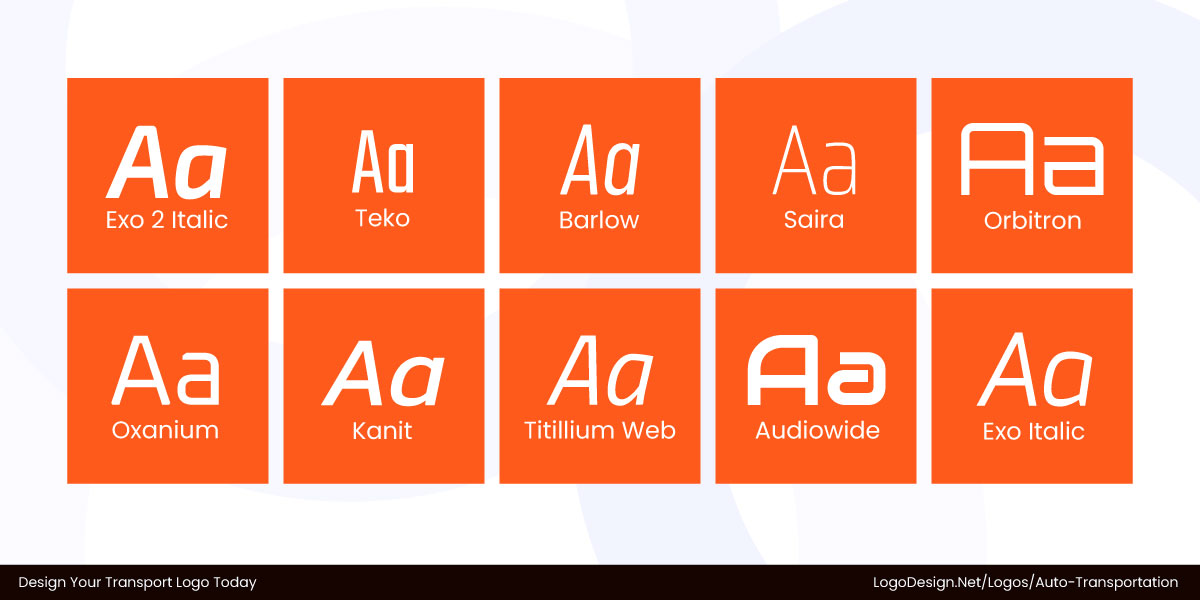
Forward-leaning fonts convey motion and dynamic brand energy.
- Horizontal or forward-leaning typefaces to suggest motion
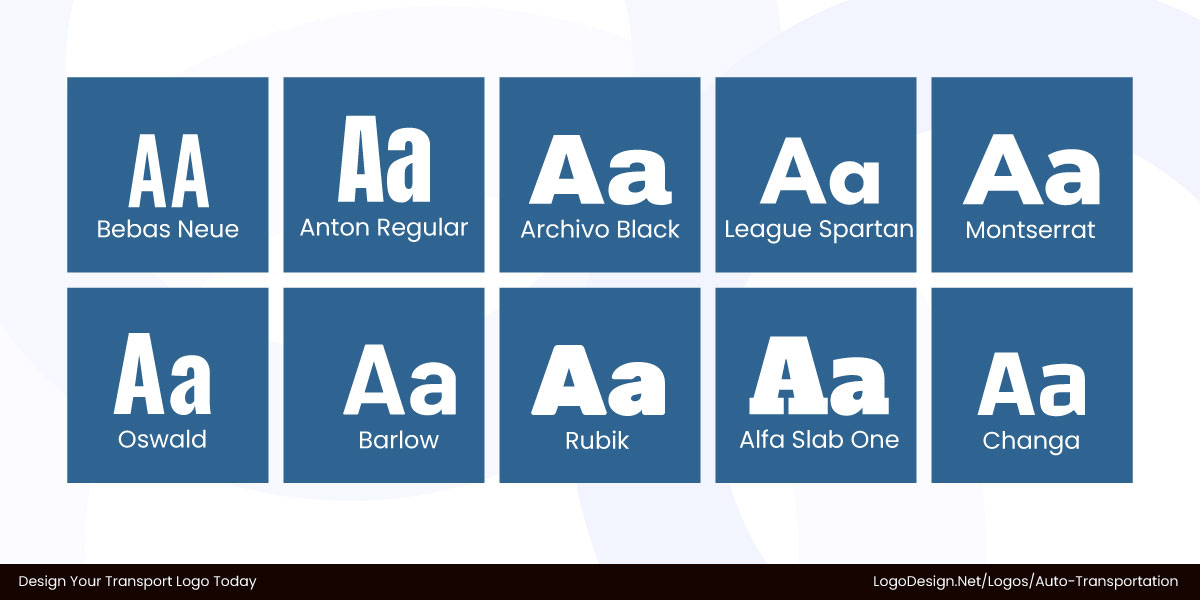
Bold, wide fonts convey industrial strength and high visibility on vehicles.
- Tall, heavy, or wide lettering to convey industrial strength and visibility across large vehicles or infrastructure
Kuehne + Nagel’s bold uppercase type conveys trust and global scale.
For instance, Kuehne + Nagel employs a bold, uppercase typeface with wide spacing. The strong, geometric letters convey professionalism, trust, and the scale of its international shipping network.
CEVA Logistics’ bold condensed type conveys efficiency and global authority.
CEVA Logistics features a strong, condensed typeface in all caps. The compact, heavy lettering maintains legibility across trailers and shipping containers while projecting global efficiency and operational authority.
Evergreen Marine’s bold wordmark conveys industrial strength and global reliability.
Evergreen Marine uses a bold, squared wordmark. The sturdy lettering provides clarity on containers and vessels and communicates the industrial strength and reliability of the brand’s international shipping network.
In all cases, typography does the primary branding work, even without symbols.
4. Shape, Layout, and Structure
The shape of a transport logo determines how it fits and performs on real surfaces—trailers, shipping containers, railcars, ports, terminals, and uniforms. Unlike other industries, transport brands prioritize horizontal, shield, or rectangular layouts that stretch across vehicles or cargo, maximizing legibility at a distance.
According to shape psychology, they also carry meaning.
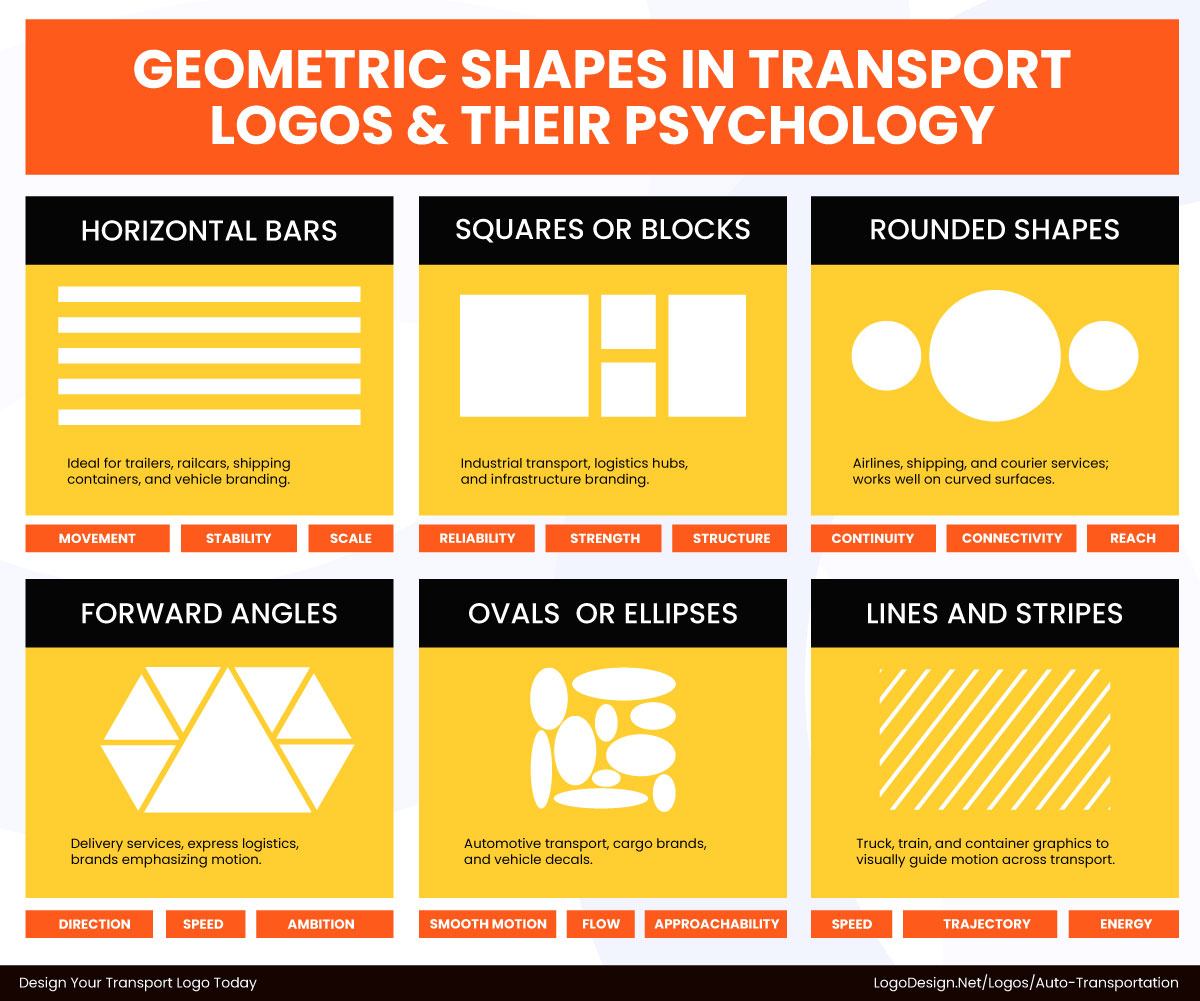
Transport logos use horizontal or shield shapes for visibility on vehicles.
- Circles suggest continuity, connectivity, and global reach.
- Shields convey protection, authority, and reliability.
- Horizontal bars or rectangles imply movement, scale, and forward progress.
Let’s see examples of how transport brands use shape and layout effectively:
Yang Ming’s horizontal wordmark conveys stability, scale, and global operations.
Yang Ming Marine Transport uses a rectangular, elongated wordmark. The horizontal shape spans container sides clearly and communicates stability, scale, and smooth global operations.
MSC’s wide, rectangular lowercase logo conveys visibility, global reach, and strength.
MSC (Mediterranean Shipping Company) features a wide, rectangular layout with bold, lowercase letters. The horizontal shape ensures high visibility on containers and vessels while signaling global reach and operational strength.
ZIM’s compact rectangular logo conveys reliability, scale, and global presence.
ZIM Integrated Shipping Services uses a compact rectangular wordmark with clean typography. The layout works across ship hulls and terminals, reinforcing reliability, scale, and international shipping presence.
These examples show that shape, layout, and structure are not arbitrary. They are carefully chosen to ensure that transport logos remain readable, recognizable, and meaningful wherever they appear in the real world, whether on moving vehicles, signage, or digital platforms.
Step-by-Step Process for Designing a Transport Logo
Designing a logo for a transport or logistics company usually moves from understanding to creation to real-world use. The steps are straightforward, but each one keeps the final mark aligned with how these businesses actually operate. While we’re discussing transport logos, the same approach applies to designing rent-a-car company logos and other travel or hotel logos.
Step 1: Understand the Business and Brand Personality
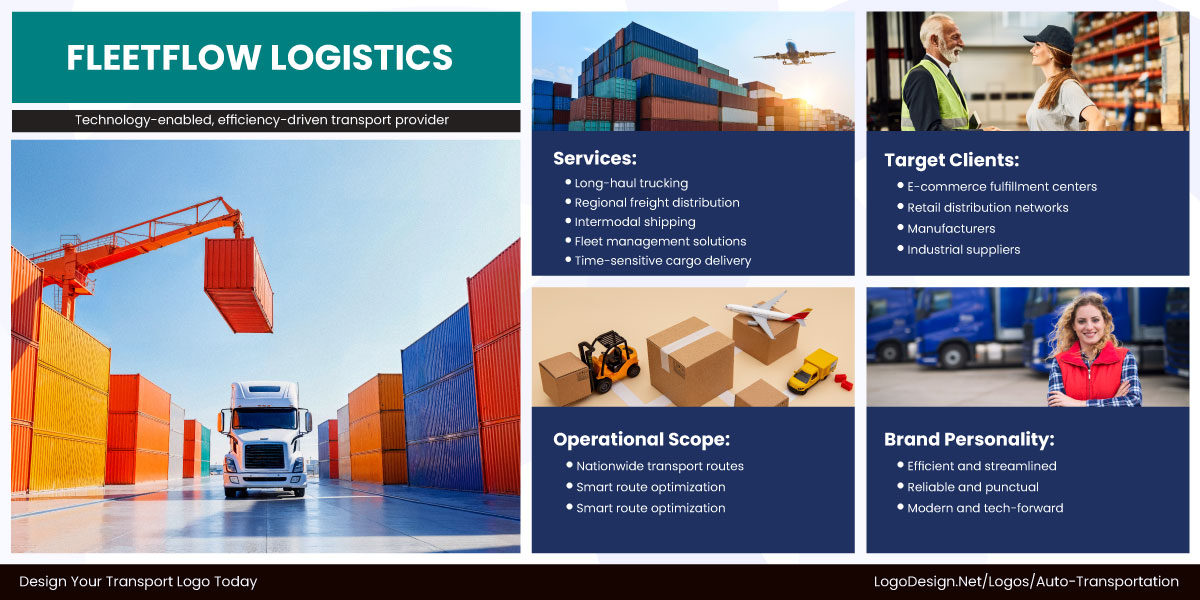
Start with the company: define services, scale, and target customers.
Start with the company itself. What services does it offer? Who does it serve? Is it a regional trucking company, a national logistics provider, or a global shipping operator?
Try describing the brand in human terms. Solid and dependable? Fast and efficient? Rugged and hands-on? These traits guide later choices in color, symbols, and typography. Keeping them written down helps maintain consistency during design.
Step 2: Study the Local Market and Competitors
Start with the company: define services, scale, and target customers.
Next, look at how similar businesses present themselves visually. Analyze logos from other logistics companies, freight operators, or shipping networks. Observe recurring color palettes, shapes, and symbols.
The goal is not imitation. It is awareness. Once you know the visual norms, you can decide where to follow them and where to create distinction.
Step 3: Define the Logo Elements Direction
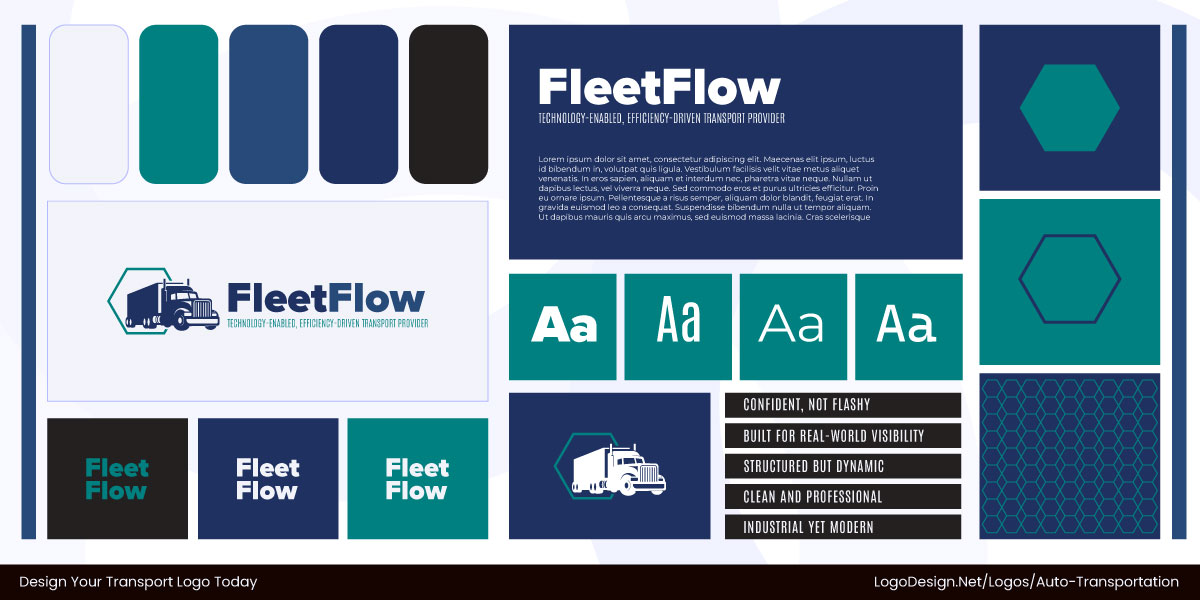
Define logo elements: colors, symbols, typography, and shape for visibility.
Now outline the core ingredients. Which colors fit the positioning? Should the logo include a tool, vehicle, or abstract motion cue? Will the typography feel heavy and mechanical or streamlined and transport-focused? What overall shape suits vehicles or signage?
These decisions create a clear direction before any detailed design begins.
Step 4: Create Concepts Using Sketches or a Logo Maker
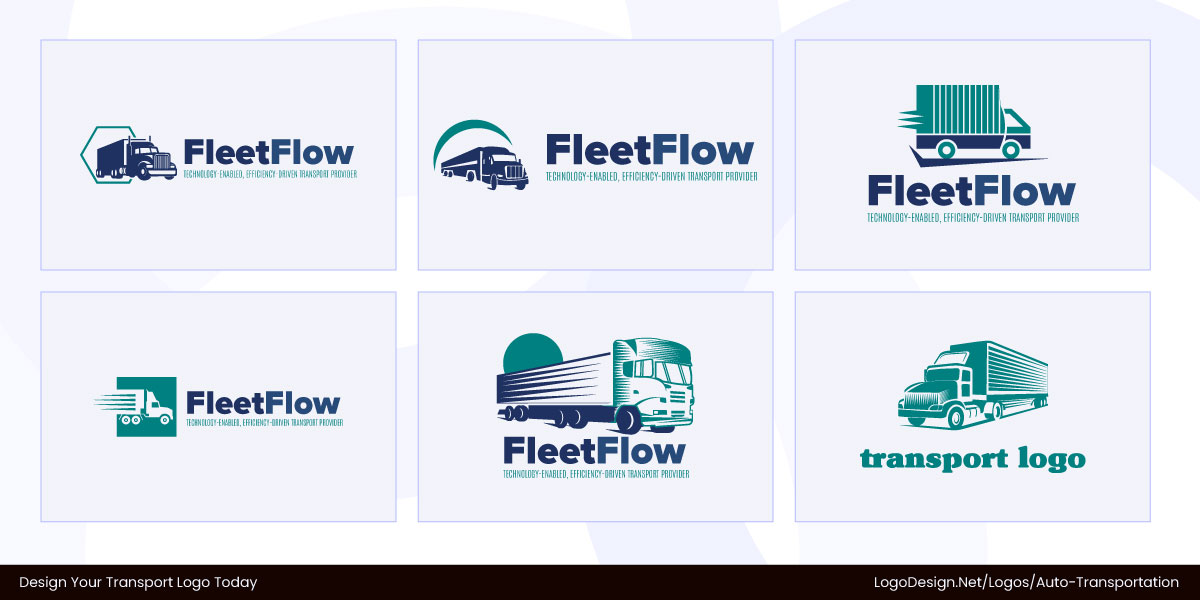
Generate visual ideas: sketch or use software to create logo concepts.
With direction set, begin generating visual ideas. Some designers sketch first and then recreate concepts digitally. Others move directly into logo design software or a logo maker tool to assemble symbols, fonts, and layouts.
A logo maker is especially useful here because it lets you quickly test combinations of icons, typography styles, and color palettes. You can explore multiple badge, horizontal, or emblem formats in minutes and see how they feel as actual logos rather than rough drawings.
Step 5: Refine, Test, and Apply the Logo
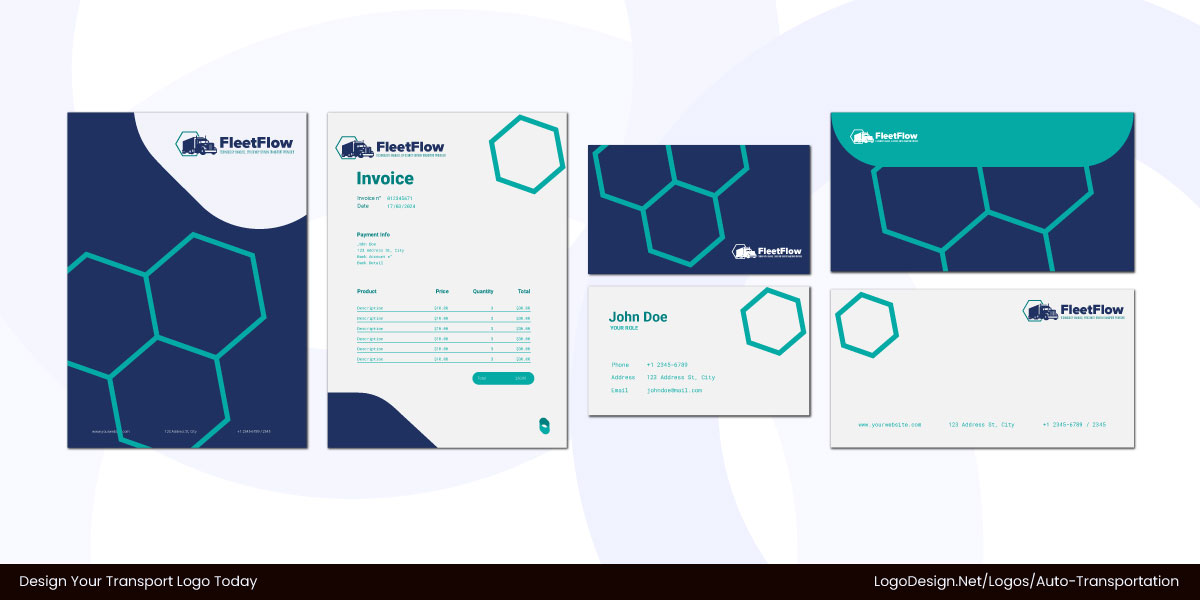
Refine the chosen logo and test clarity across all real-world applications.
After selecting the strongest concept, refine spacing, proportions, and line weight so the mark stays clear at different sizes. Then test it in its intended environment: vehicle doors, signage, uniforms, invoices, and digital listings.
At this stage, small adjustments often make a big difference. Contrast may need boosting for vehicle paint. Details may need simplifying for decals. Once it performs well across uses, the logo is ready to represent the business consistently in the real world.
Designing for Real-World Transport Environments
Transport logos must perform under challenging, dynamic conditions. They appear on moving trucks, trailers, shipping containers, railcars, ports, terminals, and uniforms, often seen quickly or from a distance. That is why practical performance shapes their design. The constraints below explain what really matters once a logo leaves the screen and enters the physical world.
-
Logos Must Remain Clear in Motion and at Distance
When vehicles are in motion or viewed across a busy terminal, only bold, simple forms remain legible.
Matson’s bold uppercase logo ensures clear visibility and instant recognition.
Matson, Inc. uses bold, uppercase lettering with wide spacing. The wordmark reads clearly on cargo ships, trucks, and containers, ensuring the brand is instantly recognizable even from a distance or at speed.
-
Contrast and Stroke Thickness Under Outdoor Lighting
Sunlight, shadows, and reflective surfaces can easily wash out subtle details or thin lines. Strong contrast and thick strokes preserve visibility.
DSV’s bold, solid logo ensures legibility across vehicles and signage.
DSV employs a thick, solid wordmark with contrasting color to maintain legibility on trucks, vans, and terminal signage under bright or variable lighting conditions.
-
Performance Across Multiple Surfaces
Transport logos appear on metal, painted surfaces, vinyl, fabric, and other textured materials. Designs must tolerate seams, curves, and irregular textures.
ONE’s bold rectangular logo ensures consistent visibility and brand recognition.
ONE (Ocean Network Express) uses a bold rectangular layout with clean, solid typography. The design reproduces consistently, ensuring the brand remains clearly visible and recognizable in all real-world applications.
-
Simplification for One-Color Printing and Decals
Many operational applications require single-color vinyl, stencil, or screen printing. Intricate details or gradients often fail in these formats.
Expeditors International’s simple wordmark ensures clarity across all applications.
Expeditors International employs a simple wordmark with minimal accents, ensuring easy one-color reproduction on trailers, crates, and uniforms without losing clarity or identity.
-
Why Intricate Detail Fails in Transport Environments
Fine decorative elements quickly lose visibility due to dirt, weather, and distance. Bold, simplified shapes perform best across moving vehicles and outdoor environments, preserving instant recognition and brand credibility.
HMM’s clean blocky logo ensures clarity and durability across transport applications.
HMM (Hyundai Merchant Marine) uses a clean, blocky wordmark with minimal accents. The logo demonstrates how simplicity ensures clarity and durability in all transport contexts.
Across all these constraints, transport logos succeed when they are designed for real-world surfaces, outdoor conditions, and moving contexts, communicating reliability, scale, and efficiency immediately.
Motion and Mechanical Precision in Logo Design
Motion in transport logos is rarely shown through literal speed effects. Instead, designers rely on proportion, angle, posture, and internal structure to suggest movement while keeping the mark stable and engineered. The strongest transport logos feel reliable at rest, yet convey forward action visually. These principles are what make top transport brands appear both dynamic and trustworthy.
-
Visual Cues That Suggest Speed without Clutter
Speed does not require lines, blurs, or gradients. Simple angled geometry communicates motion effectively while staying legible on trailers, shipping containers, and terminals.
K Line’s slanted letterforms subtly convey forward momentum and motion.
For example, K Line (Kawasaki Kisen Kaisha) uses a subtle upward slant in the letterforms to convey forward momentum. The effect is minimal yet conveys motion clearly across containers and vehicles.
-
Directional Flow and Forward Orientation
Logos that guide the eye in a single direction naturally feel in motion. Designers achieve this through tilt, alignment, or placement of elements.
CMA CGM’s diagonal wave emblem conveys movement and operational efficiency.
CMA CGM uses a subtle diagonal in its wave-like emblem, gently guiding the viewer’s eye forward. This creates a sense of continuous movement and operational efficiency without relying on literal imagery of vehicles or arrows.
-
Diagonal vs Horizontal Emphasis
Horizontal structures feel grounded and stable, while diagonals introduce energy and a sense of forward motion. Transport logos often combine both to balance stability with dynamic presence.
USPS’s horizontal wordmark with subtle diagonal accent conveys reliability and motion.
The United States Postal Service uses a strong horizontal wordmark paired with a subtle forward-leaning accent in its emblem. The horizontal form communicates reliability and wide-reach service, while the slight diagonal orientation hints at motion and delivery flow — reinforcing both steadiness and movement across its mail and logistics network.
-
Mechanical Symmetry vs Kinetic Movement
Transport logos often balance symmetry for credibility with subtle movement cues to suggest efficiency and reliability.
Sinotrans’s symmetrical wordmark with forward tilt conveys stability and motion.
Sinotrans uses a symmetrical structure in its wordmark paired with a stylized element that tilts slightly forward. The symmetry conveys stability and dependable service, while the subtle forward tilt suggests motion and coordinated flow without relying on literal imagery like vehicles or arrows.
-
Maintaining Stability While Implying Motion
A motion-focused logo must feel reliable even while suggesting forward direction.
Blue Dart’s horizontal wordmark with forward tilt conveys trust and efficient movement.
Blue Dart uses a bold horizontal wordmark paired with a subtle forward‑leaning accent in the lettering and symbol. The horizontal base conveys stability and trust, while the slight forward tilt in the design elements suggests efficient movement and delivery flow.
Tips for Designing Effective Transport Logos
- Keep the design simple and purposeful. Fewer elements help the logo stay clear on vehicles, uniforms, and signage.
- Match visuals to actual services. Symbols, colors, and typography should reflect the type and scale of work offered.
- Use a restrained color palette. Two strong, high-contrast colors usually perform better than many decorative shades.
- Ensure legibility at a distance. Thick strokes and open spacing keep the logo readable on moving trucks and roadside signs.
- Stand apart from competitors. Avoid overused graphic elements and clichés unless you can present them in a distinct way.
- Design for real applications first. The logo should reproduce cleanly in one color for decals, embroidery, and print.
- Align tone with true capability. The visual style should promise only what the business genuinely delivers.
- Choose longevity over trends. Durable typography and simple structure age far better than fashionable effects.
Transport Logo Designs for Inspiration
Even after exploring existing logos and understanding the principles of logo design, sometimes it helps to see ready-made examples that spark ideas. If you’re starting from scratch or just need a creative nudge, looking at curated designs can make the process faster and more focused.
On LogoDesign.Net, you can browse hundreds of transport logos for free. Each design showcases different combinations of color, typography, symbols, and layout. You can pick the elements that resonate most with your brand and use them as a foundation to create a personalized logo that feels unique and professional.
Here are a few sample logos to get your imagination rolling.
Put Your Brand in Motion with the Right Logo!
A strong transport logo comes down to clarity, relevance, and durability in real-world use. When color, symbols, and typography all support the same message, the brand becomes instantly recognizable from fleet to freight.
If you’re ready to turn these principles into a working design, you can start creating your own transport fleetlogo now with LogoDesign.Net’s logo maker.